
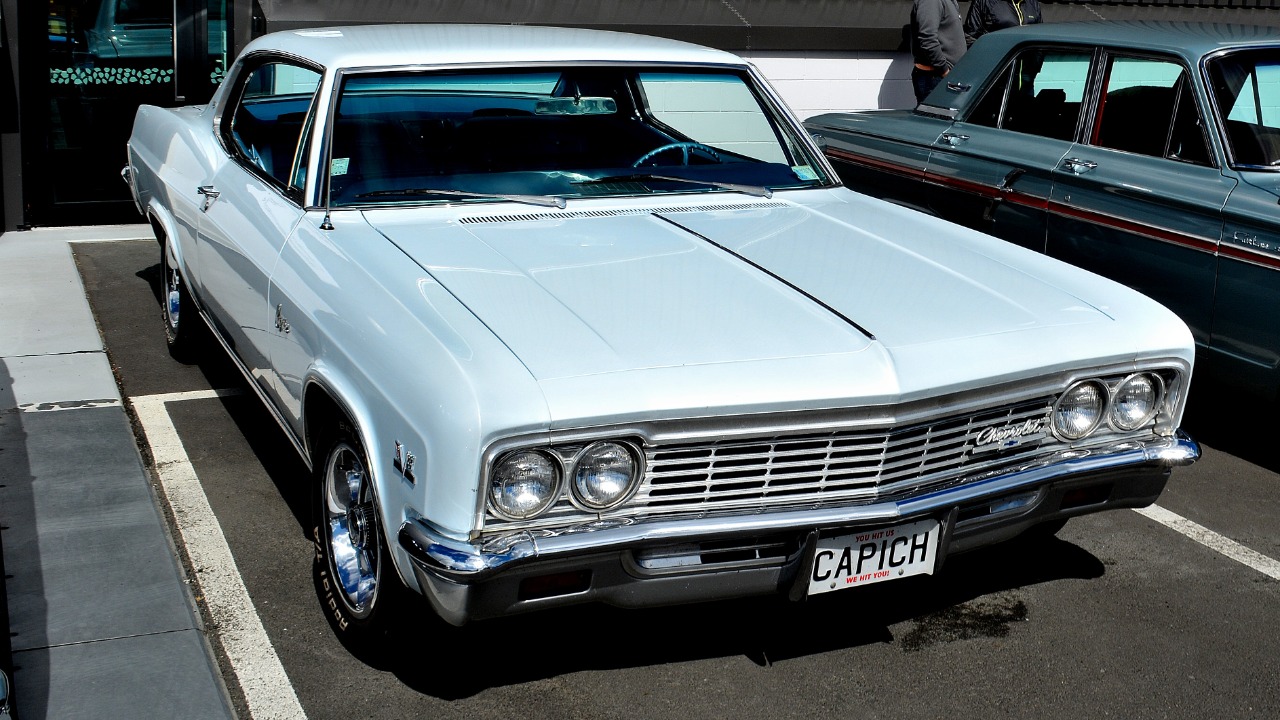
The 1966 Chevrolet Caprice arrived at a moment when American buyers were starting to expect Cadillac comfort without Cadillac prices, and it answered that demand with a full-size body wrapped around unexpectedly plush details. You see the shift most clearly in how Chevrolet turned a trim package into a stand-alone luxury line, then filled it with design cues and options that nudged everyday family transport into near-prestige territory. If you look closely at the styling, the cabin, and the powertrain choices, you can trace how this single model year helped redefine what “luxury” meant in a mainstream showroom.
From option package to flagship
When you talk about the 1966 Chevrolet Caprice, you are really talking about a car that stepped out from the shadow of the Impala and claimed its own identity. After starting as a top trim on the big Chevrolets, the Caprice gained full series status for 1966 and was positioned as the top-line full-size Chevrolet, a move that instantly signaled to buyers that this was the most upscale car in the showroom. In that role it sat above the Impala and Bel Air, giving you a clear ladder from basic transportation to something that felt genuinely aspirational inside the same dealership network, as confirmed in period descriptions of the Chevrolet Caprice.
That promotion to series status was not just a marketing flourish, it reshaped the body styles and badging you could order. For 1966, Caprice buyers could choose a four-door hardtop sedan and a new Custom Coupe with a special formal roofline, and Chevrolet also extended the name to two station wagons that carried the Caprice Custom identity on their tailgates. Contemporary documentation notes that the Caprice gained series status for the 1966 model year and that the upscale wagons were marketed as Caprice Custom, a detail that underlined how the brand wanted you to see this car as a distinct step up from the rest of the full-size line, a point echoed in focused coverage of how the Caprice gained series.
Luxury cues with a Cadillac accent
Once you slide into a 1966 Caprice, you immediately understand that Chevrolet was chasing a different feel from its other big cars. The cabin leaned heavily on rich fabrics, wood-grain accents, and extra sound insulation so you experienced a quieter, more tailored environment than in an Impala, and the formal roofline on the Custom Coupe reinforced that sense of tailored luxury from the outside. Enthusiasts who have studied the 1966 full-size lineup point out that all of this aimed to give Chevy buyers a one-of-a-kind taste of Cadillac’s look and ride, a goal that shows up in period commentary about how all of this to bring Cadillac flavor downmarket.
Chevrolet did not stop at soft materials and quiet glass, it layered in specific trim touches that made the Caprice feel more formal than its siblings. The fact sheets for the 1966 full-size cars highlight the special Custom Coupe roofline, unique exterior moldings, and upscale interior patterns that separated the Caprice from the Impala SS and Biscayne, and they also note that the Caprice nameplate appeared on the Custom Wagons to signal that the same luxury treatment extended to family haulers. When you read through the detailed breakdown of the 1966 full-size Chevrolets, you see how the Caprice was expanded to series status and how the Custom Coupe and wagons were positioned as the most refined choices in the lineup, a story laid out in the 1966 fact sheet.
Design that made a big car feel special
Visually, the 1966 Caprice took the clean, Coke-bottle lines of Chevrolet’s big-car redesign and sharpened them into something more formal. You notice it in the squared-off roof treatment on the Custom Coupe, the restrained use of brightwork, and the way the grille and taillights are framed to look more tailored than flashy, which helped the car stand apart from the sportier Impala SS. Period brochures for the 1966 full-size Chevrolets emphasize the new distinctive front and rear styling and the special roofline that gave the Caprice its almost European formality, details that are easy to spot in the original 1966 brochure.
That design language was not just about static beauty, it was meant to catch your eye in motion and in the showroom. Modern walkaround videos of surviving cars point out how the crisp body creases, full wheel covers, and subtle Caprice scripts combine to create a car that looks more expensive than its Chevrolet badge suggests, and they also note that 1966 was a very special year for Chevrolet because the full-size cars adopted a new distinctive face that set them apart from earlier models. When you watch a detailed tour of a restored example, you can see how those styling choices still read as upscale today, especially when a presenter walks you around the 1966 Caprice and lingers on the roofline and trim.
Power, poise, and the 396 surprise
Under the hood, the 1966 Caprice quietly rewrote expectations about what a luxury-branded full-size Chevrolet could do. You could order modest small-block V8s if you wanted a smooth cruiser, but Chevrolet also let you pair the Caprice’s plush interior with serious big-block power, including the 396 cubic inch V8 that turned this formal sedan or coupe into a genuine highway performer. Enthusiast coverage of a 1966 Chevrolet 396 Luxury Caprice makes the point that if you think luxury cars have to be big, fat, floaty barges gliding on a cloud of isolated marshmallowness, the 396-powered Caprice will change your mind, a sentiment captured in a feature on the 396 Luxury Caprice.
That blend of comfort and muscle was not an accident, it was baked into how Chevrolet pitched the car to buyers who wanted one machine to do everything. A later deep dive into the same 396-powered Caprice notes that the car combined luxury appointments with serious performance hardware, and that the chassis tuning and powertrain options proved you could have budget, luxury, and performance all in one package. When you look at modern video reviews that revisit the 1966 full-size Chevrolets, you hear the same theme repeated as hosts describe how the 1966 Chevrolets had a new distinctive feel and how the Caprice in particular delivered a mix of comfort and power that still resonates, a point that comes through clearly in a walkaround that calls the 1966 Caprice a blend of budget, luxury, and.
How the 1966 Caprice still connects with you today
For you as a modern enthusiast, the 1966 Caprice is more than a period curiosity, it is a car that still feels surprisingly relevant if you value comfort and character. Owners who have restored these cars talk about repainting them from their original white finishes, carefully redoing door jambs and trunk interiors, and then using them as real drivers that carry families and memories, not just trophies. One long-time owner recalled how the car was originally white and how every inch, including the trunk, was repainted during restoration, and he also described the fond memories that the Caprice stirred up for people who grew up around them, a story shared in a profile of a 1966 Chevrolet Caprice.
That emotional pull is rooted in how the Caprice marked the debut of Chevy’s new luxury full-size model, a car that blended upscale features with solid performance in a way that felt accessible to middle-class buyers. Later retrospectives describe how the 1966 Chevrolet Caprice marked the debut of Chevy’s new luxury full-size model and underline that this was the moment when Chevrolet fully committed to giving its customers a near-Cadillac experience without asking them to leave the Chevrolet showroom. When you step back and see the Caprice as the starting point for that strategy, it becomes clear why the 1966 model year still matters, a point that is spelled out in commentary on how the 1966 Chevrolet Caprice set the tone for Chevy luxury.
More from Fast Lane Only

Leave a Reply