
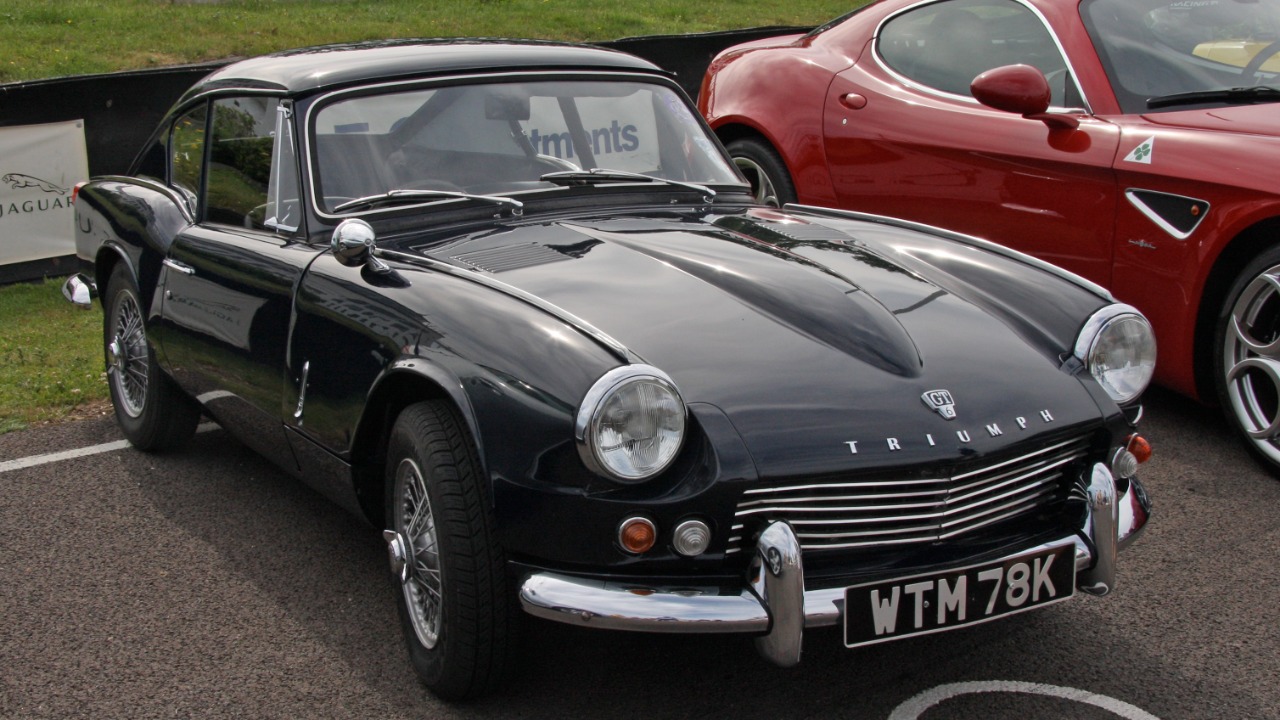
The 1966 Triumph GT6 arrived as a compact coupé that wanted to punch far above its weight, chasing the kind of speed and glamour usually reserved for bigger, pricier machines. You see that ambition in its sleek fastback body, its six‑cylinder growl, and its roots in Le Mans experimentation rather than a quiet styling studio. To understand how it went after pace and prestige, you have to follow its path from humble Spitfire underpinnings to a car that could genuinely trouble the fast lane.
Look closely and you find a story of clever re‑use, bold engineering, and a few missteps that owners still debate today. The GT6 did not just chase speed in a straight line, it also pushed Triumph to rethink aerodynamics, suspension, and even how much performance you could offer to drivers on a realistic budget.
From Spitfire sketch to fastback coupé
You start with the Triumph Spitfire, a light roadster whose separate chassis and compact dimensions made it an ideal canvas for experimentation. Period Specifications charts set out how the original open car evolved through different Spitfire marks, but the key point for you is that its basic structure could accept more power and a different body. Designer Giovanni Michelotti had already shaped the Spitfire for Standard‑Triumph, and later accounts note that he also penned cars for Ferrari, Maserati, and Lancia, a reminder that the same creative mind sat behind this modest British chassis and those Italian exotics. That link is highlighted in analysis of the Spitfire for Standard Triumph and its designer’s broader portfolio.
Racing pushed the transformation along. Triumph experimented with hard‑top Spitfires for endurance events, including Le Mans, where the need for stability and low drag encouraged a fastback shape. One account of the Triumph Spitfire Le Mans cars notes how, in the interests of aerodynamics, rear seams were smoothed and Jaguar E‑type style headlamp covers were added, a detail you see described in coverage of those In the period modifications. Another retrospective on a 1963 Triumph Spitfire GT6R Le Mans car explains that, with Porsche reputedly hitting 160 mph, Triumph responded by building a six‑cylinder racing Spitfire with triple carburettors, a project summarised under the phrase With Porsche pushing the benchmark. Those experiments fed directly into the idea of a production coupé that could carry the same fastback silhouette and a more muscular engine.
“Poor man’s E‑Type” and the Le Mans halo
When you look at a GT6 in profile, you immediately see why it picked up the nickname that still follows it. Contemporary enthusiasts described the newly born GT6 as having exquisite lines and called it the “Poor man’s E‑Type” because of its resemblance to the Jaguar XKE, a phrase preserved in later collections of quotations. Another source repeats that the GT6 was nicknamed the “Poor man’s E‑Type” after its resemblance to the famed Jaguar XKE, reinforcing how closely observers linked it to that Jaguar XKE silhouette. For you as a driver, that meant a car that looked like a scaled‑down super‑GT, with a long bonnet, tight cabin, and a tail that seemed to taper into the distance.
The Le Mans connection gave that styling real substance. A retrospective on the Triumph GT6 1966 story notes that, in 1963, Giovanni Michelotti was involved with a fastback Spitfire project and that the Triumph GT6 is a 6‑cylinder sports coupé built by Standard‑Triumph, based on their popular Triumph roadster, a lineage captured in a social post about the Triumph GT6 1966. Another enthusiast piece, headed “Born in Le Mans,” recalls a 1963 Triumph Spitfire Le Mans signed by Le Mans legend Derek Bell Triumph and notes that Triumph ran three racing Spitfires during the 1964 and 1965 events, details preserved in a post about the Triumph Spitfire Le and Derek Bell Triumph. That racing backdrop meant the GT6’s curves were not just pretty, they were informed by real attempts to slip through the air at sustained high speed.
Six cylinders, 106 m, and the chase for numbers
Under the bonnet, the GT6’s ambition was clear. Instead of the Spitfire’s four‑cylinder, Triumph dropped in a straight‑six derived from the Triumph Vitesse, giving the coupé the kind of smooth torque you feel as a continuous shove rather than a frantic scramble. A technical overview of the Triumph GT6 notes that the new car’s engine provided a 106 m (171 km) top speed and 0–60 m (97 km) in just under 12 seconds, figures that put it ahead of many small sports cars of its day and are preserved in the engine summary. Another section on the GT6 Mk I explains that the new car was introduced in 1966 and called the Triumph GT6, with a sleek fastback body and an opening rear hatch, and that a small rear seat could be ordered, large enough for small children, details you see laid out in the GT6 Mk I description.
Those numbers did not appear in isolation. The six‑cylinder story runs through Triumph’s broader range, including the Triumph Herald and Triumph Vitesse and later iterations, which are unpacked in a video history of the Triumph Herald and its derivatives. A follow‑up segment in the same series looks at the Triumph Vitess and how that car’s 2‑litre six became a natural donor for the GT6, a link highlighted in the clip labelled Triumph Vitess and. Later buyer‑focused guides set out how the GT6 evolved across three marks, with a table of Years Produced for MK1, MK2, and MK3 and fuel consumption figures such as 24 mpg and 25 mpg, details captured in a technical Triumph table that also repeats the figure 68 for the end of the first series.
Chassis compromises and the 68 pivot
If you are thinking about how the GT6 actually felt on a twisting road, you also have to reckon with its weakest point. The early cars used a swing‑axle rear suspension that could deliver sudden camber changes, something that critics said made the handling tricky at the limit. A later road test summary notes that Criticisms of the GT6’s roadholding due to the crude swing‑axle rear suspension were addressed with the Mk2 of 1968, which introduced revised geometry and improved the top speed to 107 mph, a change described in the piece that opens with Criticisms of the early setup. That 68 update matters to you because it shows Triumph listening to feedback and trying to align the car’s cornering confidence with its straight‑line pace.
Production figures underline how quickly the company moved. A detailed Factfile on the GT6 records that Sold/number built for the first series was 1966‑’68/15,818, and that Construction used a steel chassis and body panels with an iron‑block, alloy‑head, ohv Engine, figures and terms laid out in the Factfile that also repeats the number 15,818 and the year 68. A broader feature on Canley’s “super six” expands on how the GT6 sat within Triumph’s line‑up, describing its steel chassis and body panels and its iron‑block, alloy‑head Engine in more narrative form, context you find in the Canley overview. For you as a modern buyer, those numbers and construction details help explain why the GT6 feels solid yet compact, and why rust and chassis condition are still central talking points.
Market position, “genius idea,” and how you feel behind the wheel today
More from Fast Lane Only


Leave a Reply