
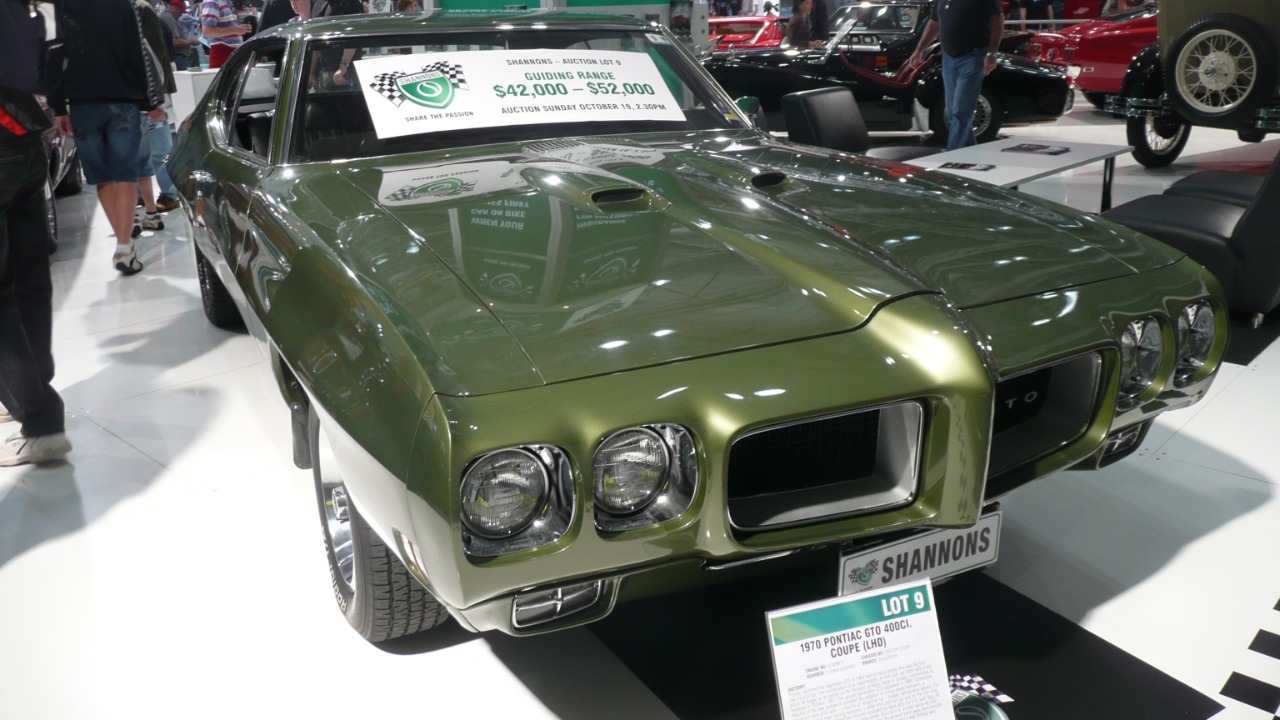
The 1970 Pontiac GTO Judge arrived at the peak of the muscle era as a car that did not just join the horsepower race, it tried to settle it. With outrageous color, race-bred hardware, and a name that promised to “lay down the law,” it pushed Detroit’s idea of street performance right up to the edge of what the time, the roads, and the insurance companies would tolerate.
When I look at that single model year, I see more than a fast GTO. I see a moment when Pontiac treated the Judge as a rolling manifesto, proving how far it could stretch style, engineering, and attitude before the muscle-car bubble began to deflate.
From budget bruiser to headline act
To understand why the 1970 version feels so extreme, I start with what a Pontiac GTO Judge was meant to be in the first place. Launched in 1969 and produced until 1971, the Pontiac GTO Judge began life as a stripped, price-conscious package, a kind of anti-status statement that still delivered serious performance. The idea was simple: take the already potent GTO, cut some frills, and add the right go-fast parts so younger buyers could afford a car that looked and ran like it belonged at the drag strip.
By the time Feb rolled around for the second model year, that original bargain-basement concept had evolved into something bolder and more theatrical. The Judge was no longer just a cheaper GTO; it had become the halo version, engineered as a bold response to the muscle car era’s demand for high-performance and eye-catching vehicles. The 1970 Pontiac GTO Judge leaned into that mission with more aggressive powertrain options and wilder presentation, a shift that an enthusiast site captures when it notes the car was engineered to stand out even in a crowded field of Detroit heavy hitters.
Styling that shouted from a block away

What makes the 1970 Judge feel like the high-water mark to me is how completely its styling commits to the performance story. For the 1970 model year, Pontiac gave the GTO a new front end with a total Endura nosepiece, split oval grilles, and dual headlamp housings, a look that made the car seem lower, wider, and more menacing even before the engine fired. That Endura front, described in period-correct detail as a key Styling change, turned the Judge into a kind of rolling battering ram, with the body-colored bumper visually fusing sheet metal and grille into one aggressive face.
Color and trim pushed the drama even further. One of the most popular colors for the 1970 GTO models was a shade called One of the signature hues, “Orbit Orange,” which turned the Judge into a beacon even in a sea of bright muscle cars. Contemporary descriptions of the 1970 Pontiac GTO Judge exterior point out how the spoilers, striping, and hood scoops worked with that paint to create a cohesive, almost cartoonishly bold package, and even note details like the four exhaust tips, two from each of the exhaust pipes, tucked Below the rear bumper. In an era of loud designs, the Judge still managed to look like it was shouting the loudest.
Powertrains that flirted with the edge
Under the skin, the 1970 Judge backed up its visual swagger with hardware that pushed street performance toward race territory. The GTO lineup already offered serious V8 power, but the Judge package focused that potential with specific engine choices and breathing upgrades that boosted the car’s performance capabilities. Period breakdowns of the GTO Judge engines emphasize how the Ram Air systems, hotter camshafts, and carefully tuned carburetion were selected to squeeze more out of Pontiac’s big-displacement blocks, with Engines tailored to drivers who cared more about quarter-mile times than quiet idle.
For 1970, the most serious Judge buyers gravitated toward the Ram Air III and especially the Ram Air IV combinations, which paired high-flow cylinder heads with aggressive gearing and heavy-duty internals. Club historians note that for the 1970 model year, these Ram Air IV cars sat at the top of the GTO performance pyramid, a fact underscored in technical writeups that detail how the Endura front and functional hood scoops were not just cosmetic but part of a package designed to feed cooler air to those hungry engines. In practical terms, that meant a showroom car that idled in traffic yet felt only a few steps removed from the staging lanes.
Inside the cockpit, where speed met control
From the driver’s seat, the 1970 Judge made its intentions clear with a cockpit that prioritized information and control over luxury. People that like to push the limits of speed in their cars know all too well how vital a tachometer is to have, and Pontiac leaned into that mindset by giving the Judge a prominent rev counter and clear instrumentation that made it easier to keep the engine in its sweet spot. One enthusiast-focused breakdown of the model even opens with the line “People that like to push the limits of speed in their cars know all too well how vital a tachometer is to have,” a sentiment that perfectly captures the Judge’s target buyer.
When I picture a 1970 Judge being driven as intended, I think of a driver working a four-speed through the gears, eyes flicking between the road and that tach as the big V8 climbs toward redline. Period videos and modern recreations, including a comparison of a 1970 Pontiac GTO Judge vs a 1969 Dodge Super Bee that features the offhand line “you are a bag and you should eat Whoa looks like we accidentally lost that one as well let’s take one last phone call c,” show how enthusiasts still debate which car ruled the street, but they all agree the Judge demanded an engaged driver. That clip, preserved at the 25-second mark of a Sep video, underlines how the Judge’s mix of power, gearing, and driver-focused gauges made it a car that rewarded skill as much as it delivered raw speed.
Rarity, provenance, and the collector verdict
Half a century later, the 1970 Judge’s push toward the limits of muscle-car excess has turned into a different kind of power: collectability. In 1970, GM’s Pontiac Motor Division assembled a total of 3,783 Judge editions, a relatively small figure compared with mass-market GTO production. Those cars were highlighted by body-color accents, bold graphics on the front fenders and rear decklid, and the kind of option mix that made each example feel like a personalized weapon. Limited numbers, combined with the car’s outsized personality, help explain why pristine Judges now command serious money at auction.
Individual histories only add to that appeal. One documented 1970 Pontiac GTO Judge was Built at the Oshawa, Ontario, plant and sold new at Elliott Motors in Belleville, Ontario, a provenance that collectors pore over in detailed auction catalogs. That specific car, described in a profile that notes it was Built in Canada and delivered through Elliott Motors, shows how even within a run of a few thousand, enthusiasts track assembly plants, dealer networks, and original equipment to separate the merely desirable from the truly special.
Survivors that still feel outrageous
What fascinates me most is how surviving Judges still radiate the same over-the-top energy that defined them new. Some of the most coveted examples are convertibles and Ram Air cars that spent years tucked away, only to resurface needing full restoration. One account of a collection of Ram Air, four-speed Pontiac GTO convertibles notes that Though the Judge was in obvious need of restoration, it was extremely rare and was nicely equipped from the factory, with options like a hood tach, spoilers, and power disc brakes at the rear, not to mention power disc brakes up front. That description, preserved in a feature that opens with “Though the Judge was in obvious need of restoration,” captures how even a tired example still carries an aura of purpose.
Modern writeups of the 1970 Pontiac GTO Judge exterior reinforce that sense of enduring drama, walking through details like the hood-mounted tach, the rear spoiler, and the quad exhaust outlets that made the car look fast even standing still. One such overview of the Pontiac GTO Judge Exteri points out how the Judge’s visual cues, from the striping to the scoops, have become shorthand for peak muscle-car theater. When I see a restored Orbit Orange Judge today, with its Endura nose pointed down a modern highway, it still feels like a car testing the boundaries of what a street machine can be, just as it did when Pontiac first rolled it out.


Leave a Reply