
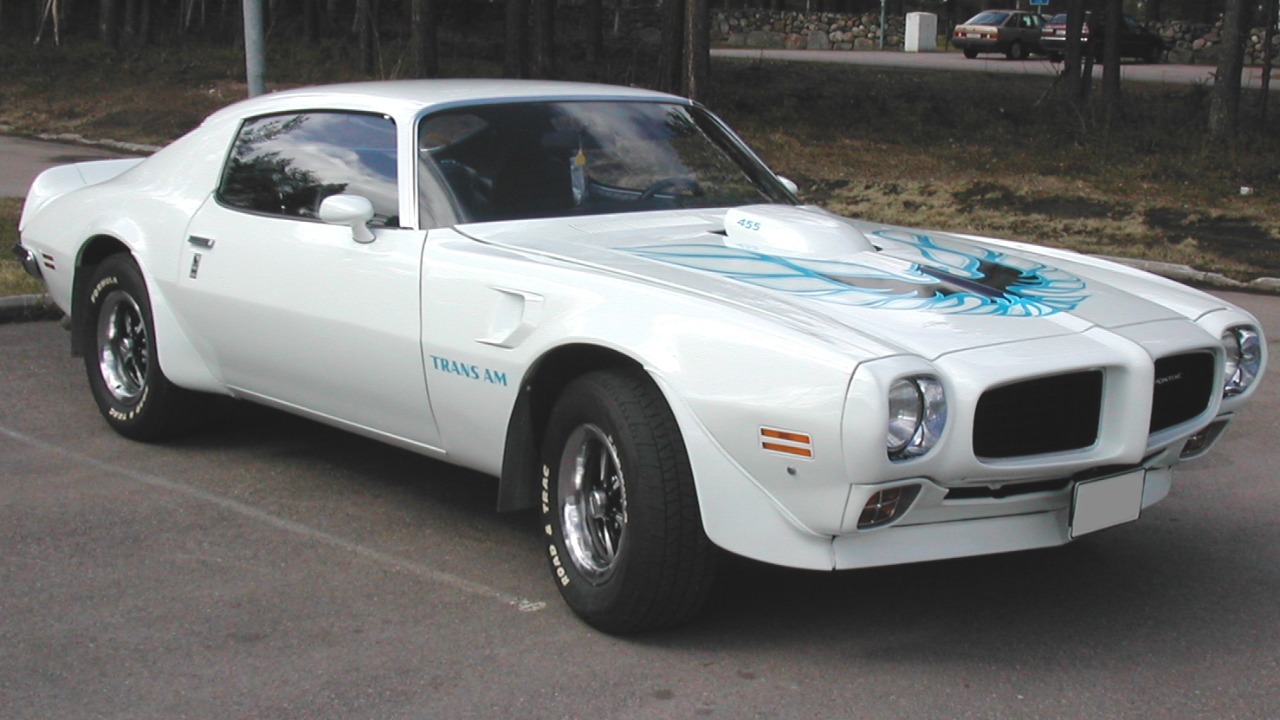
The 1973 Pontiac Trans Am did not just roll out of Pontiac’s factories as another performance package; it arrived at a moment when American muscle was under pressure and somehow turned that tension into attitude. In a single model year, the car’s styling, name, and racing associations fused into a personality that drivers could recognize from a block away and kids could sketch from memory. That is the moment when the Trans Am stopped being only a Firebird variant and started to become a cultural shorthand for speed, rebellion, and unapologetic flair.
How the Trans Am name set the stage for legend
Before anyone saw the 1973 car’s sheet metal, the badge on its fender was already doing heavy lifting. The Trans Am name tied Pontiac directly to the Trans-American racing series, so even parked at a curb the car carried the aura of competition and track-bred aggression. If the Trans Am name had been slapped on a mild cruiser, it would have rung hollow, but Pontiac used it to build what one report describes as Building Pontiac into a brand with real power and style, and the 1973 model inherited that reputation.
By 1973, emissions rules and insurance costs were already chipping away at the classic muscle formula, yet the Trans Am name still sounded as rebellious as it looked. I see that tension as part of the car’s appeal: it promised the raw spirit of late‑1960s racing even as the industry was being forced to compromise. The badge told buyers they were not just getting a Firebird with extra chrome, they were buying into a lineage that treated every on‑ramp like a short straightaway, and that promise helped the 1973 Trans Am stand apart from other coupes that were quietly retreating from their performance roots.
The Screaming Chicken and the birth of a visual icon
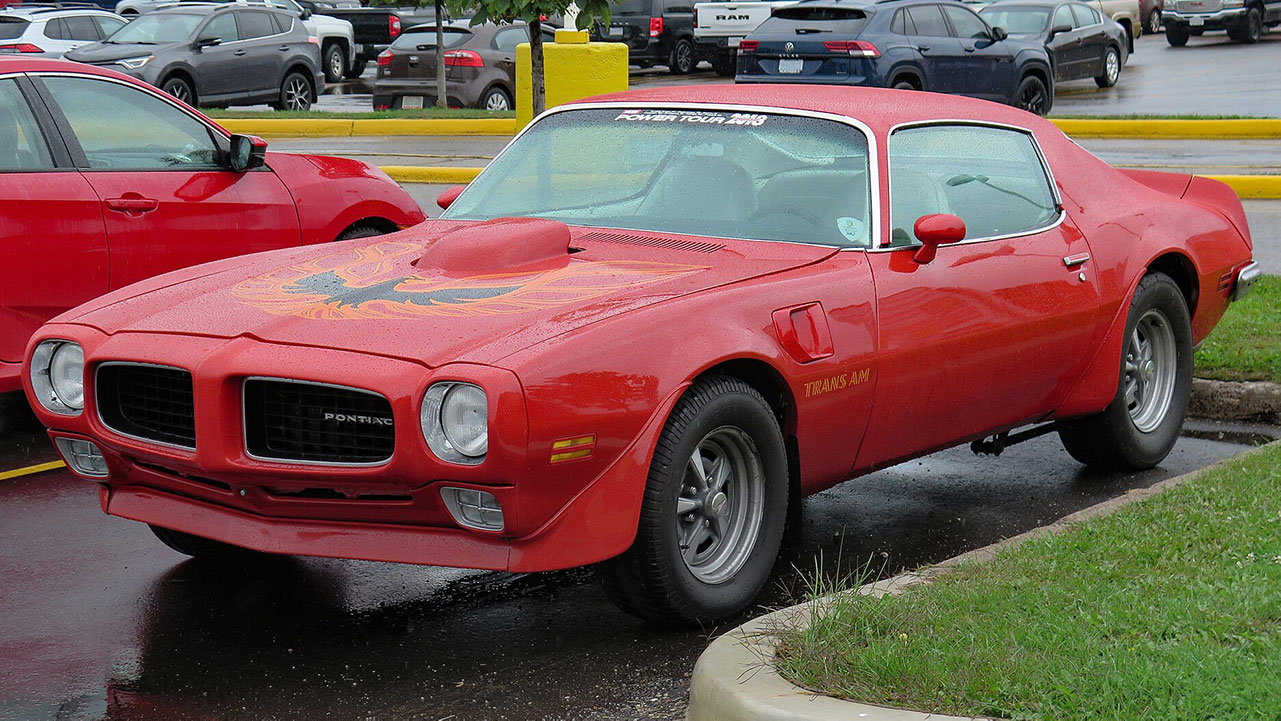
When people picture a Trans Am, they usually do not think of a spec sheet, they think of a hood. The Pontiac Firebird Trans Am Giant Screaming Chicken Decal turned the car’s front end into a billboard for bravado, and by 1973 that graphic identity was becoming inseparable from the car itself. Designed by Norm Inouye in 1970, the Pontiac Firebird Trans Am Giant Screaming Chicken Decal was more than a styling flourish; it was a declaration that subtlety was someone else’s problem. The fact that Norm Inouye’s Giant Firebi artwork kept returning, including brief runs in 1985 to 1987, shows how deeply that image had sunk into the car’s identity.
On the 1973 Trans Am, that bird turned the hood into a stage, and the car’s long nose and shaker scoop gave it room to spread its wings. I think that is where the model crossed from being a fast car to being a recognizable character, the kind of machine that could be doodled on a notebook or spotted instantly in a rearview mirror. The decal made the Trans Am impossible to mistake for a Camaro or a Mustang, and that visual confidence helped the 1973 car claim its own corner of American car culture at a time when many performance models were losing their nerve.
From showroom to screen: how pop culture amplified the myth
The 1973 Trans Am’s swagger set the template for the car that would later become a movie star, and the feedback loop between street and screen is what turned the model into a full‑blown icon. When a later Trans Am slid across theater screens with a dented fender, that imperfection felt like watching a hero take a punch, and audiences loved it because the car already had a reputation for toughness. One detailed account of that era notes how that dented fender moment fed into Audience Love and a Cultural Ripple that reached everyone from teenage gearheads to middle‑aged muscle car revivalists.
By the time Hollywood really leaned into the Trans Am’s personality, the groundwork laid by the 1973 car’s styling and attitude made the casting feel inevitable. The Screaming Chicken and the car’s low, aggressive stance translated perfectly to film, where a silhouette had to read instantly even in a quick cut. I see the 1973 model as the bridge between Pontiac’s racing‑inspired ambitions and the later screen legend, the car that proved a Trans Am could carry a story all by itself simply by roaring into frame and refusing to blend into traffic.
The Screaming Chicken and pop culture immortality
Once the Trans Am started appearing on posters and in movie theaters, the bird on its hood stopped being just a decal and became a pop symbol in its own right. The Screaming Chicken and Pop Culture Immortality are tightly linked in the reporting, which notes that if the Trans Am name tied Pontiac to racing, the massive bird on the hood gave the car a personality that could live far beyond the track. One analysis puts it plainly: Hollywood only amplified the effect of that artwork, turning the Trans Am into a symbol that felt as rebellious as it sounded.
For me, that is where the 1973 Trans Am’s influence really shows. The car arrived with the Screaming Chicken already taking shape as a design language, and as Pontiac refined that look, the hood art became a kind of shorthand for a certain kind of driver. You did not need to know compression ratios or gear ratios to understand what the car stood for; the bird told you everything. That clarity of identity is rare in automotive history, and it is a big reason the 1973 model year still feels like a turning point rather than just another entry in a production run.
Why the 1973 Trans Am still resonates with enthusiasts
Decades later, the 1973 Trans Am continues to draw attention not only from casual fans but from serious collectors who curate some of the most significant muscle cars ever built. In one deep dive into notable examples, the car appears alongside other celebrated models in a feature on Top Pontiac Trans Ams, part of Muscle Car Of The Week Video Episode 346, which highlights The Pontiac Firebird Trans Am as a true American icon. When a model year keeps showing up in that kind of company, it tells me its appeal is not just nostalgic; it is rooted in design and character that still hold up in a crowded field of classics.
What keeps pulling me back to the 1973 car is how it balances its contradictions. It arrived in a tightening regulatory climate yet projected unfiltered confidence. It wore one of the loudest graphics ever applied to a production hood, yet the underlying proportions and stance were disciplined and purposeful. It carried a name that linked Pontiac to serious racing, yet it was just as comfortable cruising a boulevard as it was storming a back road. That blend of theater and authenticity is why the 1973 Pontiac Trans Am did more than survive a difficult era; it turned that moment into the foundation of a legend that still feels alive every time one fires up and that Screaming Chicken lifts its wings into the wind.






Leave a Reply