

The 1976 Pontiac Trans Am arrived at a moment when muscle cars were supposed to be finished, choked by emissions rules and rising insurance costs. Instead of fading quietly, it proved that big-displacement performance could adapt, stay street legal, and still feel rebellious. I see that model year as the pivot point where old-school cubic inches met a new era of regulation, and somehow kept the muscle conversation alive.
To understand why that particular Trans Am mattered, you have to look past the nostalgia and focus on how it threaded the needle between shrinking engines, tightening laws, and changing tastes. It did not match the brutal numbers of the late 1960s, but it preserved the attitude, the soundtrack, and the visual drama that defined American performance, and it did so while rivals were retreating or reinventing themselves.
The pony car battlefield was shifting under Pontiac’s feet
By the mid 1970s, the American pony car class was in flux, and the Trans Am was fighting for relevance in a shrinking arena. Earlier in the decade, the segment had exploded when large displacement engines were first dropped into compact coupes, letting them compete directly in serious performance circles and pushing brands like Ford and Chevrolet to wrestle for dominance in this new space. That escalation, described in the context of the most notable pony cars as a moment when big engines transformed small bodies, set the stage for the Trans Am to matter at all, because it was born into a class defined by displacement and swagger rather than subtlety, a landscape captured in the phrase For the first time, large displacement engines were offered in pony cars.
That arms race did not last. As the decade wore on, increasingly strict safety and emissions rules began to squeeze the life out of traditional muscle hardware. One vivid example came from the Plymouth side of the aisle, where big-block options on the Barracuda were dropped as regulations tightened and engines were reworked to cut emissions, which also reduced their power output, a shift summed up in the phrase Increasingly stringent safety and exhaust emission regulations. Against that backdrop, the Trans Am’s decision to keep a big-cube V8 on the menu in 1976 was not just a spec sheet choice, it was a statement that Pontiac was not ready to abandon the core idea of a muscle-oriented pony car even as the rules closed in.
How the 1976 Trans Am kept the big-engine dream alive
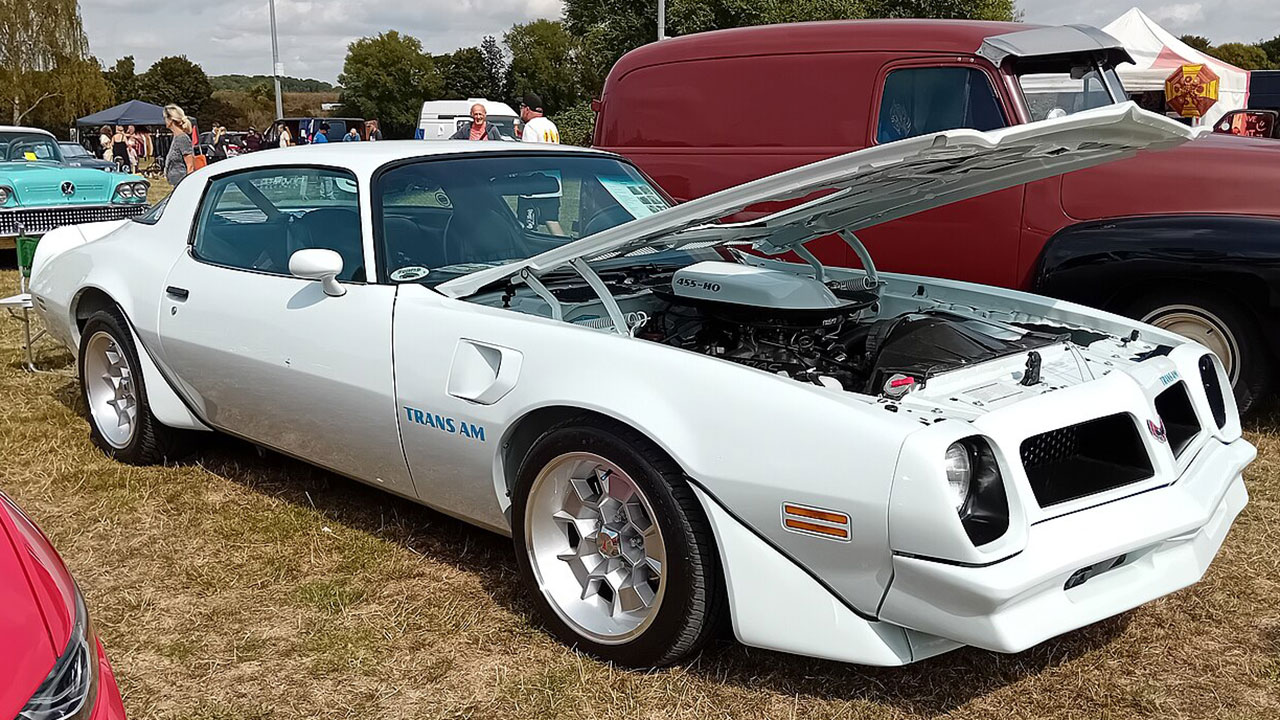
What made the 1976 Trans Am so important, in my view, is that it clung to displacement when others were downsizing or walking away. Under the hood, Trans Ams carried a standard 185 horsepower 400-cid V-8, a carryover from the previous year that reflected the new emissions reality but still delivered the low-end torque buyers expected. Crucially, Except in California, the big 455 V-8 remained available, giving enthusiasts one more shot at a factory 455 in a time when that figure was becoming a relic, and that combination of a 185 rating, a 400-cid base engine, and an optional 455 is documented in period coverage of the Trans Ams of that year.
That 455 option did more than pad a brochure. It represented the last stand of Pontiac’s traditional big-cube identity before corporate rationalization and emissions tech fully took over. Later retrospectives point out that Pontiac went defunct years after the brand’s glory days, when General Motors officially phased it out in the wake of the financial crisis, and that its last 455-cubic-inch V8 muscle offerings have since become surprisingly attainable on the collector market, a reminder that the final chapter of that engine family still resonates with buyers who want a link to the era when Pontiac went defunct and its legacy was folded into Pontiac went defunct and eventually GM corporate powertrains. When I look at the 1976 Trans Am, I see that optional 455 as the bridge between the wild late 1960s and the more constrained, corporate-engineered performance that followed.
Design that turned survival into pop culture
Power alone did not keep the 1976 Trans Am in the spotlight; its shape and graphics turned survival into spectacle. The second generation Firebird that underpinned it had been Introduced in 1970, and it was only available as a fastback coupe, a sleek profile that was Designed in tandem with the Chevrolet Camaro to share bones while still giving Pontiac its own identity. By 1976, that long-hood, short-deck silhouette had matured into a familiar sight, but the Trans Am treatment, layered on top of the base Firebird, gave it a more aggressive stance and a visual punch that still has mass appeal to this day, a lineage traced through the way the Introduced second generation Firebird evolved.
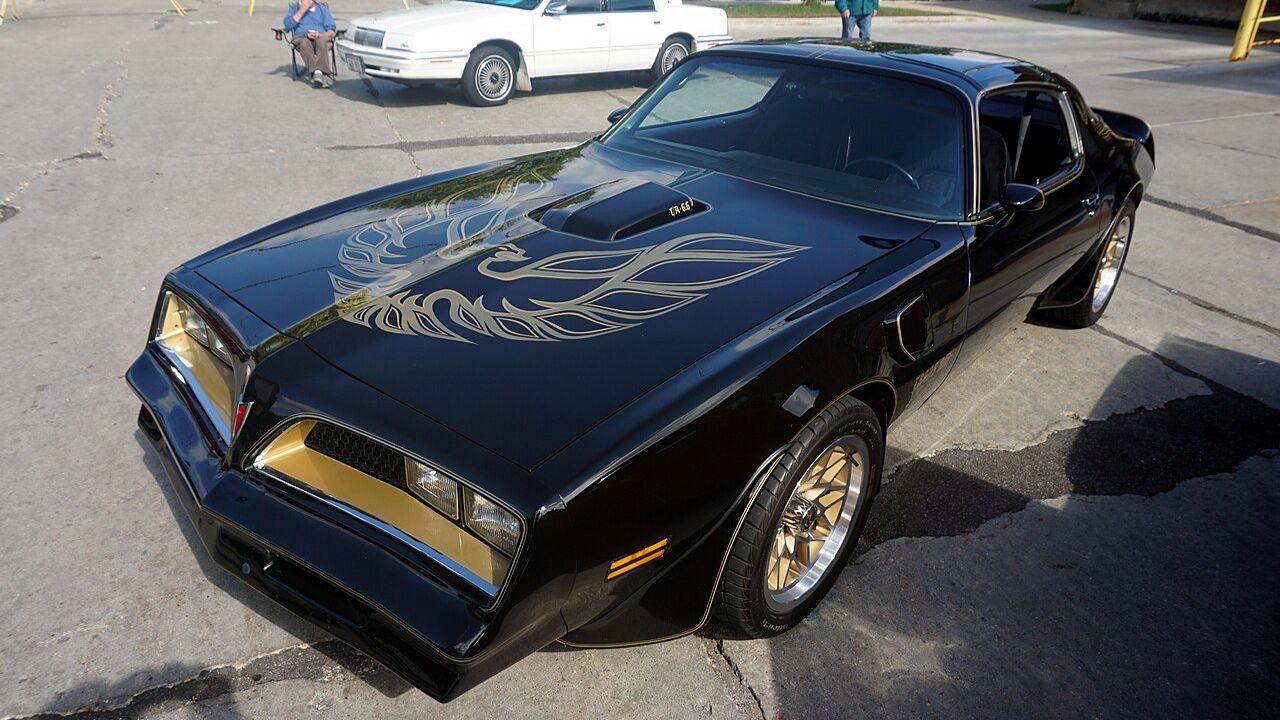
On top of that body, Pontiac layered one of the most recognizable graphics packages in muscle history. The Screaming Chicken Hood Decal, as it came to be known, was not standard, but According to Hagerty, it was a $55 option, which works out to $396 when adjusted for inflation, a modest upcharge that many buyers skipped at the time and later regretted when they realized how central that giant bird had become to the car’s identity. I see that choice as emblematic of the era: a relatively affordable way to turn a regulation-era performance car into a rolling billboard for attitude, and the fact that the According Hagerty valuation of that $55, now $396, option is still discussed today shows how much that decal helped the Trans Am transcend its spec sheet.
Rivals stumbled while the Trans Am leaned into its role
Part of why the 1976 Trans Am looms so large is that its main rivals were losing their way at the same time. In the broader pony car field, the Mustang lost its edge as it shrank and softened, the Camaro shrank as well, and both the Barracuda and Challenge nameplates disappeared from showrooms, leaving fewer traditional V8 coupes to carry the muscle banner. When I compare that attrition to the Trans Am’s persistence, I see a car that refused to abandon its large displacement V8 engines even as the Mustang, Camaro, Barracuda, and Challenge were either downsized or dropped.
Even outside the pony car niche, the Trans Am’s commitment to performance stood out. In 1976 the Dodge Charger Daytona sat at the top of the Charger and lineup and could be ordered with an optional 400 cubic inch engine, a configuration that kept some muscle flavor alive in a larger, more personal-luxury oriented package. That 400 figure underlined how mainstream performance had migrated into heavier cars, while the Trans Am stayed closer to its pony car roots, and when I watch period coverage of how the Mar era Dodge Charger Daytona with its 400 option is described, I am struck by how the Pontiac feels leaner and more focused by comparison.
Why that 1976 formula still matters today
Looking back from today, with Pontiac gone and its badge now a memory under the General Motors umbrella, the 1976 Trans Am reads like a blueprint for how to keep performance relevant under pressure. It accepted that emissions and safety rules were not going away, yet it still offered a 400-cid base engine, an optional 455, and a chassis that traced back to a time when pony cars were built to race as much as cruise. In my mind, that mix of compromise and defiance is what allowed the car to bridge the gap between the freewheeling late 1960s and the more regulated, efficiency-obsessed decades that followed.
The fact that enthusiasts still chase these cars, debate the merits of the 185 horsepower rating, and pay premiums for survivors with the Screaming Chicken Hood Decal tells me the 1976 Trans Am did more than survive a difficult year. It kept the idea of a loud, unapologetic American coupe alive long enough for later generations to rediscover it, and it did so at a time when the market, the regulators, and even some competitors were ready to move on. When I think about muscle staying relevant in the mid 1970s, I keep coming back to that car, its big engines, its fastback Firebird shell, and the way it turned a regulatory squeeze into a lasting piece of automotive culture.


Leave a Reply