
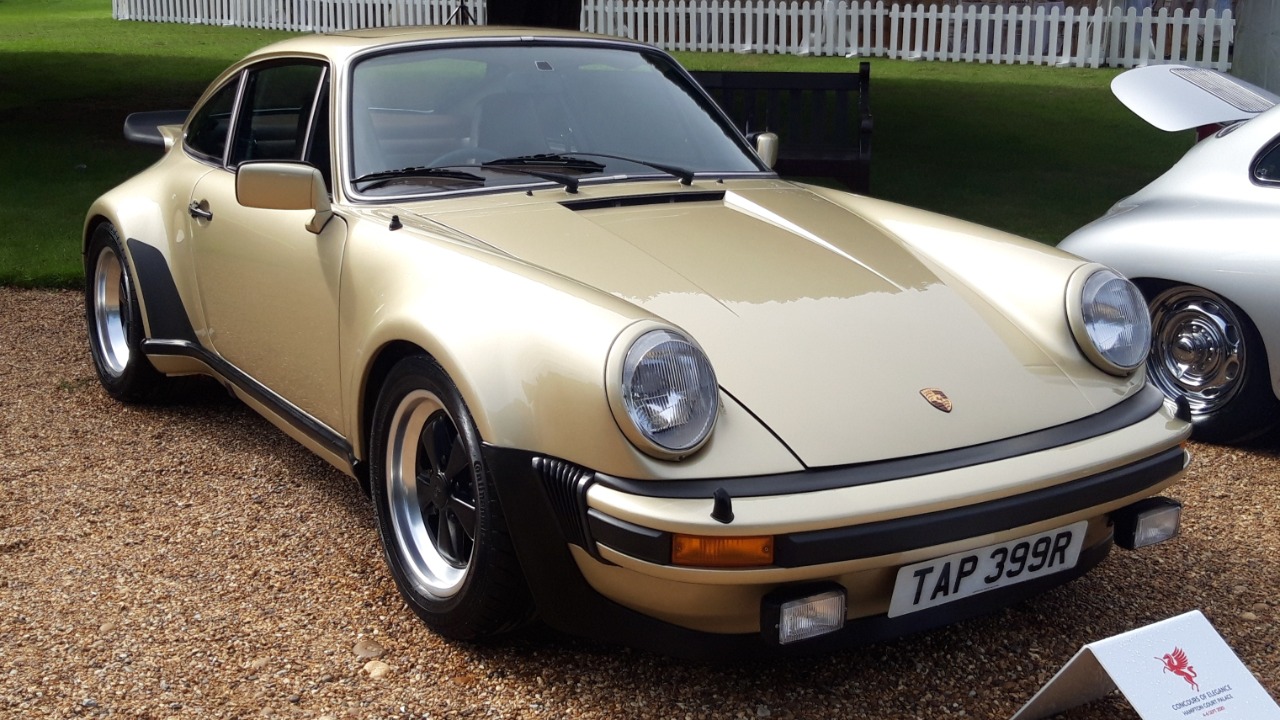
The 1977 Porsche 911 Turbo did not just add speed to an already quick sports car, it forced the entire idea of a road‑going performance machine to evolve. By pushing power, aerodynamics, and cooling to their limits, that early Turbo made you, the driver, confront what it really meant to control a supercar on public roads. In the process, it reshaped how the 911, the wider 930 family, and even rival brands would think about balancing raw pace with everyday usability.
When you look back at that era now, you can see how the 1977 car sits at a crossroads between old‑school, air‑cooled danger and the more sophisticated turbocharged performance you take for granted today. It is the moment when the 911 Turbo stopped being an experiment and started becoming a template, forcing engineers, regulators, and drivers to adapt to a new level of performance.
From wild experiment to Type 930 benchmark
If you trace the Turbo story from the beginning, you find a company using racing know‑how to turn a familiar silhouette into something far more volatile. The first production 911 Turbo 3.0 arrived as a bold extension of the 911 idea, and by the mid‑1970s it had already become clear that this car was not just another trim level but a different animal entirely. The factory itself grouped the early 911 Turbo 3.0 within the broader 911, 930 lineage, signaling that this was the start of a new branch on the family tree rather than a one‑off curiosity, and that decision framed how you still talk about these cars today.
Very quickly, the internal label caught up with the reality. Soon the official designation was changed to Type 930, and that name stuck through the rest of the first‑generation Turbo’s production run. By tying the car to the Type 930 identity, engineers and marketers locked in a narrative of escalating performance, from the original 3.0‑liter layout to later evolutions with the addition of the intercooler, and you can see how that structure still shapes how enthusiasts categorize early Turbos.
The 3.0‑liter punch and the “Widowmaker” reputation
What really forced evolution, though, was the way the early Turbo delivered its power. The 930 911 Turbo had a 260 horsepower engine that felt explosive once the boost arrived, and that figure, modest by modern supercar standards, was transformative in the mid‑1970s. Its advanced 3 liter turbo engine, paired with that iconic rear spoiler, set the performance benchmark that each subsequent generation of 911 would chase, and it did so with a power delivery that demanded real respect from you behind the wheel.
That combination of compact footprint, rear‑engine layout, and sudden torque surge is what fed the legend of the “Widowmaker.” In enthusiast circles, the 1977 Porsche 911 Turbo is often singled out as the moment when that nickname really stuck, a car that could feel benign one second and then snap into oversteer the next if you lifted mid‑corner. Later tributes, including a 1/43 scale 1977 Porsche 911 Turbo (The Widowmaker) Diecast by Minichamps, underline how deeply that reputation is baked into the story of the first‑generation 930 m cars, right down to the way collectors talk about that beautiful red color in miniature form as a symbol of danger and allure wrapped together in metal and plastic.
Charge‑air cooling and the 1977 turning point
By the time you reach 1977, the Turbo story is no longer just about raw power, it is about making that power survivable and repeatable. One of the key steps was the move to more sophisticated charge‑air management, which reduced intake temperatures and made the engine more resistant to detonation. The company itself later highlighted 1977 as the moment when Charge‑air cooling became a defining innovation for the 911 line, describing it as One of the secrets to the success of the 911 series and tying it to a philosophy in which Each model year brought systematic, incremental improvements rather than occasional revolutions.
That approach matters because it shows you how the 1977 Turbo sits at the intersection of brute force and careful engineering. By improving the way compressed air was cooled before entering the cylinders, the engineers could push boost pressure while keeping combustion stable, which meant you could use more of the car’s performance more of the time. The official account of Charge air cooling in the 911 emphasizes how this change helped ensure that the fuel‑air mixture would not ignite prematurely, and that detail is crucial to understanding why the Turbo could keep evolving without simply becoming undriveable.
From racetrack tech to road‑car philosophy
When you step back, the 1977 Turbo is part of a broader shift in how forced induction was used on road cars. Earlier, turbochargers were mostly a racing tool, a way to squeeze more power out of limited displacement for short bursts. What changed in this period was the decision to bring that technology to customers who wanted both speed and some level of comfort. Company retrospectives on the Legacy of Turbo make it clear that What made Turbo technology revolutionary was not just peak output, but the way it could be tuned for a broader, more flexible powerband and a smoother power curve that you could actually live with on the street.
That philosophy is visible in how the 911 Turbo 3.0 (type 930) from 1974 to 1977 is described in official histories. The car is framed as a bridge between pure motorsport hardware and a more rounded sports car icon, with the 911 Turbo 3.0 (type 930) presented as the first chapter in a story that would later include larger engines, better brakes, and more refined suspension tuning. In those accounts, the early 911, 930 cars are not just fast, they are portrayed as the moment when the brand committed to making Turbo a core part of its identity, and that commitment is what you still feel every time a modern 911 Turbo blends huge performance with everyday drivability.
How the 1977 Turbo reshaped the 911’s future
The real legacy of the 1977 car lies in how it forced the rest of the 911 range to catch up. Once you had a road‑legal 911 Turbo 3.0 that could out‑accelerate most exotic machinery of its day, everything from chassis tuning to braking had to evolve. Official model histories of the 911 Turbo 3.0 (type 930) from 1974 to 1977 emphasize that as impressive as the stats were, the car also highlighted the need for very good brakes and more robust driveline components, and those lessons fed directly into later 911 Turbo 3.3 updates and beyond. In that sense, the early Turbo acted as a stress test for the entire platform, revealing where the classic 911 layout needed reinforcement.
You can see the ripple effects in how the 911 Turbo is positioned in broader brand storytelling. In a concise overview of the 911 Turbo 3.0 (type 930) from 1974 to 1977, the company folds the car into a longer narrative that runs through the 911 Turbo 3.3 and later generations, treating the original as the starting point for a continuous line of development. That same perspective appears in a wider brief history of the Turbo, where the early 911, 930 cars are credited with establishing the template that later models would refine, from aerodynamics to braking systems designed specifically for high‑speed stability.
More from Fast Lane Only

Leave a Reply