
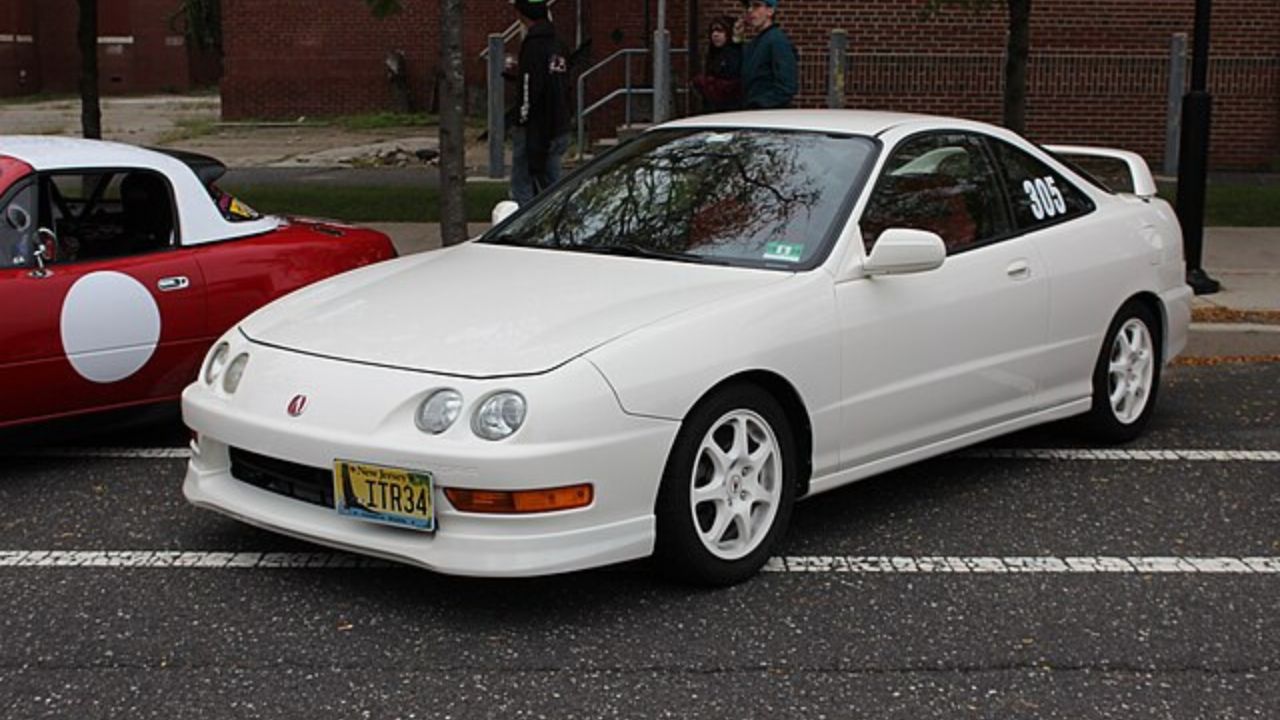
The 1994 model year marked a turning point for Acura’s compact coupe, but the real revolution arrived shortly after, when the Integra Type R took that new platform and pushed it into territory few front‑drive cars had ever reached. You see the impact today every time enthusiasts talk about balance, precision and high‑revving engines as the true measure of a driver’s car. By tracing how the 1994 Acura Integra set the stage, and how the Type R that followed reset expectations, you can understand why this lightweight coupe still shapes what you look for in a performance car.
Instead of focusing on nostalgia alone, you can treat the Integra story as a blueprint. The third‑generation chassis that appeared for 1994 gave Acura a clean canvas, and the Type R that followed in the mid‑1990s showed how far that canvas could be stretched without losing everyday usability. That combination of practicality and razor‑sharp focus is what quietly raised the bar for every hot hatch and sport compact that came after it.
The 1994 Integra lays the groundwork
When you look back at the 1994 Acura Integra, you are really looking at the foundation that made the later Type R possible. The third‑generation car arrived with a new body and an unusual four‑headlight front end that enthusiasts quickly nicknamed “bug eyes,” a design quirk that helped the coupe stand out in traffic while still serving as an easy daily driver for commuters who wanted something more engaging than a typical sedan. In North America, this generation carried the Acura Integra badge, while the same basic car was sold elsewhere under a different name, which is why you often see it discussed in two parallel threads among fans of Japanese performance cars.
Underneath that styling, the engineering team treated the 1994 platform as a serious step forward rather than a mild refresh. The chassis was stiffer, the suspension geometry was tuned for sharper response, and the car’s compact footprint kept weight in check so you could feel every adjustment you made through the steering wheel. That balance between comfort and control is what allowed Acura to market the Integra as both a practical commuter and a legitimate enthusiast choice, setting the stage for a more focused variant to build on the same bones without needing a clean‑sheet redesign.
From Integra to Honda Integra Type R
To understand how the bar really moved, you need to zoom out from the Acura badge and look at the broader family tree. The Honda Integra, known in Japanese as ホンダ インテグラ and written in Hepburn as Honda Integura, was the global template, sold in North America as the Acura Integra and in other markets under the original Honda name. That dual identity meant the same basic coupe could be tuned and positioned differently depending on where you lived, which is why the most hardcore version first appeared in Japan before you ever saw a Type R emblem on a North American dealer lot.
In Japan, the manufacturer had already experimented with a purist formula on the NSX, and the performance sub‑brand that grew from that experiment would soon reshape the Integra. The first NSX Type R showed how stripping weight, tightening suspension tuning and sharpening throttle response could transform an already capable car into something track ready, and that philosophy carried directly into the Integra project. When you read about The Honda Integra, you are really seeing the backbone that allowed engineers to spin off one of the most celebrated front‑wheel‑drive performance cars of all time without abandoning the everyday usability that made the base model so popular.
The Type R formula arrives in Japan
The leap from solid sport compact to benchmark came when Honda applied its emerging performance philosophy to the Integra platform. The Type R line itself grew out of a simple idea: take an already capable chassis and refine it with obsessive attention to weight, rigidity and engine response. Within that family, the NSX Type R set the tone, and the Integra Type R became the next chapter, with the development work organized into what enthusiasts now recognize as 2.1, 2.2 and 2.3 phases that distinguish the DC2 Integra Type R, the US Integra Type R and the DC2 Type R weight comparison. Those internal distinctions might sound like trivia, but they reflect how carefully the engineers chased incremental gains in stiffness, balance and power delivery.
In Japan, the breakthrough came when The Honda Integra Type R on the DC2 chassis debuted for the local market as the second Type R model after the NSX‑R, taking the lessons learned from the mid‑engine halo car and applying them to a front‑drive coupe. That car arrived with a high‑revving engine, a seam‑welded body, shorter gearing and a stripped‑back interior that prioritized feel over frills, all wrapped in a package that still traced its roots to the 1994 Acura Integra you might have seen in a suburban parking lot. By the time the DC2 program wrapped up and the DC5 took over, the Honda Integra Type had already cemented its reputation among drivers who valued precision more than outright horsepower.
How the Acura Integra Type R changed expectations
When the Type R formula finally crossed the Pacific and appeared in North American showrooms as the Acura Integra Type R, you were looking at a car that had already been honed on Japanese roads and circuits. In those overseas markets, Honda sold the car as the Honda Integra Type R, while in the United States and Canada it wore Acura badges, a split identity that sometimes confuses casual observers but makes perfect sense once you understand the brand strategy. The Acura Integra Type R’s basic layout, with a naturally aspirated four‑cylinder engine, close‑ratio manual gearbox and front‑wheel drive, did not sound radical on paper, yet the execution was so focused that it quickly earned a reputation as one of the sharpest driver’s cars you could buy.
That reputation has only grown as the car has aged. Enthusiasts now routinely describe The Acura Integra Type R as one of the best front‑wheel‑drive performance cars ever offered to North American buyers, a judgment that reflects how well its high‑revving engine, limited‑slip differential and lightweight body work together when you push it on a back road. When you see collectors paying serious money for clean examples, you are watching that respect translate into real‑world value, and it all traces back to the way Acura Integra Type distilled the lessons of the Japanese market car into a package tailored for your roads and fuel.
Legacy, values and the bar it set for you
If you want proof that the Integra Type R raised expectations, you only need to look at how it is valued today. Collectors have pushed auction prices into territory that would have seemed absurd when these cars were simply used sport compacts, with one Acura Integra Type R recently selling for around two hundred thousand dollars, a figure more commonly associated with modern exotics than with a 1990s front‑drive coupe. That kind of result reflects more than nostalgia, it shows how deeply the car’s reputation as one of the best‑handling front‑wheel‑drive cars of all time has taken hold among people who care about driving feel more than straight‑line numbers.
Part of that mystique comes from the broader Type R lineage, which began when the Type R badge was introduced on the NSX and then expanded to include the Integra Type R, with production of the Integra Type R limited enough that clean examples now feel genuinely rare. When you read about how Type R models were engineered with lighter components, stiffer bodies and more focused powertrains, you can see why the Integra variant in particular has become a benchmark. For you as a modern enthusiast, that legacy sets a clear standard: a truly great performance car does not just chase horsepower, it blends usability, feedback and precision so completely that, decades later, drivers are still willing to pay a premium for the chance to experience it.
More from Fast Lane Only


Leave a Reply