
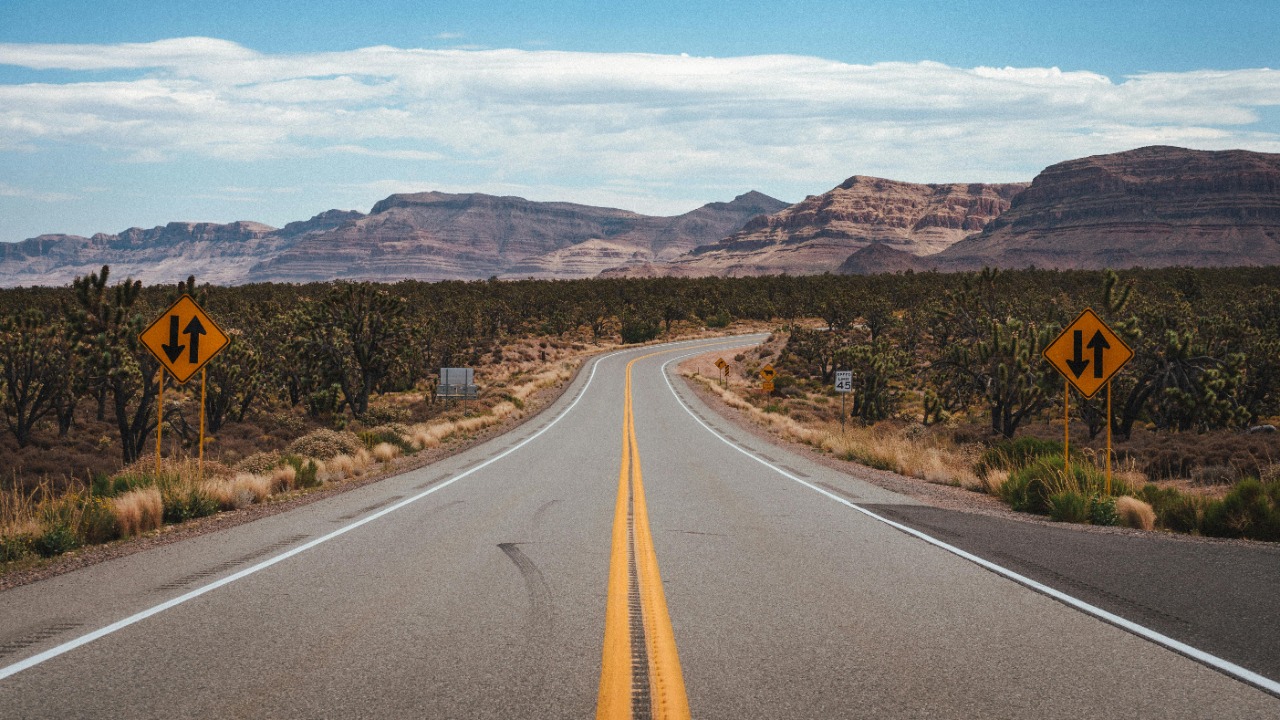
Some stretches of American highway are so unforgiving that even veteran truckers grip the wheel a little tighter when they see the signs. The fear is not superstition, it grows out of a mix of design flaws, high speeds, and human behavior that turns routine drives into high‑stakes calculations. When I look at these roads, I see a pattern that explains why certain routes unsettle even experts while others feel almost relaxing.
When design bakes danger into the pavement
Every driver knows the feeling of a road that just “doesn’t feel right,” and that instinct is usually picking up on design choices that leave very little room for error. Tight curves that arrive without much warning, short merge lanes that force last‑second decisions, and exits that peel off from the left lane all ask more of a driver than a straight, well‑marked stretch of asphalt. On some of the most notorious American routes, those quirks are stacked together, so a momentary lapse in attention can cascade into a pileup that even a seasoned driver cannot avoid.
The problem gets worse when those tricky layouts are paired with high posted speeds and poor visibility. When speed limits remain high through complex interchanges or over aging bridges, drivers have less time to react to sudden braking or a car drifting across faded lane markings. Add weak lighting, confusing signage, or guardrails that sit too close to fast‑moving traffic, and the margin for survival shrinks even further. Some stretches of American asphalt combine high limits with gaps in road design and lighting, which is exactly the recipe that turns an ordinary commute into something that rattles even confident drivers.
How speed and psychology collide in the fast lane

Even on a perfectly engineered highway, speed changes the emotional temperature inside the car. Once traffic flows above 70 miles per hour, small misjudgments start to feel like near misses, and the human brain is not great at processing closing distances at that pace. I notice it in myself when a car appears in my blind spot faster than I expect, or when a lane change that would feel casual at 45 suddenly feels like threading a needle. On roads where the design already demands quick decisions, high speeds amplify every twitch of the steering wheel.
That tension feeds into a second, quieter force: the way drivers respond to feeling unsafe. When people are anxious, they either overcompensate by slowing down too much or they try to “get it over with” by speeding past the danger, and both reactions can destabilize traffic. On intimidating stretches, you often see a mix of hesitant drivers hugging the right lane and aggressive ones weaving through gaps, each group reacting to the same stress in opposite ways. The result is a rolling mismatch of speeds and expectations that makes crashes more likely, especially where the road already has limited sightlines or awkward merges that demand split‑second judgment.
Why economics keep risky roads in heavy rotation
For all the talk about personal responsibility, the vehicles and infrastructure we rely on are shaped by money as much as by safety. A family choosing between a used compact car without modern crash‑avoidance tech and a newer SUV with automatic emergency braking is not just making a lifestyle call, it is navigating a budget. Economic considerations, such as the affordability of vehicles with advanced safety features, have led to a trade‑off where a large share of drivers are still in older cars that lack lane‑keeping assistance, blind‑spot monitoring, or adaptive cruise control. On the most demanding highways, that gap in equipment can be the difference between a close call and a fatal collision.
The same financial logic plays out at the state and local level, where transportation departments juggle limited funds across miles of aging pavement. It is cheaper in the short term to repave a surface than to redesign an interchange, lengthen an on‑ramp, or add lighting along a rural stretch that already has a grim reputation. That is how some of the most intimidating corridors stay frozen in time, even as traffic volumes and vehicle speeds climb. When budgets are tight, officials may postpone upgrades that would tame dangerous curves or widen shoulders, and the people who pay the price are the drivers who face those hazards daily. The trade‑offs are stark enough that some legal analysts explicitly link economic pressures to the persistence of risky road conditions and to behaviors like using phones while driving, which only compound the danger.
The human factor that turns bad roads into worst‑case scenarios
Even the most treacherous highway would be less frightening if every driver treated it like a shared responsibility instead of a personal obstacle course. In reality, the same corridors that are structurally unforgiving also tend to attract the kind of behavior that magnifies risk. Long, monotonous stretches invite distraction, so people glance at texts, scroll through playlists, or tweak navigation apps just as they approach a narrowing lane or a surprise construction zone. On roads that already leave little room for error, that moment of inattention is often all it takes.
Fatigue and impatience add another layer. Professional drivers who log hundreds of miles a day may know every bend by heart, but they are also more likely to be pushing through drowsiness or tight delivery windows. Commuters stuck in daily congestion on a notorious route may grow numb to the danger and start tailgating or darting between lanes to shave a few minutes off the trip. I have watched that cycle play out on countless drives: the more familiar a hazardous road becomes, the more people treat its risks as background noise, until a sudden brake light or a slick patch of pavement snaps everyone back to reality in the worst possible way.
What it would take to make intimidating highways feel ordinary
When I talk to traffic engineers and safety advocates, a common theme emerges: none of this is inevitable. The same design choices that make certain highways unnerving can be reversed, and the same economic forces that have kept them frozen can be redirected. Lengthening merge lanes, smoothing out sharp curves, improving lighting, and adding clearer lane markings are not glamorous projects, but they are exactly the kind of tweaks that turn a white‑knuckle stretch into a routine drive. On the vehicle side, policies that nudge more drivers into cars with modern safety tech, from tax incentives to stricter standards for fleet vehicles, can quietly raise the baseline of protection on the most demanding routes.
Culture matters too. When a road earns a reputation as a place where “everyone speeds” or “you just have to be aggressive,” that story becomes a self‑fulfilling prophecy. Shifting that narrative means treating those corridors less like unavoidable gauntlets and more like shared spaces that deserve respect. I find that mindset changes my own behavior: I leave more following distance, I put the phone out of reach, and I give myself extra time so I am not tempted to rush through the parts that make my shoulders tense. If enough of us, from individual drivers to policymakers, approach these unsettling highways with that mix of humility and intention, the roads that terrify even experienced drivers could start to feel a lot more ordinary, and a lot less deadly.

Leave a Reply