Jeff Gordon has every reason to distrust NASCAR’s postseason experiments, yet he has emerged as one of the most prominent voices welcoming the sport’s return to a Chase-style championship. The same format once cost him a title at the height of his powers, but he now argues that the updated version finally balances drama with fairness. His support reflects not only personal evolution, but also how the series has tried to learn from the scars of 2007 without abandoning the spectacle that modern fans and television partners demand.
As NASCAR restores a Chase framework for 2026 and beyond, Gordon’s endorsement carries unusual weight. He was in the room when the concept was first pitched, he lived through its harshest consequences, and he has watched the playoff system morph into a one-race showdown that many competitors quietly resent. His backing signals that the latest reset, with its emphasis on cumulative performance and elevated rewards for winning, may have found the middle ground the sport has chased for more than two decades.
From early skeptic to measured supporter
Gordon’s relationship with the Chase began long before the first playoff green flag, when Brian France privately outlined the idea to him in 2003. At the time, Gordon’s instinct was to test the concept against history, yet he quickly realized that trying to retrofit old points tables into a new structure was a fool’s errand. He later explained that it made little sense to “go back and look at accumulating points under the old system with the new system,” because the strategy, risk tolerance, and even how teams approached different tracks would all change once a postseason existed at all.
That early conversation framed Gordon as a cautious realist rather than a cheerleader. He understood that a playoff would reward aggression and reset the competitive calendar, but he also grasped that any comparison to the traditional full-season grind would be inherently flawed. His willingness to engage with France’s proposal, even while acknowledging its limitations, set the tone for how he has approached every subsequent format change: skeptical of nostalgia-based arguments, focused instead on how drivers and teams will actually race under the rules in front of them.
The 2007 heartbreak that defined the debate
If Gordon had reason to be wary in theory, 2007 gave him a brutal case study in practice. That season, he and crew chief Steve Letarte assembled one of the most statistically dominant campaigns in modern NASCAR history, piling up 21 top-five finishes and a record 30 top-10s. Under the old full-season system, such relentless consistency would have made the championship a formality, yet the Chase reset compressed his advantage and left him vulnerable over the final 10 races.
Letarte has revisited that year as NASCAR circles back to a Chase format, pointing to how the title slipped away despite Gordon’s overwhelming body of work. When the last 10 events began, the points were bunched, and a few key results swung the balance against the No. 24. The experience hardened the perception that the Chase could punish excellence in favor of short-term volatility, a perception that has lingered in fan debates ever since. For Gordon, the sting of losing a championship after such a season became the emotional backdrop for every later conversation about how the sport should crown its champion.
Why he still backs the new Chase
Against that history, Gordon’s recent comments on the revived format are striking. Speaking on “Hauler Talk” after hearing that NASCAR would bring back The Chase name and structure, he said he “really like[s] where you guys landed” with the updated rules. He acknowledged that he had been burned by the system multiple times, yet he framed the new version as a better blend of merit and excitement, suggesting that the balance of risk and reward now aligns more closely with what competitors have been asking for.
Central to his support is the way the modern Chase emphasizes winning without completely discarding season-long consistency. NASCAR has announced that it is returning to the championship framework it used when it first adopted a postseason model, with The Chase name restored and a series of tweaks layered on top. The latest structure still creates a defined playoff window, but it also places heavier points value on victories, which Gordon and others see as a more honest reflection of what a champion should do: seize races rather than simply manage them.
Letarte’s warning and the new win calculus
Letarte, who once watched Gordon lose a title despite that avalanche of top-10s, has become one of the clearest interpreters of what the new Chase will demand. He has stressed that the revised format’s high points value for wins makes multiple Chase victories essential, arguing that “there is no way, in my opinion,” to contend for the championship without stacking trophies in the postseason. In his view, the days of riding consistent top-five finishes to a title are effectively over, particularly once the field is reset for the final stretch.
That warning is not a criticism so much as a blueprint. Letarte’s analysis suggests that teams will have to treat the Chase races as a separate, more aggressive season, with strategy calls tilted toward stage wins, late-race gambles, and track-position plays that might have seemed reckless under the old full-year grind. For Gordon, who built his legacy on both speed and calculation, the idea that the champion must now win repeatedly in the spotlight months may feel like a fair trade for the heartbreak of 2007, when consistency alone proved insufficient.
NASCAR’s broader playoff evolution
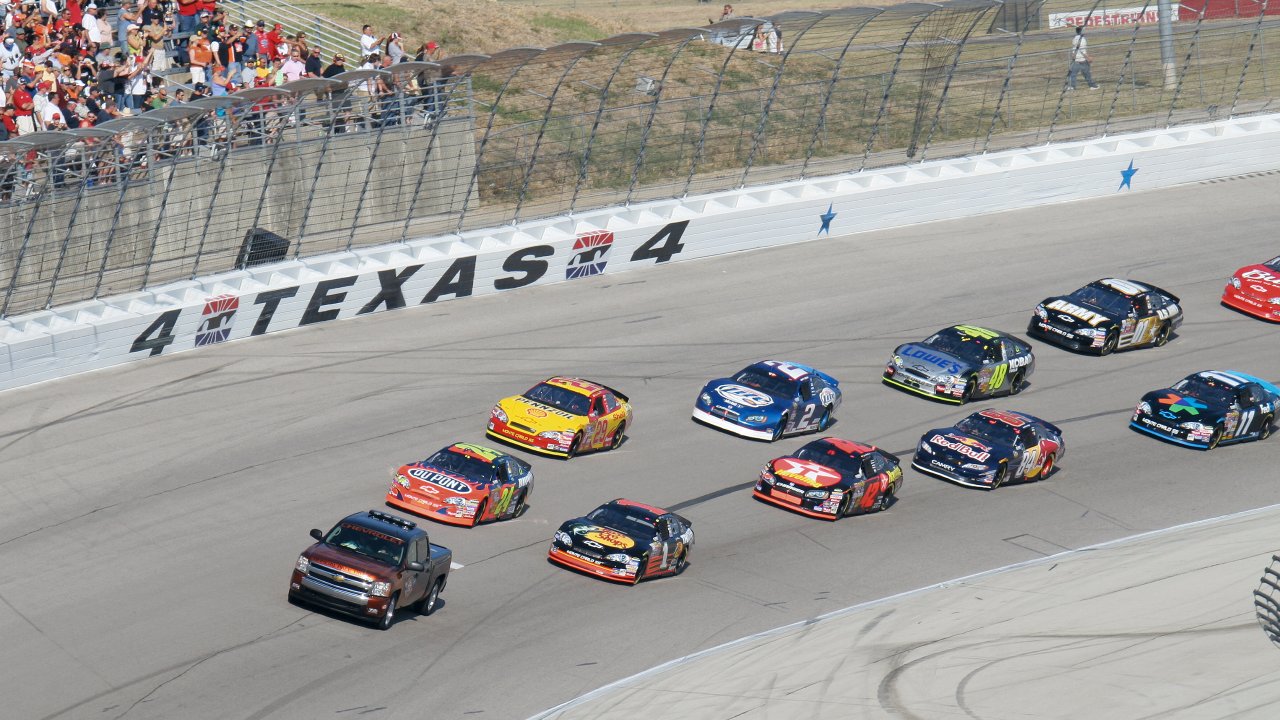
Gordon’s endorsement also reflects how far NASCAR’s playoff thinking has shifted since the first Chase. Over time, the series moved from a simple points reset to an elimination-style bracket that culminated in a one-race championship finale. That format delivered undeniable drama, but it also concentrated the entire season’s work into a single afternoon, a structure that some competitors and fans felt was too dependent on luck, late cautions, or one mechanical failure. Recent analysis of the latest changes has noted that, despite the rhetoric of a major overhaul, NASCAR has not actually altered the playoffs as radically as it might appear, instead refining the existing model to make it more entertaining without discarding its core.
Critics have argued that the one-race championship, while thrilling, can distort the notion of a deserving champion, especially when a driver dominates the first nine playoff events only to be undone by a fluke in the finale. Commentators have observed that NASCAR clearly wants more drama and has achieved that with the winner-take-all race, yet they have also suggested that fans should consider alternatives, such as counting performance across all 10 playoff races rather than hinging everything on one. The new Chase, with its restored branding and adjusted points incentives, appears to be NASCAR’s attempt to answer those concerns without abandoning the postseason concept that has become central to its identity.
More from Fast Lane Only