
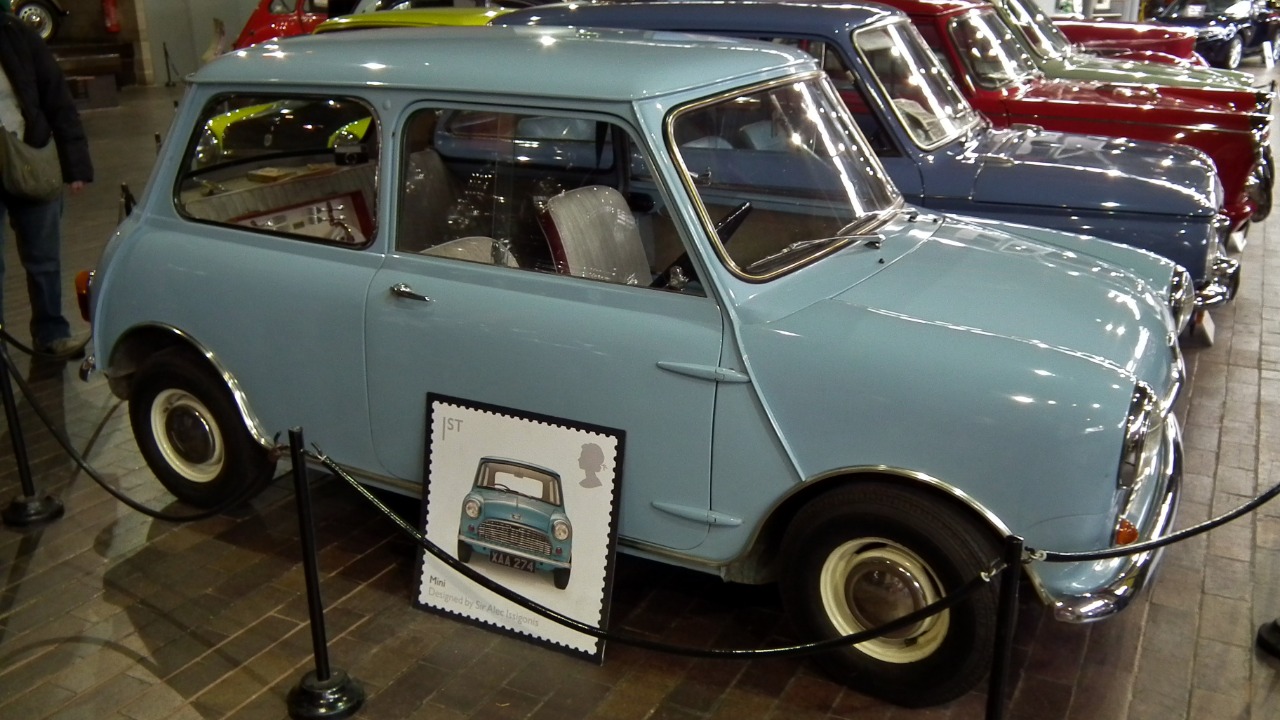
You can trace a straight line from the cramped, fuel conscious streets of postwar Britain to the moment the 1959 Austin Mini Seven rolled into view and quietly rewrote the rules of small car design. Instead of shrinking a conventional saloon, it treated space, fuel and cost as a puzzle to be solved from scratch. That is why the first Mini did not just launch a new model, it overturned the assumptions that had shaped family cars for decades.
To see how radical that was, you need to look at the pressures that shaped it, the engineering tricks that made it work and the way drivers have lived with those choices ever since. When you do, you start to understand why this tiny Austin still feels modern, even as you compare it with today’s city cars and crossovers.
The fuel crisis that forced a rethink
You live in a world where small, efficient cars are a given, but in the mid 1950s that was not the case in Britain. After the Suez crisis, British access to fuel and oil tightened sharply and Petrol rationing returned, making thirsty, full size saloons look like a liability rather than a status symbol. That squeeze created a clear brief for a new kind of car, one that could carry a family while using as little fuel and road space as possible.
Inside the British Motor Corporation, that pressure landed on the desk of its president. In the mid 1950s the president of BMC, Leonard Lord, asked his chief designer, Alec Issigonis, to create a compact model that could answer that national problem. You can think of the Austin Mini Seven as the direct result of that commission, a car built to turn scarce Petrol into maximum everyday usefulness rather than weekend performance.
Alec Issigonis and a clean sheet of paper
If you are used to modern front wheel drive hatchbacks, it is easy to forget how unconventional the Mini’s layout was in 1959. Instead of a long bonnet and a separate gearbox, Alec Issigonis decided the solution was to mount the engine transversely and stack the gearbox in the same casing, driving the front wheels through shared gears. He had studied that idea even before his time at Alvi, and now he used it to free up precious cabin length without stretching the car’s footprint.
That packaging choice let the Mini devote most of its length to people rather than machinery. Inside the 1959 Morris Mini Minor interior, a cross section shows how the compact drivetrain and tiny wheels pushed to the corners maximise passenger space. The Mini came about because of a fuel shortage, but Issigonis turned that constraint into a chance to rethink how a small car should be laid out, using an existing engine in a radically different way.
Clever packaging that shrank the outside, not the inside
When you park an original Austin Mini Seven next to a modern hatchback, what stands out is how little metal there is beyond the cabin. The Mark I version reduced the overall width because there was no need to fit a separate gearbox across the car, a change that, as the Mini (Mark I) layout makes clear, represents some very clever packaging. You get four usable seats and a boot in a footprint that barely covers a modern parking bay.
That efficiency was not just about comfort, it was about engineering discipline. Later assessments of the classic Mini describe Engineering qualities of the highest calibre, with the compact suspension and drivetrain working together to give outstanding handling while still leaving room for the passengers and their luggage. You feel that when you drive one today, the car seems to pivot around you, a direct result of Issigonis treating every millimetre of width and length as something to be justified.
How it felt on the road in 1959
For all the clever theory, you judge a car by how it drives, and early testers quickly realised the Mini behaved very differently from the tall, narrow saloons it was replacing. Period road tests of the 1959 Morris Mini Minor noted that Some other rattles were also detected in the bodywork, a reminder that this was a budget car built quickly, but they also stressed that Maintenance would not be too troublesome and that threading through congested cities was an easy matter. You can read those comments today and recognise the template for the modern urban runabout.
Later retrospectives underline how those early impressions were rooted in solid engineering rather than novelty. Over the decades, assessments of the classic Engineering behind the Mini have highlighted its technically superior suspension and steering, which gave it a stability and agility that drivers of the time were not used to in such a small package. When you turn into a corner in an Austin Mini Seven, you are feeling the same priorities that shaped its launch, a focus on control and usability rather than straight line speed.
Design quirks, flaws and the reality of living with one
Of course, breaking conventions came with trade offs that you still have to manage if you own an early Mini today. Owners talk about how the steel was prone to rusting and how the original suspension cones were not as Issigonis intended, details that later analyses of the Original Design list as built in flaws. The same compact packaging that made the car so agile also left little room for corrosion protection or easy suspension upgrades.
When you read modern owners describing their cars, you see how those compromises show up in the metal. One enthusiast writes that Mine is not bad, but it has the beginnings of serious rust in the usual Mini spots, such as the front wing join to the windscreen scuttle, before adding that it is still a proper Mini. That mix of affection and frustration is part of the car’s legacy, a reminder that Issigonis pushed the structure hard to achieve his goals and that you, as a custodian, inherit both the brilliance and the weak points.
More from Fast Lane Only


Leave a Reply