
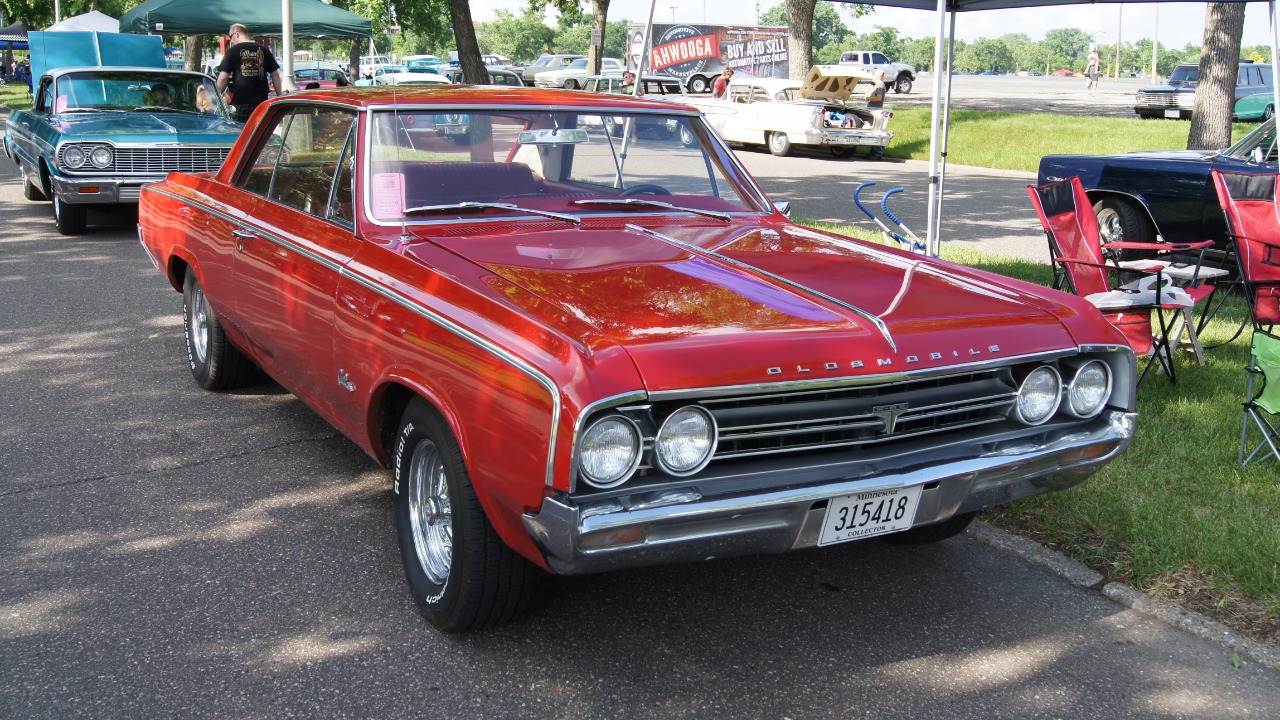
The 1964 Oldsmobile Cutlass did more than update a popular nameplate. It crystallized a formula that would guide American performance cars for decades: intermediate size, real power, and everyday comfort wrapped in clean, confident styling. When you look closely at how that car was engineered, marketed, and remembered, you can see the blueprint that later muscle machines quietly followed.
If you are drawn to cars that can haul the family, cruise comfortably, and still light up a back road, you are chasing the same balance Oldsmobile locked in with the Cutlass in 1964. That mix of practicality and punch, refined structure and raw torque, is why enthusiasts still treat this model year as a turning point rather than just another early‑sixties redesign.
The moment Oldsmobile found the sweet spot
By the time the Cutlass name reached 1964, Oldsmobile had already spent a few years learning what buyers wanted from a smaller car. The Cutlass, first introduced in 1961, quickly became a symbol of Oldsmobile’s push toward performance, style, and innovation in a more manageable footprint. By 1964, that evolution had carried the car from compact roots toward a true intermediate, giving you more space and presence without the bulk of a full‑size sedan.
That shift mattered because it let Oldsmobile position the car between bare‑bones economy models and the brand’s big luxury cruisers. Contemporary descriptions of the 1964 Oldsmobile Cutlass describe it as bridging the gap between full‑sized opulence and compact agility, setting a benchmark for what a mid‑size American car could be. That benchmark, rooted in careful research into how people actually used their cars, is what later muscle machines and family coupes kept chasing.
Structure and comfort that made power usable
What really set the 1964 Cutlass apart was how seriously Oldsmobile treated structure and ride quality. Instead of simply stiffening springs and calling it a day, engineers isolated the body from the frame with a series of carefully tuned mounts. Period testing notes that Seven soft butyl‑rubber body mounts on each side, 14 per car, allowed the frame to absorb twist and vibration before it reached the cabin. That kind of attention to isolation meant you could enjoy serious performance without feeling punished on rough pavement.
Road tests of the 1964 Oldsmobile Cutlass Holiday coupe highlighted how this structure translated into real‑world composure at speed. The detailed expo and test material shows how the chassis tuning, steering feel, and braking balance worked together so the car felt secure rather than skittish when you pushed it. That blend of quietness, stability, and control is what later performance sedans and personal coupes tried to replicate, proving that the template was not just about horsepower but about making that power approachable for everyday drivers.
The 330 V8 and the birth of accessible muscle
Under the hood, 1964 is the year the Cutlass finally got the kind of engine that matched its ambitions. For the first time, Oldsmobile offered a dedicated V8 option for the model, the 330 cubic inch unit marketed as the Jetfire Rocket. That 330 gave the car the kind of mid‑range torque that let you merge, pass, and climb with ease, while still keeping fuel and maintenance demands within reach for a typical family buyer.
Enthusiasts today still point to this combination of size and power as the moment the Cutlass stepped into true performance territory. Owners of closely related models, like a 1965 Oldsmobile Cutlass F‑85, describe how the car feels eager yet civilized in everyday driving, a balance that traces directly back to the 1964 package and its F‑85 roots. When you look at later American muscle cars that tried to be both quick and livable, you are essentially seeing variations on the formula that this 330 V8 Cutlass proved could sell.
How the 4-4-2 turned a smart car into a legend
If the standard 1964 Cutlass set the stage, the 4‑4‑2 package turned it into a cultural touchstone. Early that year, Oldsmobile rolled out a performance‑oriented version of the F‑85 and Cutlass, with the name 4‑4‑2 standing for a four‑barrel carburetor, a four‑speed manual transmission, and dual exhausts. The Four in the badge was not marketing fluff, it was a coded spec sheet that told you exactly what kind of hardware you were getting.
Oldsmobile leaned into that hardware with confident advertising that promised “police car performance” to everyday buyers. Period discussion of the 1964 advertising shows how the brand pitched the car as capable of serious duty while still being a stylish personal ride. Later enthusiasts would look back on that first‑year 4‑4‑2 as the start of a lineage that kept evolving, with the package originally introduced in 1964 as a performance option for the F‑85 and Cutlass and the name 442 itself, with its 442 digits, becoming shorthand for serious Oldsmobile muscle.
A template that shaped the Cutlass story for decades
Once Oldsmobile proved that a mid‑size car with real power and comfort could succeed, the Cutlass nameplate followed that path for generations. Enthusiast histories of the Oldsmobile Cutlass trace eight distinct generations, from early concepts in the 1950s through the 1961 compact, the 1964 intermediate, and later evolutions in 1968, 1973, 1978, and beyond. Each step built on the idea that you deserved a car that felt upscale without being unwieldy, and quick without being temperamental.
By the late 1980s, that philosophy had turned the Cutlass into one of the most familiar names on American roads. Coverage of a 1988 Oldsmobile Cutlass Sup highlights how buyers had a dizzying variety of models to choose from, yet none matched the success of the core Cutlass line. That breadth of trims and body styles, from basic coupes to loaded Supremes, only made sense because the 1964 car had already proven that the underlying package could satisfy drivers who wanted both comfort and excitement in the same driveway.
More from Fast Lane Only



Leave a Reply