
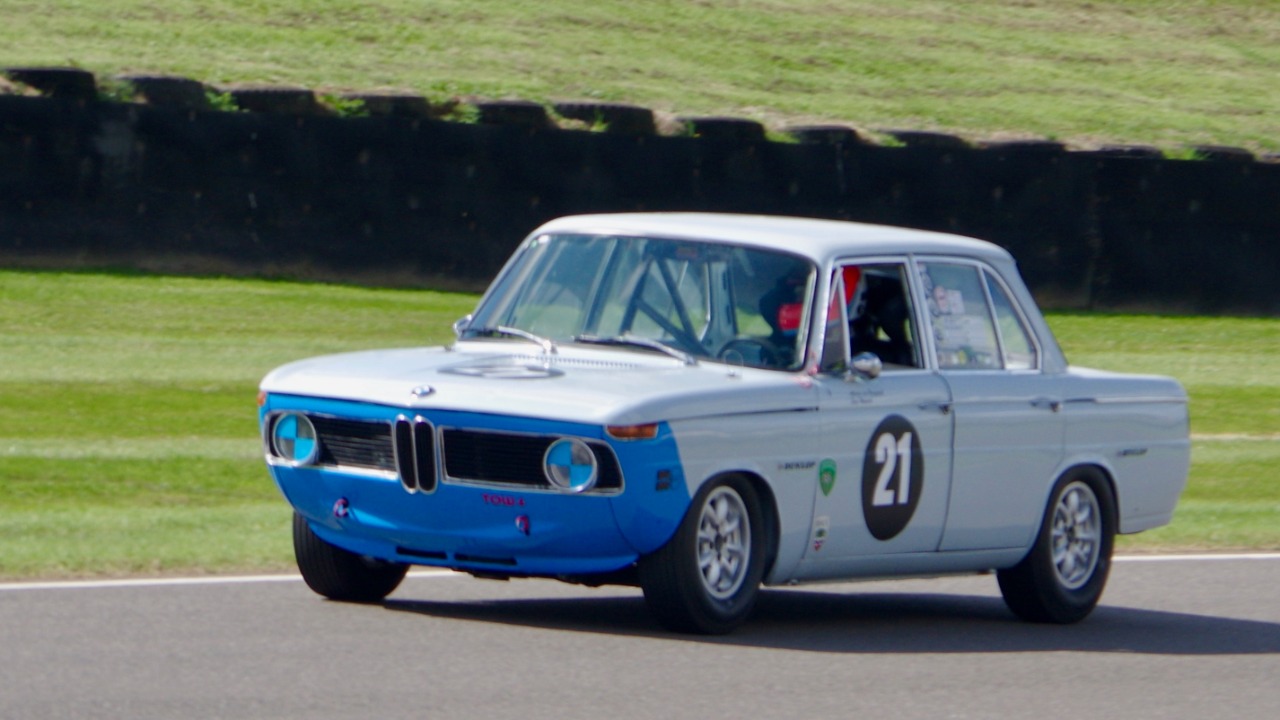
You tend to hear about the BMW 2002, the E9 coupes, or the later M cars when people talk about the brand’s golden years, but the 1965 BMW 1800 quietly set that story in motion. It mixed family-sedan practicality with genuine touring pace, yet it never quite earned the spotlight its influence deserves. If you care about how modern BMWs came to feel the way they do, you have to look past the hype and into this underrated four‑door that helped reset the company’s future.
By the mid‑1960s, the 1800 was already proving that a sensible saloon could carry real fire in its belly, on the autobahn and at the track. You see its fingerprints on later legends, from the 2002 to today’s compact sports sedans, even if the car itself still slips under most enthusiasts’ radar.
The car that reset BMW’s course
When you trace BMW’s modern identity back to its roots, you land in the Neue Klasse, and right in the middle of it sits the 1800. Amongst the BMW history gurus, it is well established that BMW’s Neue Klasse, also called the New Class, effectively saved the brand following World War II by giving it a clear, sporting direction. The BMW 1800 was the dawn of a new era in the 1960s, a car that carved the path for generations and defined the essence of what a compact sports sedan from Munich should feel like, as you can see in period footage of The BMW in motion.
The BMW 1800 was a car many people had been waiting a long time to see, unveiled at the Frankfurt Motor Show as The BMW that would draw a line under some troubled times. The BMW 1800 was designed as a solid, dependable family car for the German people and for the people of Europe as a whole, a practical saloon that could carry four adults and luggage at speed across Europe without drama. That blend of everyday duty and high‑speed composure is exactly what later BMW sedans would refine, which is why the 1800 deserves more credit than it usually gets.
Why it never became a household name
If you grew up seeing 2002s at every vintage meet, you might wonder why you rarely spot an 1800. There are reasons why you see so few of the NK cars on the road today. Period observers note that There were simple market realities working against them: BMW was just getting a foothold in key export markets, and these cars never sold in the volumes that later 1600 and 2002 models enjoyed. By the time the 2002 arrived, its crisper styling and more aggressive marketing made the older sedans look conservative, even though the mechanical DNA was closely related.
From a distance, it is uncanny how closely these early Neue Klasse sedans resemble the later -02 coupes, even from a pretty close distance, yet that visual overlap worked against the 1800 in the long run. Enthusiasts gravitated to the shorter, sportier‑looking 2002, while the four‑door was pigeonholed as a sensible saloon. When you add in the fact that many 1800s were simply used up as daily transport, with fewer preserved for posterity, it is not surprising that the car slipped into the background of BMW lore.
Performance hiding in a family saloon
Look past the upright body and you find a chassis that feels remarkably modern. The 1800 is described as a fabulous driver’s car, with steering and suspension that make it feel just like a modern BMW on a twisty road. After a brief stop in Brussels, one owner even drove his 1800 to Zeebrugge, Belgium, then put the BMW on a cargo ship and later used it for long‑distance touring, a real‑world example of how comfortably the car could cover ground. That mix of composure and feedback is exactly what you expect from the brand today, and it was already present in this mid‑1960s sedan.
The BMW 1800TI took that formula further, with the TI standing for Turismo Internazionale within the New Class range. The BMW 1800TI was singled out among the most underrated European sports cars of the 1960s, precisely because it wrapped genuine pace in a practical shell that you could use every day. When you drive one today, you feel how the engine, gearbox, and suspension encourage you to carry speed, yet the cabin still works as a family car, which is a balance many later sports sedans tried to copy.
The TiSA and the racing edge
If you want to understand how serious BMW was about motorsport in this era, you only have to look at the 1965 BMW 1800 TI/SA. The 1800TISA was produced in 1965 specifically for works team competition, a limited‑run homologation special that turned the mild‑mannered saloon into a touring‑car weapon, as detailed by the Editorial Team that chronicled its specs. The same 1965 BMW 1800 TI/SA appears in other period material as a focused evolution of the standard car, with the BMW badge on its nose signaling that the company was ready to fight for touring‑car titles.
Amongst the BMW specialists who study this period, the 1965 BMW 1800 TiSA Touring Sedan has become a touchstone for how the brand blended engineering and aesthetics. Amongst the BMW history gurus, the TiSA is remembered not only for its competition record but also for the way it was later refined by the tuning house Alpina, as shown in detailed photography of Richard Meinig’s car. When you see how close the race‑bred TiSA sits to the standard 1800 in basic layout, it becomes clear that the everyday sedan had far more potential than its modest image suggested.
Oddballs, pickups and the culture around the 1800
Part of the 1800’s charm today lies in the strange and wonderful shapes it has taken on in enthusiast hands. The 1965 BMW 1800 Ti pickup is one of the rarest and most unusual vehicles ever associated with the Bavarian automaker, Born from a need to haul parts and equipment while still moving quickly, as you can see in footage of the BMW based truck. The same story of adaptation appears in written accounts of the 1965 BMW 1800 TI pickup, which describe how the BMW 1800 was designed as a solid, dependable family car for the German market before a handful were turned into working utes, a transformation captured in detail on The BMW pickup build.
Even the way enthusiasts talk about the model today reflects its cult status. There are reasons why you see so few of the NK cars, Just as later 1600 and 2002 BMW’s looked more modern and drew the limelight, as one Bring a Trailer listing for a 2002 tii powered 1965 BMW 1800 points out. Yet when you watch period‑style retrospectives like A Vanguard – The BMW 1800 | Neue Klasse Origins, where The BMW 1800 is described as the dawn of a new era and part of a new thinking for a new class, you start to see how the car has become a touchstone for a certain kind of enthusiast who values subtlety over status, as captured in the Neya Classer the narrative about the Noya Classic.More from Fast Lane Only

Leave a Reply