
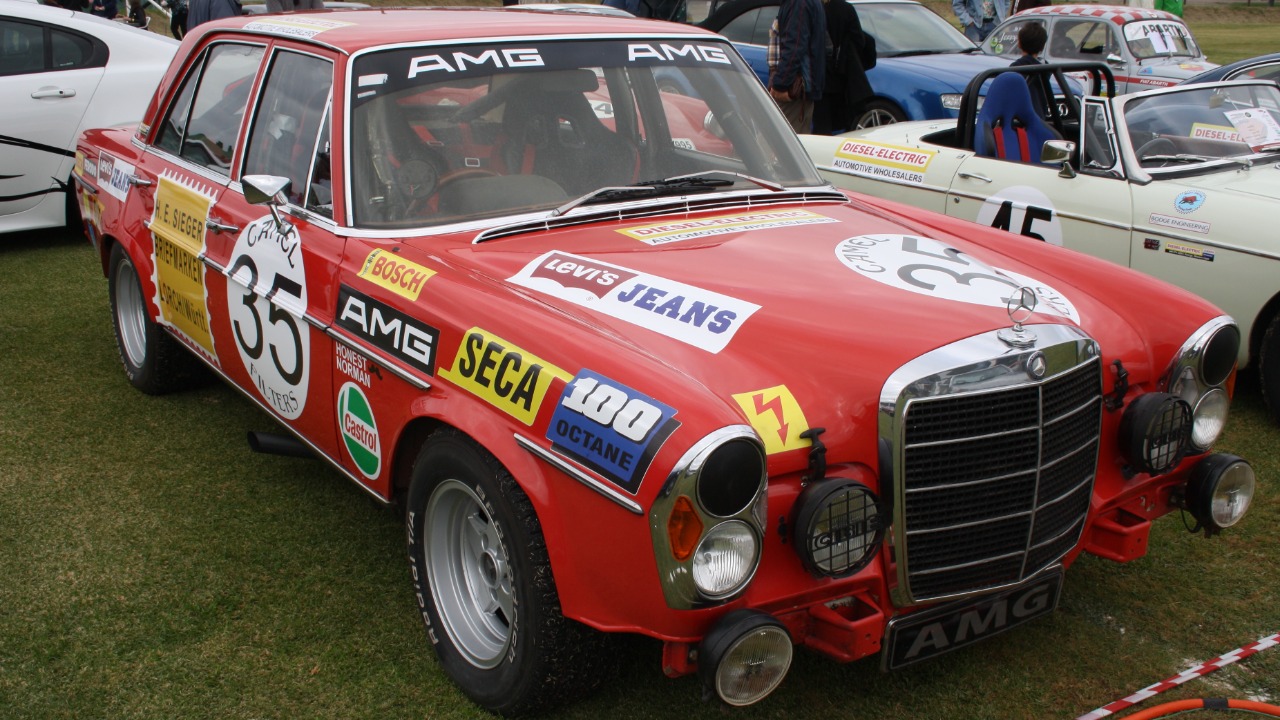
The 1968 Mercedes-Benz 280SEL arrived at a moment when luxury sedans were starting to chase speed and status, yet it quietly doubled down on something more human: how you actually felt in the cabin. Instead of turning the big W108 and W109 sedans into hard-edged performance cars, Mercedes-Benz shaped the 280SEL around long-distance ease, supple suspension and a sense of calm that started the moment you shut the door. If you look closely at its engineering, its cabin and even its rivals in the same showroom, you can see how deliberately comfort sat at the top of the brief.
The S-Class mindset behind the 280SEL
When you slide into a 1968 Mercedes-Benz 280SEL, you are stepping into the same philosophy that guided the broader W108 and W109 sedans: you should arrive less tired than when you set off. Contemporary descriptions of the related 280 S make it clear that this family of cars was designed to offer a decent driving experience, but with passenger comfort treated as equally important, not as an afterthought. One period drive notes that the chassis was tuned so the car would not simply wallow like a barge, yet it still soaked up rough surfaces in a way that made long journeys feel almost unremarkable, which is exactly the point in a luxury sedan. That balance between control and softness is what set the 280SEL apart from more overtly sporting contemporaries.
To understand why comfort was such a priority, you have to see the 280SEL in the context of late 1960s German luxury engineering. Enthusiasts today still describe the 1968 Mercedes-Benz 280SEL as a remarkable example of German engineering and luxury from the late 1960s, highlighting how the car’s long wheelbase and careful suspension tuning created a serene ride that matched its understated styling. Owners and fans of the W108 and W109 sedans point out that these cars were equipped with advanced features for their time, including power windows, power steering and other electric conveniences that reduced effort behind the wheel and in the rear seats. In that world, the 280SEL was not chasing lap times, it was quietly redefining what a long-haul executive car should feel like.
Suspension and ride: comfort baked into the hardware
The way the 280SEL glides over broken tarmac is not an accident, it is the result of a chassis set up from day one to prioritize isolation. Reports on the 280 S, which shared its basic platform, emphasize that the car was engineered so that passenger comfort was just as important as the driving experience, with springs and dampers chosen to smooth out bumps rather than transmit every ripple to the cabin. That philosophy carried through the W108 and W109 range, where the longer wheelbase of the 280SEL further calmed the ride, stretching out the car’s responses to dips and crests so you felt a gentle rise and fall instead of a sharp jolt. The result is a sedan that encourages you to settle into a steady rhythm rather than hustle from corner to corner.
Modern explanations of Mercedes suspension design help you see how far ahead of its time that approach was. Many Mercedes vehicles are equipped with advanced air suspension systems for a smooth ride, and even though the 280SEL relied on steel springs in most configurations, the same principle applied: the suspension’s job was to absorb imperfections before they reached you. When components age, the rubber in air springs or bushings can crack and leak, which reduces the system’s ability to absorb bumps and reminds you how carefully the original setup was tuned. On a well-maintained 280SEL, that tuning still comes through as a kind of relaxed composure, the car breathing with the road rather than fighting it, which is exactly what you want if you are spending hours behind the wheel.
Engines that serve refinement, not aggression
Under the hood, the 1968 Mercedes-Benz 280SEL shared its basic powertrain philosophy with other 280 models of the era, which were built around smooth, relatively unstressed straight six engines. Enthusiast descriptions of the 1968 Mercedes-Benz 280 SE sedan and coupe highlight how the 280 engine delivered enough power for confident cruising while remaining quiet and refined at typical autobahn speeds. One detailed look at the 280 SE notes that the 280 designation referred to a 2.8 liter engine that was tuned for a blend of performance and efficiency, not for raw acceleration, which suited a car whose primary mission was to carry four or five people in comfort over long distances. You feel that in the way the engine pulls cleanly from low revs without needing to be worked hard.
Comparing the 280SEL to its more extreme stablemates makes the comfort bias even clearer. A separate look at the W109 points out that at its heart, the W109 housed a robust 6.3-liter V8 engine delivering an impressive 250 horsepower, derived from the brand’s racing lineage and aimed squarely at buyers who wanted supercar levels of thrust in a limousine body. That car was a technical showcase, but it also brought more noise, more complexity and a more urgent character. By contrast, the 280SEL’s straight six feels almost unhurried, encouraging you to lean on its torque rather than chase the redline. In practice, that makes the car feel calmer in everyday use, which is exactly what you notice when you are driving home after a long day instead of sprinting down an empty autobahn.
Cabin comfort and long-distance luxury
Open the door of a 1968 Mercedes-Benz 280SEL and you are greeted by an interior that was clearly designed for people who would spend serious time inside. Contemporary enthusiasts describe the 1968 Mercedes-Benz 280SEL Silver as Beautiful, emphasizing the way its restrained exterior is matched by a cabin that mixes wood, leather and precise switchgear in a way that still feels solid decades later. The long wheelbase gives rear passengers generous legroom, and the upright seating position means you sit with your hips and knees at a natural angle, which matters more than you might think after several hours on the road. Even the door seals and window mechanisms were engineered to keep wind noise low, so conversation in the cabin stays relaxed at speed.
The broader W108 and W109 family reinforces how seriously Mercedes-Benz took in-car comfort at the time. Enthusiast write ups on the 280 S sedan note that in terms of innovation, the 280 S was equipped with advanced features for its time, including power windows, power steering and other electric conveniences that reduced the physical effort of driving and riding. Those same priorities show up in the 280SEL, where the controls are light, the steering is assisted and the pedals are positioned to avoid strain. When you compare that to a 1968 Mercedes-Benz 280SL 4-Speed roadster, which is celebrated as one of the most iconic Mercedes roadsters ever made and known for its elegance and performance, you can see the split in philosophy. The 280SL 4-Speed invites you to engage with every shift and every corner, while the 280SEL invites you to settle in, adjust the windows with a switch and let the miles roll by with minimal effort.
How the 280SEL fits alongside its siblings and successors
To really appreciate why the 1968 Mercedes-Benz 280SEL leaned so hard into comfort, it helps to look at how it sat among other Mercedes models of the era and how later enthusiasts experience similar cars today. Modern video drives of a 1968 Mercedes-Benz 280SE Cabriolet, hosted by Tedward with a car supplied by Bond Group in Waltham Massachusetts, show how even the open top versions of these 280 models feel relaxed and unhurried on the road, with soft suspension and a creamy engine note that encourage cruising rather than aggressive driving. That same character is present in the 280SEL, only amplified by the extra wheelbase and enclosed body, which add stability and quiet. When you watch that cabriolet float over bumps, you are seeing the same engineering mindset that shaped the sedan.
More from Fast Lane Only

Leave a Reply