
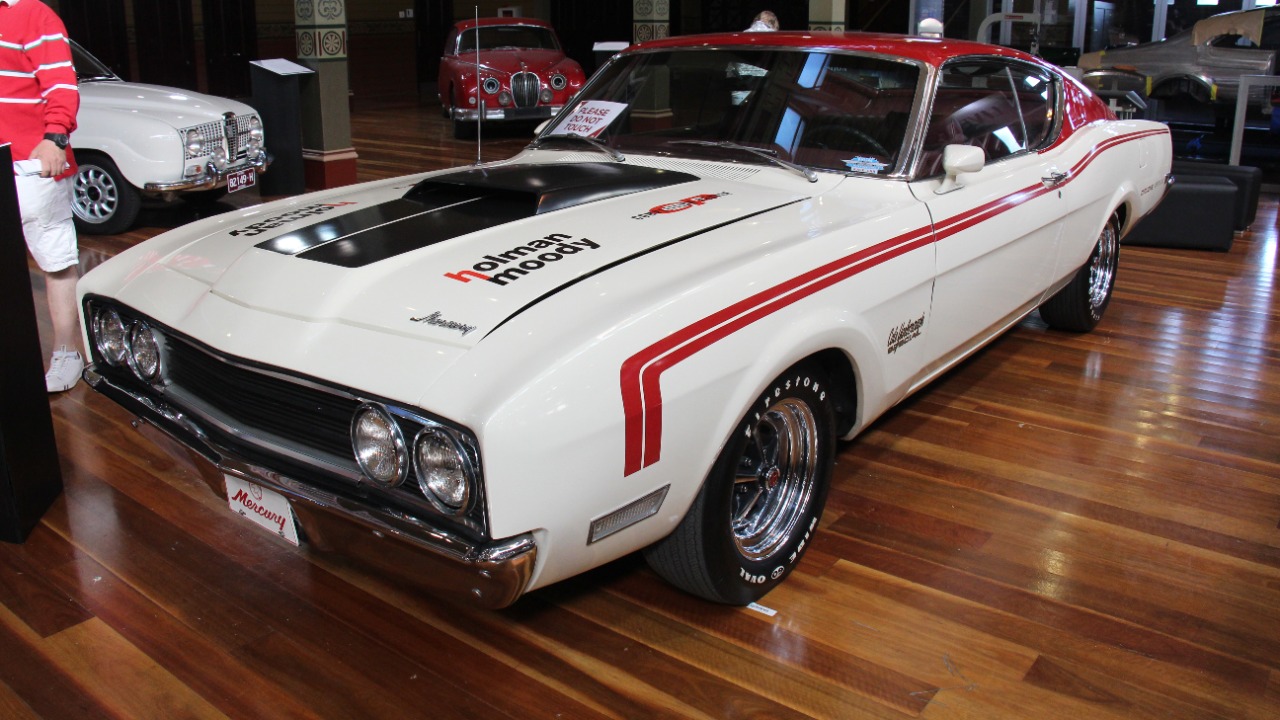
You can trace the 1969 Mercury Cyclone Spoiler’s story straight to the high banks of NASCAR, where factory pride and raw speed mattered more than showroom polish. Built in tiny numbers and shaped by wind tunnel logic rather than styling studios, it existed for one purpose: to turn Mercury into a winner when stock cars still had to be, in meaningful ways, stock. If you care about how racing pressure can twist a regular muscle car into something wild, the Cyclone Spoiler is one of the clearest examples you will ever find.
Instead of chasing collectors, Mercury chased lap times, stretching sheet metal, reworking noses, and sacrificing profit to keep up with rivals in NASCAR’s escalating aero fight. The result was a car that looked almost handmade in its single‑mindedness, yet had to be sold to regular buyers like you just to satisfy the rulebook.
From showroom to superspeedway
To understand why the 1969 Mercury Cyclone Spoiler went racing, you have to start with the factory mindset. Ford and Mercury were racing in NASCAR and wanted to win more races, and at that time the only way to do it was to turn the cars you sold into the cars you raced. Unlike the modern era of bespoke chassis and composite bodies, in 1969 NASCAR meant race cars were Stock Cars, so if you wanted a slipperier shape on Sunday, you had to bolt that same basic body into driveways during the week.
That pressure pushed Mercury to evolve the regular Cyclone into the more specialized Mercury Cyclone Spoiler II, a machine that took the existing fastback and stretched it into something far more purposeful. The 1969 Mercury Cyclone Spoiler II was based on the Mercury Cyclone “Sportsroof” 2‑door hardtop, a body style that Ford marketed as a fastback, and it kept the basic layout of a column shifter and front bench seat even as the nose and sides were reworked for speed, as detailed in the Sportsroof description.
Aero wars and a rulebook arms race
You are looking at a car born in what the NASCAR Hall of Fame now calls the age of aero wars, when manufacturers pushed bodywork to the edge of the rulebook to claw back miles per hour. While the aero wars of 1969 and 70 were entertaining, they did not represent the direction that NASCAR Chairman William Franc wanted for the series, but in the moment, the only thing that mattered to the factories was beating the other guy to the finish line. That climate is what pushed Mercury to take the already sleek Cyclone and refine it into the Spoiler II, with a longer, more tapered nose and cleaned‑up body sides.
Neither Ford nor Mercury was out to build a collector car when they put together a limited run of the Talladega and Spoiler II, and period reporting notes that they were willing to lose money on every unit sold just to stay competitive, a point underscored in accounts of how Neither Ford nor Mercury treated these cars as profit centers. For you as an enthusiast, that means the Spoiler II is one of the purest examples of a homologation special, a car whose very existence is a side effect of corporate rivalry at 190 miles per hour.
Homologation: building just enough for you to buy one
Because NASCAR required manufacturers to sell a minimum number of cars to the public, Mercury had to turn its race‑bred Cyclone into something you could actually register and insure. The Mercury Cyclone Spoiler II is a muscle car that was produced by Mercury in early 1969, and The Mercury Cyclone Spoiler II was created specifically so the aerodynamic body could be homologated for sale to the public, as laid out in the official homologation summary. That requirement is the only reason a handful of buyers ever got to park this race‑shaped Mercury in their garages.
On track, the race version pushed the envelope even further. A prototype of the Cyclone was tested with a 429 cubic inch engine, and later race cars used engines with 429 cubic inches of displacement versus the smaller street offerings, a detail preserved in technical notes on the prototype. For you, that split between street and race specification is part of the appeal: the car you could buy was a thinly disguised cousin of the one screaming down Daytona’s tri‑oval.
The Cale Yarborough Specials and NASCAR success
If you are drawn to driver lore as much as bodywork, the 1969 Mercury Cyclone Spoiler II “Cale Yarborough Special” gives you a direct line to one of stock car racing’s fiercest competitors. Mercury built two special Cyclones in 1969, and the Cale Yarborough Special was one of them, a limited configuration that tied the road car to the driver who wheeled the race version, as enthusiasts have documented in period photos of the Cale Yarborough Special. Owning one meant you were not just buying a Mercury, you were buying into Yarborough’s reputation for aggression and speed.
On the track, that connection was more than just decals. The Mercury Cyclone Spoiler II was very successful on the racing circuit, winning 8 Grand National races during the 1969 and 1970 seasons, a tally that shows how quickly the aero work paid off in real results, as recorded in the Grand National statistics. For a fan in the stands, seeing a Cyclone Spoiler II in victory lane made the connection between the car in the showroom and the car on the banking feel very real.
Why the Spoiler still matters to you today
Decades later, the Mercury Cyclone Spoiler II has become exactly what its creators never intended: a rare and coveted collector piece. The Mercury Cyclone Spoiler II is a muscle car that was produced by Mercury in early 1969, and The Mercury Cyclone Spoiler II now stands out because so few were built and because its entire reason for being was competition, a point that modern overviews of the Mercury Cyclone Spoiler underline. When you see one at a show, you are looking at a physical artifact of a time when the rulebook forced manufacturers to share their racing tricks with regular drivers.
That racing DNA also explains why most of the cars did not retire quietly. Subsequently, most of the NASCAR and ARCA race teams running Mercurys continued to run their 1969 Mercury Cyclone Spoiler IIs in competition even after newer models appeared, a testament to how effective the package was, as chronicled in notes on how Subsequently teams kept their Spoiler IIs. For you as a modern enthusiast, that longevity on track and scarcity on the street are exactly why the car still feels like it is chasing NASCAR glory every time you see one fired up.
More from Fast Lane Only

Leave a Reply