
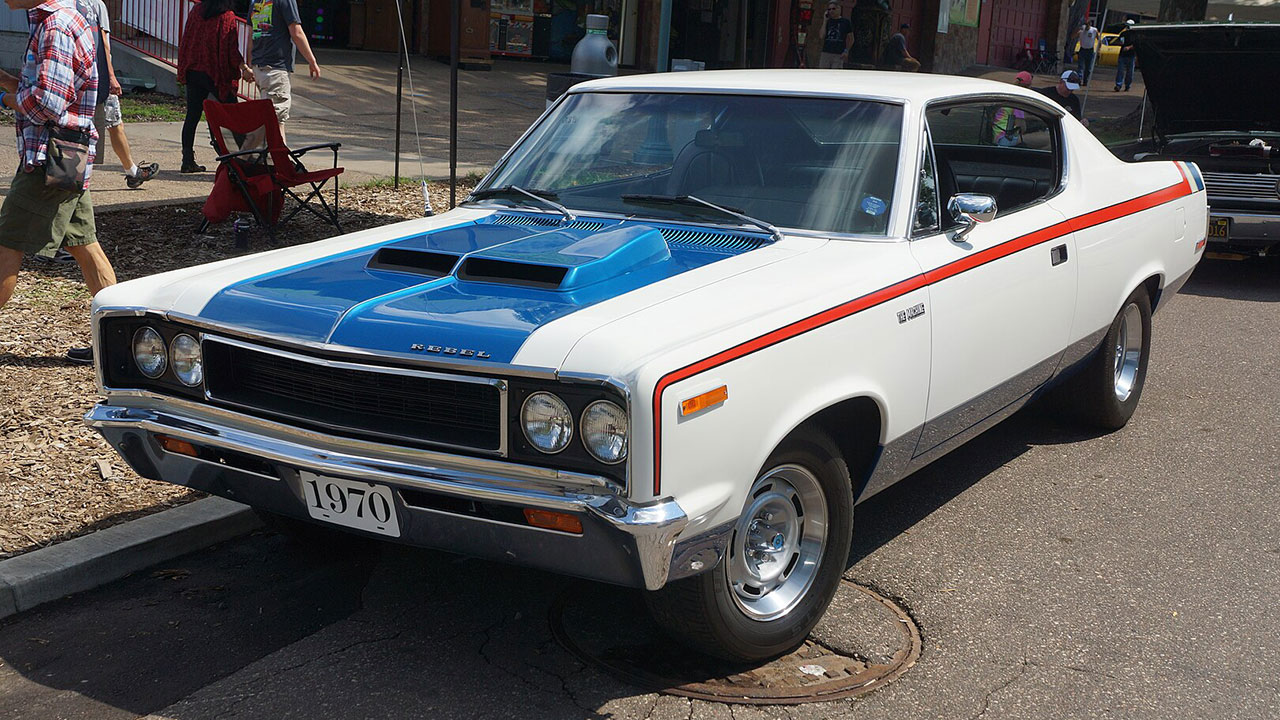
The 1970 AMC Rebel Machine arrived at the height of the muscle car wars with the power, attitude, and engineering to run with the era’s heavy hitters, yet it never earned the same reverence as its rivals. Instead of becoming a fixture in pop culture, it slipped into the background, remembered mainly by diehards who knew how much performance AMC had squeezed out of a mid-size sedan. I want to lay out why that car deserved a far bigger spotlight, and why its reputation is finally catching up to what it delivered.
The muscle car underdog that could actually fight back
When people talk about classic American performance, the conversation usually jumps straight to Dodge, Ford, and Chevy, as if those were the only names that mattered in the late 1960s and early 1970s. The 1970 AMC Rebel Machine proves how incomplete that story is, because it showed that AMC could build a street brawler that did not just keep up with the big three, it could embarrass them at the stoplight. The car’s very existence is a reminder that muscle history was written by the winners with the biggest ad budgets, not necessarily by the cars that offered the most character per dollar.
That imbalance is still visible in how the Rebel Machine is discussed today, often framed as being overshadowed by Dodge, Ford, and Chevy even though it carried serious performance credentials. AMC, a now-defunct American carmaker, did not have the marketing muscle or dealer footprint of its Detroit rivals, which meant the Rebel Machine had to punch above its weight just to be noticed. That underdog status is exactly why it deserves more respect: it was built in the toughest neighborhood in the car world and still managed to stand out to anyone who actually drove or raced one.
Engineering that arrived late but landed hard
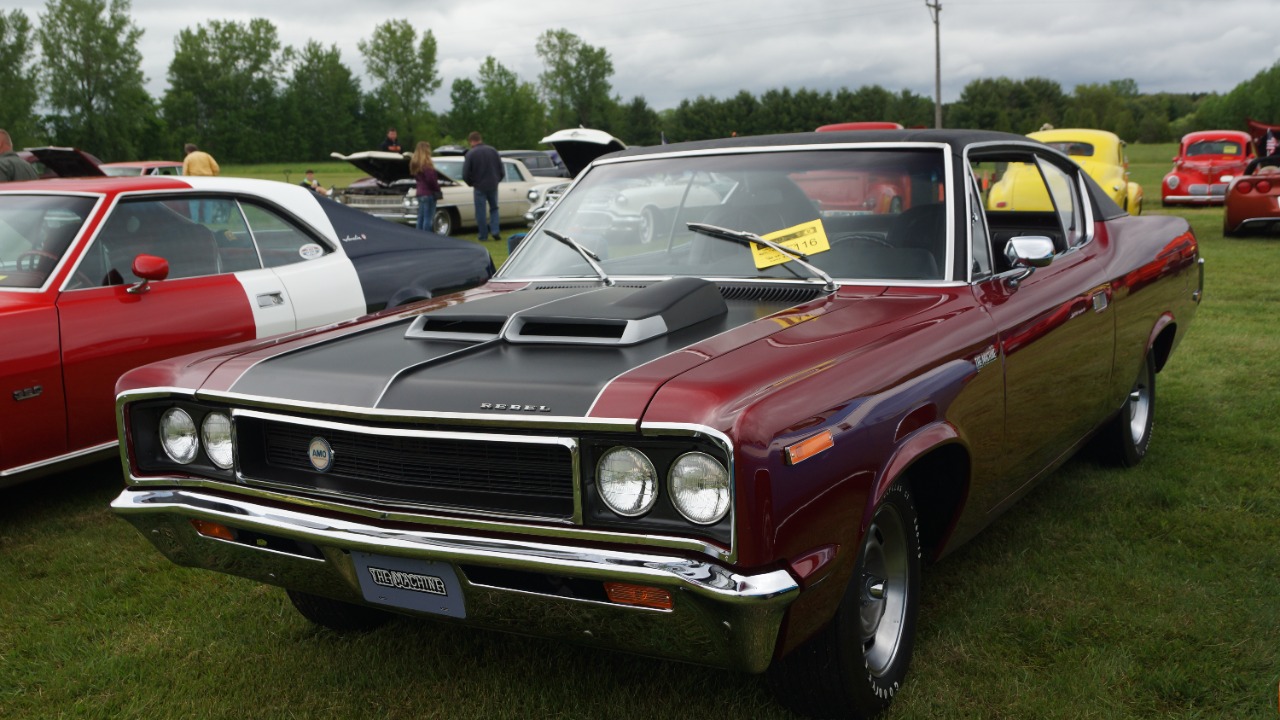
From a technical standpoint, the Rebel Machine was not a half-hearted appearance package, it was a focused performance project that happened to be wrapped in a sensible mid-size body. The car’s big-block V8, heavy-duty suspension, and drag-strip-friendly gearing were engineered to deliver real-world speed rather than brochure bragging rights. In an era when some muscle cars leaned on wild decals to distract from modest upgrades, the Machine backed up its name with hardware that made a difference every time the light turned green.
Timing, however, worked against it. It has been widely speculated that the Machine would have been much more successful had it been released a couple of years earlier, before insurance crackdowns and looming emissions rules started to cool the market. By the time AMC rolled out this high-compression, high-profile Rebel, the golden window for unrestrained muscle was already starting to close. That late arrival does not diminish the engineering, but it does explain why such a capable car never translated into big sales or a lasting mainstream reputation.
Reliability and everyday toughness behind the stripes
One of the easiest ways to dismiss a niche performance model is to assume it was fragile, a weekend toy that could not handle daily use. The Rebel Machine undercuts that stereotype, because it was built on a platform that has since been singled out as one of the toughest cars AMC ever produced. Under the patriotic paint and hood scoop sat a chassis and drivetrain that were designed to survive real-world abuse, not just quarter-mile hero runs.
That durability is not just folklore. When enthusiasts look back at the company’s lineup, the Rebel model that most people remember is the 1970 Rebel Machine, which is highlighted among the specs and context for The Most Reliable AMC Ever Produced. AMC made good cars but was not the best at running a business, and that disconnect between product quality and corporate execution is part of why the Machine’s reputation lagged behind its actual capability. From my perspective, the fact that this Rebel is still discussed in the same breath as long-lived models like the Javelin underscores how much substance there was beneath its loud graphics.
Standing up to Detroit’s muscle car bullies
In the cultural memory of the muscle era, AMC is often treated as comic relief, the quirky outsider that never quite belonged at the same table as the big three. The 1970 AMC Rebel The Machine cuts straight through that caricature. It was a car built to stand up to what one account aptly calls Detroit’s “muscle car bullies,” a machine that could show up at the drag strip or the local cruise and prove that the little company from Kenosha knew exactly how to build a fast, loud, unapologetic performance car.
That spirit comes through clearly in the way enthusiasts describe the 1970 AMC Rebel The Machine as a perfect example of how AMC, even with limited resources, could create something that resonated with both period buyers and modern classic performance fans. The car’s mix of power, stance, and attitude is captured in detail in a piece on how the Rebel The Machine stood up to Detroit muscle car bullies, and that framing matches how I see it: as a car that refused to play the victim in a segment dominated by bigger brands. Its willingness to go toe-to-toe with the era’s icons is a major reason it deserves a higher place in the muscle car hierarchy.
Why it was killed off and why its legacy lingers
For all its strengths, the Rebel Machine was a one-year wonder, and that short run has often been used as evidence that it somehow “failed.” The reality is more complicated. AMC was a small company without deep pockets or giant engineering teams, operating in a market that was shifting under its feet. Building a high-profile, high-performance model in that environment was a bold move, but it also meant that when the winds changed, there was little margin to keep a niche muscle car alive.
That context is laid out in a detailed look at why the 1970 AMC Rebel Machine was killed off despite its strengths, which notes that there are moments in American muscle car history when a small company simply cannot keep pace with regulatory pressure and changing buyer tastes. The video on why the Machine was killed off underscores how AMC’s limited resources and the broader market downturn for big-power cars converged at exactly the wrong time. To me, that makes the Rebel Machine less a failure and more a casualty of timing, a car that proved what AMC could do just as the era that made it possible was ending.
Why the Rebel Machine finally feels properly appreciated
Looking back now, the 1970 AMC Rebel Machine checks almost every box enthusiasts say they want from a classic American performance car. It has a distinctive look, from the hood scoop to the red, white, and blue color scheme, and it delivers the kind of straight-line performance that defined the muscle era. It came from a company that had to fight for every sale, which gives it an underdog charm that more common models from Dodge, Ford, and Chevy simply cannot match. When I weigh all of that, it is hard not to see the Machine as one of the most interesting and unfairly sidelined cars of its time.
The good news is that the narrative is finally shifting. Enthusiast lists of overlooked classics now routinely single out the AMC Rebel Machine as a car that deserves more respect, and deeper dives into its engineering, reliability, and cultural impact are helping to correct the record. As more people discover how much performance and personality AMC packed into this one-year wonder, the Rebel Machine is moving from footnote to cult favorite, which feels like the recognition it has owed since the day it first rolled out of Kenosha.

Leave a Reply