
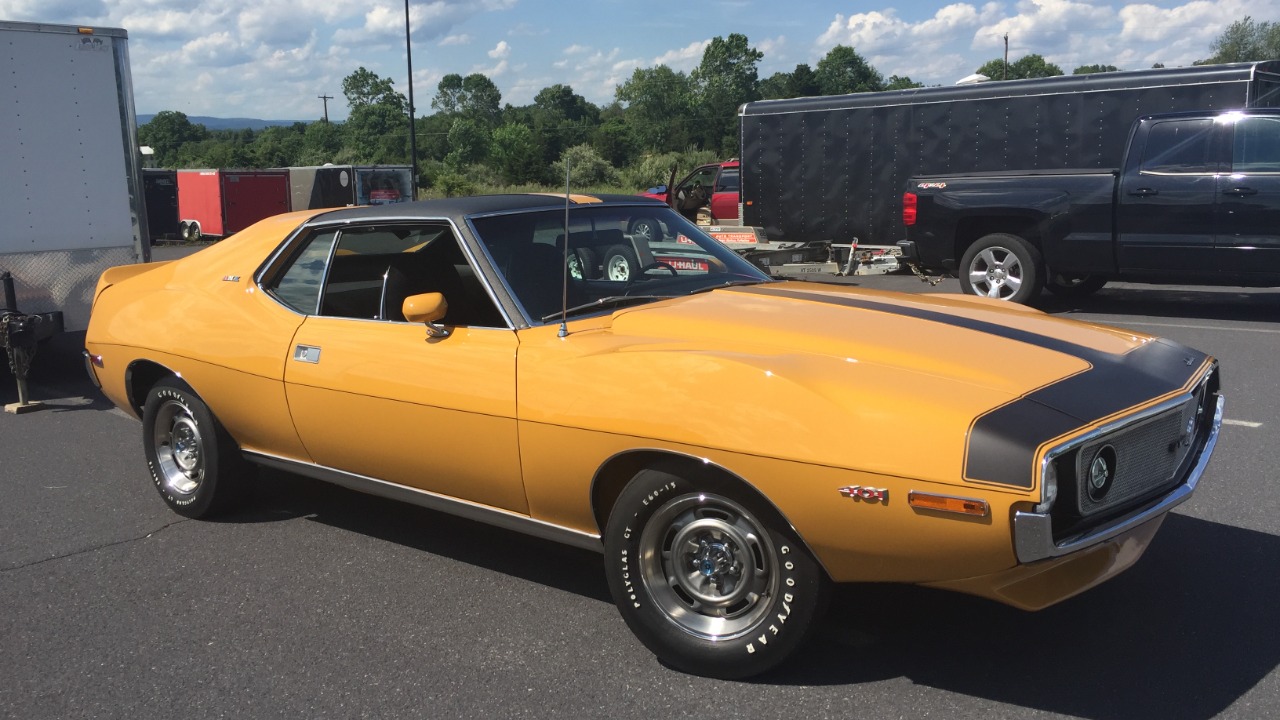
The 1971 AMC Javelin AMX arrived in the thick of Detroit’s muscle wars with fewer dollars, less dealer reach, and a fraction of the hype, yet it managed to hit far above its class. By pairing serious power with clever engineering and a bold sense of style, it gave American Motors a genuine performance flagship that could hassle the establishment on the street and in professional racing. I see that car as the moment AMC proved that brains, balance, and attitude could matter as much as raw budget.
The underdog that refused to act small
What grabs me first about the 1971 AMC Javelin AMX is how unapologetically ambitious it was for a company that never had the Big Three’s money. When AMC decided to go out swinging, it did not hold back on its last true muscle offerings, leaning hard into the big-cube 401 V8 and aggressive styling to create a car that could stand next to far pricier rivals. The 401 engine was not just a marketing badge, it was a statement that this smaller brand was willing to play in the same league as the most feared street machines of its era, and that intent is exactly what made the car feel like a “Brilliant Exit For The Brand” rather than a half-hearted sendoff.
That sense of defiance is why I think the Javelin AMX feels so much larger than its sales numbers. AMC did not have the cash to flood television with ads or stack every small-town lot with inventory, yet the company still engineered a car that enthusiasts now recognize as rarer than some halo models from bigger names. When AMC chose to build the 401-powered AMX variant, it was effectively betting that a focused, high-impact package could overcome limited marketing reach, and the resulting car has earned that reputation as a bold final swing for When AMC.
Track-bred credibility that translated to the street
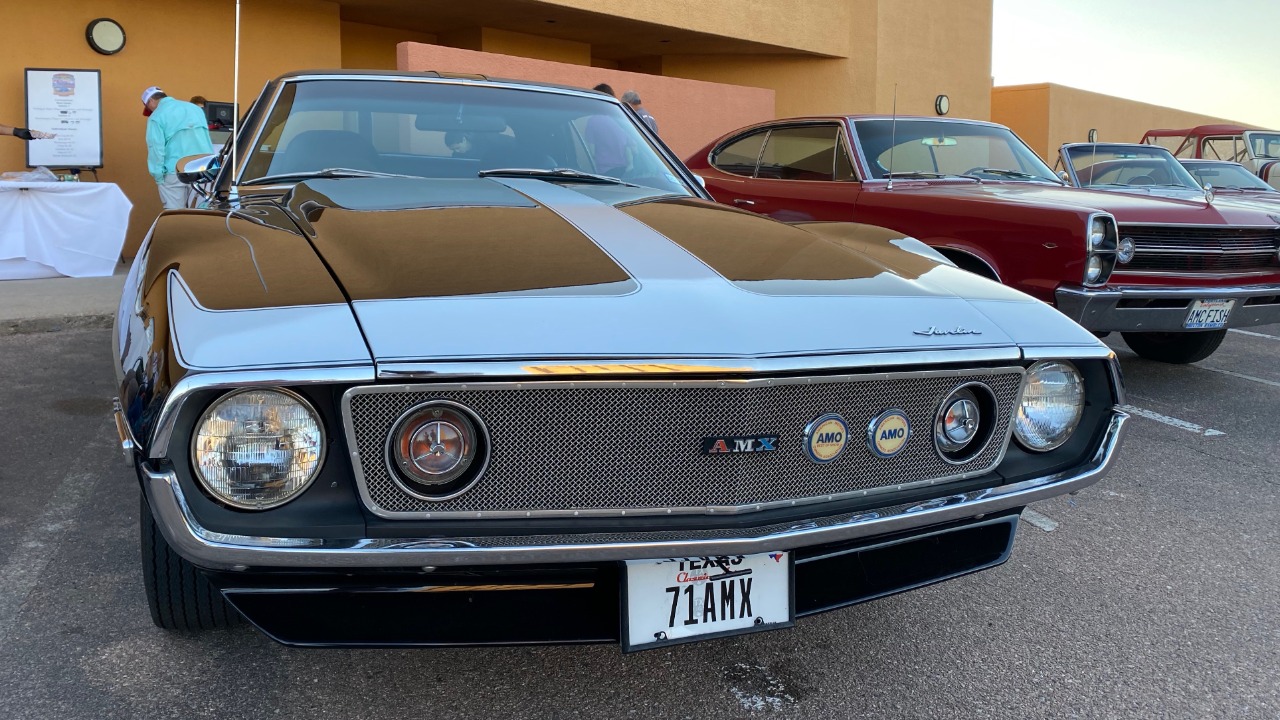
For me, the real secret to the Javelin AMX’s overachieving character is how much of its identity was forged in competition. The Racing AMC Javelin program in the Trans-Am Series put the car up against factory-backed efforts from Ford and Chevrolet, and it did far more than simply make up the numbers. By the early seventies, the AMC Javelin was a familiar sight in Trans-Am grids, and that experience fed directly into the production car’s chassis tuning, aerodynamics, and high-speed stability, giving buyers a street machine with genuine racing DNA rather than just stripes and decals.
That connection to the track mattered because it shaped how the car behaved when pushed. Reports on What Made The AMX a Terror On The Track highlight how a longer wheelbase delivered Perfect balance and improved high-speed stability, while careful Aerodynami tweaks helped the car stay planted when rivals started to feel nervous. I see that engineering focus as the bridge between the race-winning Racing AMC Javelin and the road-going AMX, proof that the same hardware that battled Ford and Chevy in Trans-Am was being refined for people who wanted a car that felt composed, not just loud, when the speedometer climbed. The result was a Javelin that could legitimately be called a Racing thoroughbred and a street car that earned its reputation as a Terror On The Track.
Big-block punch without big-brand arrogance
On paper, the 1971 AMC Javelin AMX had the kind of numbers that made people stop snickering at the “little” company. In one vivid comparison, a 426 1971 AMC Javelin and no this car does not have some peasantly 232 cubic inch straight 6, it is got a 401 V8, and that blunt phrasing captures how owners and fans saw the car as a rebuttal to anyone who dismissed AMC as an economy brand. I read that as a proud declaration that the Javelin AMX belonged in the same conversation as the big-block legends, not as a quirky side note.
What I like about that setup is how it pairs swagger with substance. The 401 engine gave the Javelin AMX the torque and top-end pull to run with established heavy hitters, yet the car still carried the underdog attitude of a company that knew it had to prove itself every time the light turned green. Watching that 426 1971 AMC Javelin and hearing the emphasis on the 401 V8 over the humble 232 straight six, I am reminded that this car was built to surprise people who expected something mild from AMC, and it delivered enough real-world pace to back up the talk in Javelin and.
Engineering around a tight budget
What impresses me most, as I dig into the 1971 Javelin AMX story, is how much of its capability came from smart engineering rather than lavish spending. AMC did not have as much money as its Detroit rivals, so the company could not build an endless range of engines or exotic suspensions, yet it still managed to make the car ride better, go faster, and feel smoother on the road. That constraint forced the engineers to sweat details like geometry, weight distribution, and aero tweaks instead of simply throwing more displacement or flash at the problem.
I see that mindset clearly in the way the 1971 redesign sharpened the Javelin’s dynamics. By refining the chassis and focusing on how the car behaved at speed, AMC created a package that felt more composed than its budget might suggest, which is exactly why the Javelin AMX could surprise drivers used to better-funded brands. The fact that amc did not have as much money, so they could not build everything they might have wanted, only makes the end result more impressive, because the car still managed to go faster and feel smoother in real-world driving, as enthusiasts point out when they revisit those Aug era decisions.
Torque, style, and the lasting legacy
When I look at the 1971 Javelin in the broader AMC timeline, it stands out as the moment the company hit its performance peak. The 1971 Javelin Is The Torquiest Muscle Car AMC Ever Made, and that fact alone explains a lot about why the AMX variant feels so muscular even today. AMC’s zenith ended up being the 1971 redesign of its Javeli line, a point where the brand’s racing success, engine development, and styling all converged into a single, cohesive package that could carry the company’s performance reputation on its shoulders.
That torque-rich character did more than just light up the rear tires, it gave the Javelin AMX the kind of effortless mid-range shove that makes a car feel strong in everyday driving, not just at the drag strip. I think that is a big part of why the model’s reputation has grown over time, because it delivered the sort of real-world punch that drivers remember long after spec sheets fade. When enthusiasts talk about how the 1971 Javelin Is The Torquiest Muscle Car AMC Ever Made, they are really talking about how a relatively small manufacturer managed to distill all its performance know-how into one defining Javelin Is The Torquiest Muscle Car AMC Ever Made.
The flair that made the AMX unforgettable
Power and racing pedigree are only part of why I think the Javelin AMX punched above its weight; the car also had a sense of style that felt genuinely daring. Even as early as 1971, AMC was willing to treat the Javelin as a canvas for design experimentation, and that spirit carried into later AMX models that wore some of the most distinctive interiors of the muscle era. The willingness to collaborate with fashion and design figures signaled that AMC saw the Javelin AMX as more than just a straight-line bruiser, it was a statement piece meant to turn heads even when parked.
One of the clearest examples of that attitude is the optional interior design by Pierre Cardin in the 1973 AMC Javelin AMX, which featured multi-colored panels in bold shades of white and silver on a black background. I see that Pierre Cardin collaboration as an extension of the same confidence that drove AMC to build the 401-powered AMX in the first place, a belief that the car could stand on its own as both a performance machine and a style icon. When I picture that 1973 AMC Javelin AMX in original Cardin trim with the 401 Go Package and a 4-speed, I see a direct line back to the 1971 car’s mission: to give a relatively small company a big, unforgettable presence in the muscle car story, a legacy still visible in every surviving Javelin AMX.

Leave a Reply