
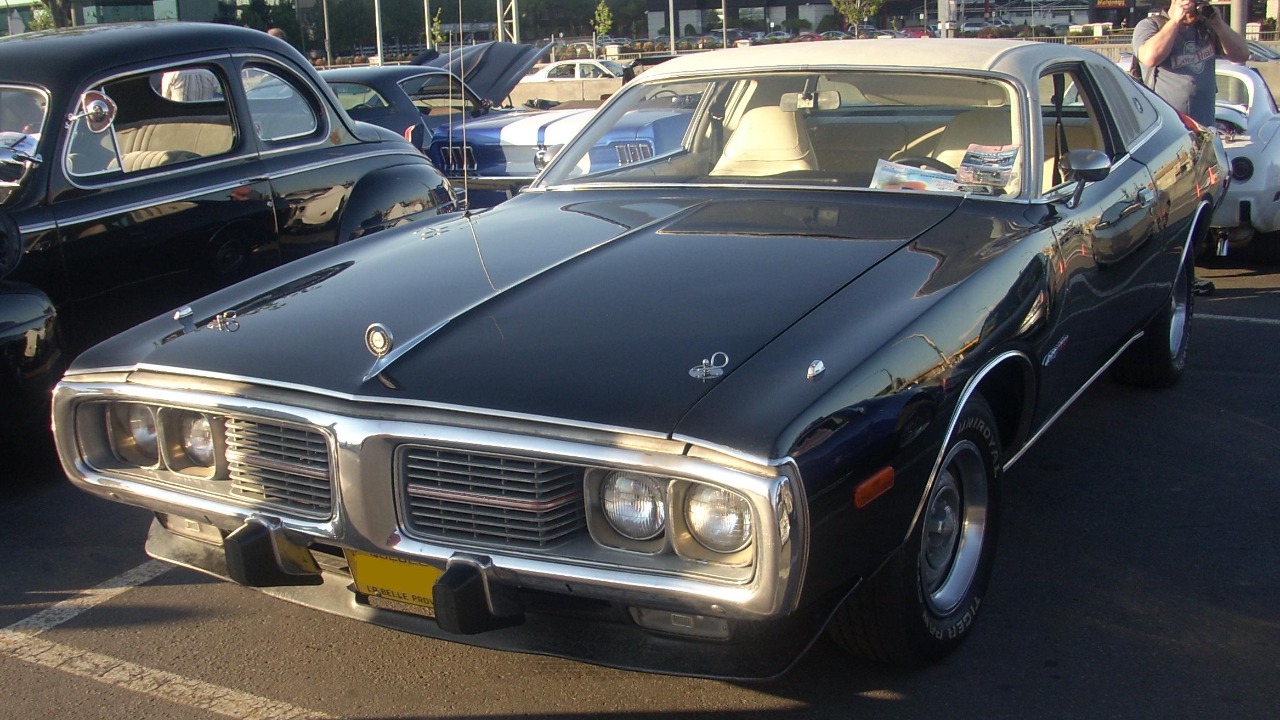
The 1974 Dodge Charger arrived at a moment when muscle cars were being pushed in opposite directions by regulators, insurers, and changing tastes. You can still see the bones of a performance coupe in its long hood and fastback roofline, yet the car is wrapped in luxury cues that pull it away from the street‑fighter image that made earlier Chargers famous. To understand why that single model year feels so conflicted, you have to look at how its styling, engineering, and marketing were tugged between past glory and a very different future.
The third generation loses its compass
When you look at the Charger story as a whole, the 1974 model sits at the tail end of the Third Generation, a run that started strong and then steadily lost its sense of purpose. The Dodge Charger began life in the 1960s as a fastback performance car, and by the early 1970s it had already shifted from pure muscle to a broader mix of style, power, and comfort. Enthusiast overviews of The Dodge Charger trace that evolution from its 1966 debut through each redesign, and by the time you reach the Third Generation you are already reading about compromises rather than unfiltered performance.
Within that Third Generation, which ran from 1971 to 1974, the car’s design became more aggressive even as external pressures chipped away at its power. A detailed community history of the Third Generation notes that the early 1970s oil crisis and new emissions rules hit the Charger just as it was trying to balance style, power, and performance. By 1974, you were looking at a car that still wore the badge of a muscle icon but was increasingly tuned and trimmed like a personal luxury coupe, which left its identity caught between two eras.
Styling that talks muscle, detailing that whispers luxury
Walk around a 1974 Charger and you can feel that tension in the sheetmetal. The basic proportions still echo the late 1960s cars that looked fast sitting still, a reputation rooted in the way the 68 Charger rode on Chrysler’s B‑body platform and projected speed even at idle. Owners who celebrate that earlier look point out that the Charger of that era seemed quick even before you turned the key, and that heritage still lingers in the long hood and sweeping roofline of the 1974 SE.
Yet by 1974, the details had shifted decisively toward comfort and ornament. Contemporary commentary on the 1974 Dodge Charger SE describes how the car was turned into a brougham, with opera windows, padded vinyl roof, and plush interiors that chased the same buyers who were cross‑shopping a Monte Carlo SS or a Grand Prix SJ. One period discussion, preserved alongside 83 Comments, even notes that you could order a Monte Carlo SS with a 454 or a Grand Prix SJ with a 428 and still enjoy a similar level of luxury. When your supposed muscle car is being compared on equal terms with those plush coupes, you can see how its visual message might start to blur.
Mechanical reality collides with the muscle‑car myth
Under the skin, the 1974 Charger was also being pulled in conflicting directions. On paper, you could still order serious hardware, including big‑block engines that kept the spec sheet respectable. Classified listings for surviving cars highlight the 440 V8, with one seller calling 1974 a GREAT INVESTMENT YEAR because it was the LAST year of the Performance based muscle 440 V8 chargers, and stressing that after 1974 Dodge Chargers became more like a rebadged Coronet than true performance muscle cars. That pitch, preserved in a GREAT INVESTMENT YEAR advertisement, shows how even sellers lean on the idea that 1974 was the last gasp of real Charger performance.
At the same time, broader context makes it clear that the muscle era was effectively over. A period feature on a 1974 Dodge Charger SE 440 notes that the 1974 model year was the end of the third generation and really the end of the true muscle car era, adding that the car was no longer considered a pure performance machine and was slower off the line than a contemporary Chevrolet Corvette. That assessment of the 1974 model year underlines how the Charger’s mechanical reality had drifted away from its legend, even when you ticked the right boxes on the order form.
Regulation, insurance, and the brougham drift
The forces that pushed the Charger toward luxury were not just internal styling whims, they were responses to a changing market. Analysts looking back on the 1970s point out that in that decade the Dodge Charger, which had begun life as a stylish and powerful performance car, was forced to adapt to new emissions rules, rising fuel prices, and tougher insurance costs. A ranking of 1970s Charger model years notes that in the 70s, however, every model year was not a home run, and that the mix of regulations and market shifts left some years compromised, a verdict that lands squarely on the Dodge Charger Model that closed out the Third Generation.
Writers who focus on the Charger’s transformation describe how, upon the winds of insurance foibles and fuel crises, the Charger underwent a rapid and profound change by 1973, shifting from a hard‑edged muscle coupe into something closer to a personal luxury car. That reflection on how the Upon the era’s pressures reshaped the car helps you see why the 1974 model feels like a compromise: it is trying to keep one foot in the performance world while leaning heavily into comfort and image to survive in a tougher regulatory climate.
Enthusiast expectations and the shadow of its siblings
Part of the 1974 Charger’s identity problem comes from the expectations you bring to the badge. Enthusiast histories of 1970s Chargers remind you that earlier cars were ranked highly because they combined style and serious power, while later years had to settle for appearance packages and softer tuning. A retrospective that ranks Every 70s Charger model year points out that the decade began with genuine muscle and ended with cars that were more about image, which leaves the 1974 example stuck between nostalgia for the past and the reality of its own spec sheet.
When you compare the Charger to its corporate cousins and rivals, the contrast sharpens. A community write‑up on the 1974 Dodge Challenger notes that Its long hood, aggressive grille, and sweeping body lines retained the unmistakable Challenger character and the enduring muscle car legacy, even as that model also faced tightening rules. That description of the Dodge Challenger shows how another Mopar coupe managed to project a clearer performance identity, which only makes the Charger’s brougham turn feel more pronounced to you as an enthusiast.
More from Fast Lane Only



Leave a Reply