
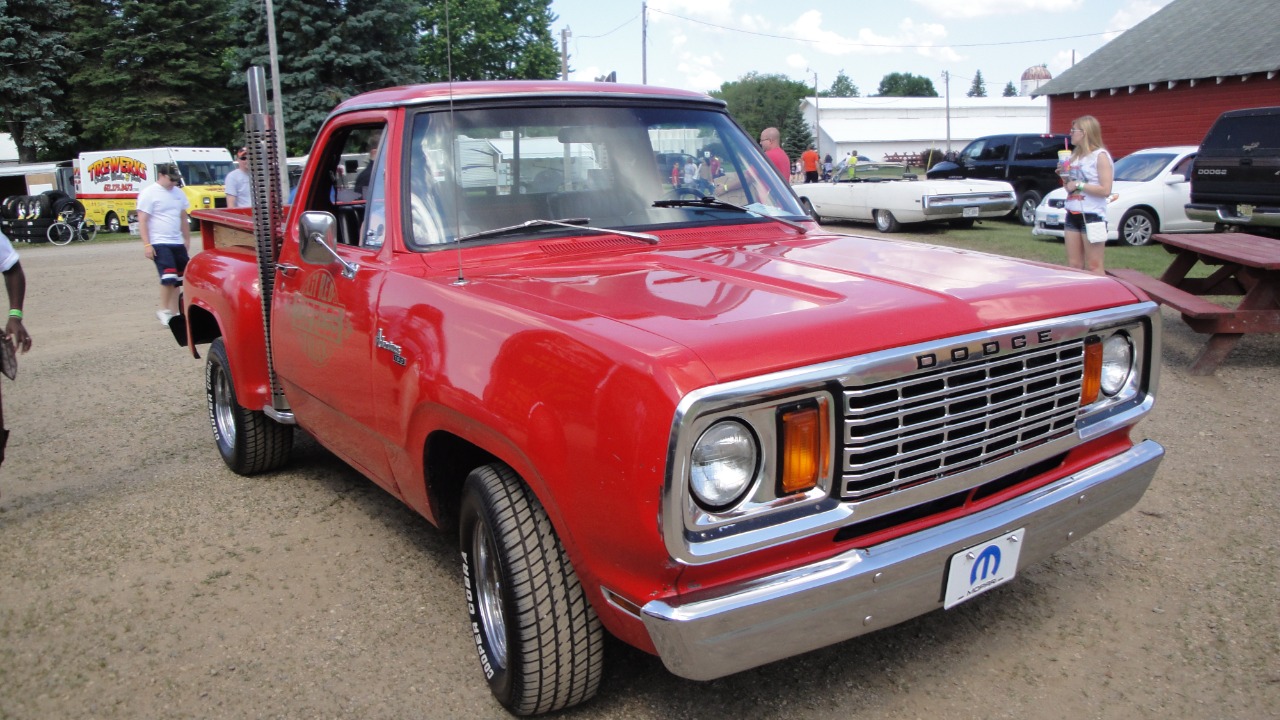
The 1978 Dodge Lil’ Red Express arrived at a moment when performance was supposed to be dead, yet it managed to outrun the era’s most vaunted sports cars and muscle machines. Instead of quietly accepting the new rules of fuel economy and emissions, Dodge slipped a hot‑rod heart into a short‑bed pickup and sent it straight past the radar of regulators and rivals alike. The result was a truck that did not just look loud, it genuinely shocked the industry by becoming one of the quickest American vehicles you could buy.
Looking back now, I see the Lil’ Red Express as a clever act of rebellion wrapped in bright paint and chrome stacks. It was outrageous in all the right ways, from its loophole‑exploiting engine to its limited production run, and it helped keep the spirit of classic muscle alive when most performance badges were being retired or neutered.
How a bright red pickup became the quickest thing on the road
The core of the Lil’ Red Express story is simple: this was a work truck that could embarrass sports cars. Contemporary testing and later retrospectives have consistently pointed out that the 1978 version was effectively the fastest or quickest American production vehicle of its year, a claim that still sounds wild when you picture the square‑shouldered body and wood‑trimmed bed. Yet the combination of a tuned small‑block V8, relatively light short‑wheelbase chassis, and aggressive gearing meant this Dodge could sprint harder than the sleek coupes it parked next to at the stoplight, a point underscored in detailed rundowns of how this “forgotten pickup” became the fastest vehicle in America in 1978 in pieces like This Forgotten Pickup Was The Fastest Vehicle In America In.
What made that performance so startling was the context. The mid‑to‑late 1970s were defined by tightening emissions rules, catalytic converters, and a general retreat from big horsepower, yet trucks were governed differently. The rules for fuel economy and emissions on light trucks were looser than for passenger cars, which gave Dodge room to maneuver. Instead of pouring money into a compromised muscle coupe, the company leaned into that regulatory gap and, as one analysis of 1970s performance survivors notes, used those truck standards so Dodge could effectively Fed the market a genuine hot rod at a time when buyers were starved for speed.
The loophole that let Dodge build a factory hot rod
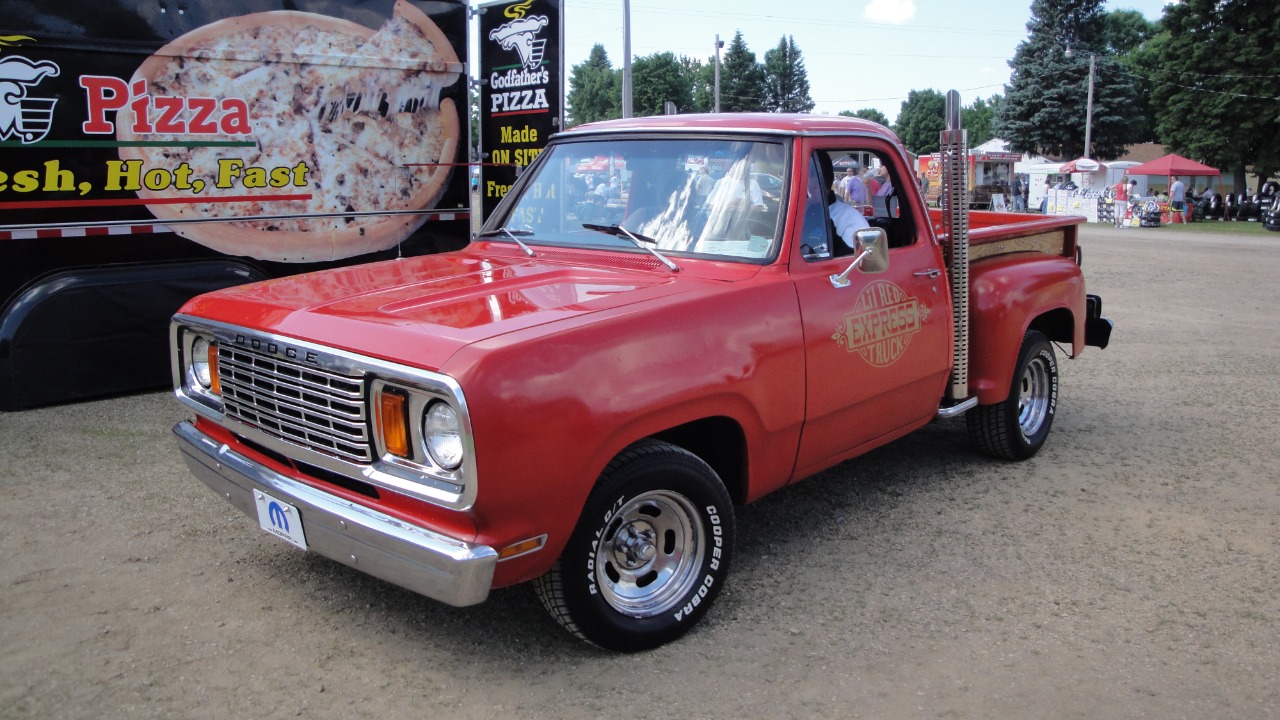
From a distance, the Lil’ Red Express looks like a styling exercise, but under the surface it was a carefully calculated piece of rule‑bending. Because regulators treated trucks differently, Dodge engineers could bolt on a high‑output V8 with relatively free‑flowing exhaust and avoid some of the strictest emissions hardware that was strangling car engines. That is why the truck’s vertical chrome stacks were not just visual theater, they were part of a less restricted exhaust system that helped the engine breathe better than most contemporary performance cars, a strategy that fits neatly with the way Dodge used truck classifications to keep performance alive in the late 1970s as described in that same look at how emissions rules shaped what automakers could build.
In period, this approach made the Lil’ Red Express stand out sharply from the rest of the Dodge lineup. The short‑wheelbase body was painted a vivid shade known as Bright Canyon Red, accented with gold striping and wood trim that made the truck impossible to miss in traffic. Contemporary descriptions emphasize how the pickup stood out among other Dodge offerings for 1978, with its Bright Canyon Red paint and bold graphics turning what could have been a simple fleet hauler into a rolling billboard for performance, a point captured in detail in coverage of how the Bright Canyon Red truck grabbed attention on the street.
Why the Lil’ Red Express looked like nothing else on the road
Even if you ignore the spec sheet, the Lil’ Red Express was visually shocking in an era drifting toward earth tones and understated graphics. The combination of that Bright Canyon Red paint, polished vertical exhaust stacks, and real wood side panels made the truck look more like a custom showpiece than something you could order off a dealer lot. Period photos and later retrospectives highlight how the styling cues, from the gold “Lil’ Red Express Truck” door decals to the slotted wheels, were deliberately over the top, a point that enthusiasts still celebrate in deep dives into this obscure auto that Dodge briefly turned into a factory custom.
That visual drama has aged well. When I watch modern walk‑around videos of surviving examples, the truck still looks like a concept that somehow escaped the design studio. One detailed clip of a preserved 1978 Dodge Lil Red Express, filmed by an owner who initially did not even want to be heard on camera, lingers on the bright paint, wood bed, and towering stacks, reminding viewers how cohesive and intentional the design really was, and how every angle reinforces the truck’s extroverted personality, as seen in footage simply titled 1978 Dodge Lil Red Express.
The “Outstanding Engine” that turned a showpiece into a sleeper
Of course, the Lil’ Red Express would have been a footnote if it had not backed up its looks with real power. Under the hood sat a small‑block V8 that enthusiasts still single out as an “Outstanding Engine,” tuned with hotter internals and less restrictive breathing than most of its contemporaries. Analyses of Dodge’s special‑edition trucks from that era point out that the company was serious about manufacturing muscle trucks, and that the Lil’ Red Express, along with siblings like the Midnite Express and Warlock, used that Outstanding Engine to deliver genuine performance rather than just graphics packages, a point underscored in breakdowns of how Outstanding Engine choices set these trucks apart.
Production numbers add another layer to why the truck still feels special. Between 1978 and 1979, Dodge built a little less than 10,000 Lil’ Red Express trucks, a figure that strikes a sweet spot between rarity and real‑world presence. That “Between 1978 and 1979, a little less than 10,000 Li’l” production run means the truck was never common enough to become anonymous, yet it was accessible enough that plenty of enthusiasts had a chance to own or at least encounter one in period, a balance that helps explain why the Lil’ Red Express still commands attention in collector circles today.
From forgotten oddball to cherished Mopar legend
For a long time, the Lil’ Red Express lived in a strange space, remembered fondly by Mopar die‑hards but largely overlooked by the broader collector market. That is changing as more people recognize how radical it was for Dodge to build a truck that could outrun the era’s sports cars. Modern features on ultra‑low‑mileage survivors, including one Li’l Red Express truck with only 5600 original miles, frame the model as far more than a quirky special edition, stressing that for anyone who has followed Mopar history, the Red Express is one of the vehicles that kept performance alive when most muscle badges were fading, a point driven home in coverage of how Mopar fans now treat these trucks as blue‑chip collectibles.
That reevaluation fits into a broader rediscovery of Dodge’s performance truck experiments. Enthusiast discussions and video deep dives into Dodge trucks that were effectively factory hot rods, sometimes framed as explorations of “Dodge Trucks Factory Performance Hot Rods,” revisit the Lil’ Red Express alongside later efforts and ask what, exactly, Dodge was trying to achieve with these bold pickups. In one such breakdown, the host walks through how Dodge used trucks as a canvas for performance when cars were constrained, grouping the Lil’ Red Express with other short‑bed bruisers and underlining how these Dodge trucks laid the groundwork for the modern idea of a muscle truck.
Why the Lil’ Red Express still matters in the muscle era story
When I connect all these threads, the Lil’ Red Express stops looking like a novelty and starts to read as a pivotal chapter in American performance history. It proved that even in the shadow of fuel crises and emissions crackdowns, there was still room for creativity, provided an automaker was willing to color outside the lines. By using truck regulations to keep horsepower alive, Dodge showed that the muscle car spirit could survive in new forms, a point echoed in broader histories of 1970s performance that highlight how Dodge and its rivals navigated the era’s shifting rules.
Today, when I see a Lil’ Red Express at a show or in a video clip, I do not just see a bright red truck with wood trim and chrome pipes. I see a clever response to a difficult moment, a reminder that performance has always found a way to adapt, and a rolling symbol of how a company willing to bend the rulebook can still surprise everyone, even in the unlikeliest of packages.



Leave a Reply