
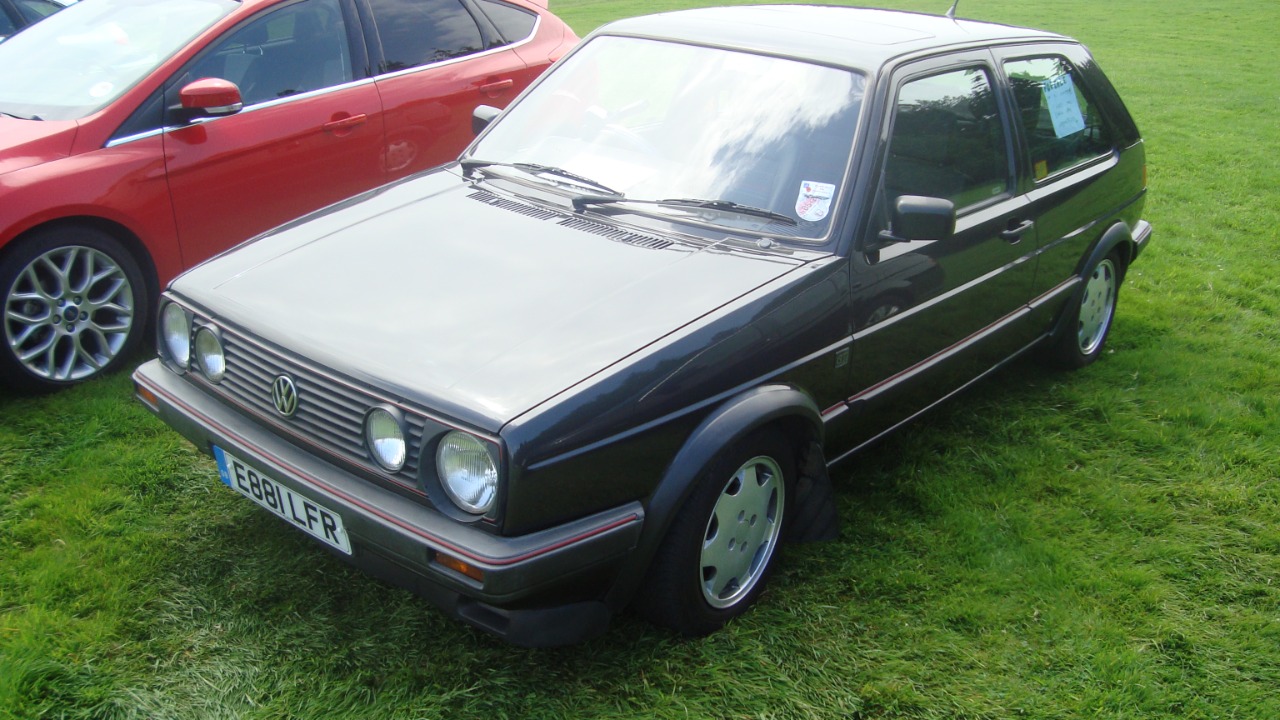
You tend to remember the wild hot hatches that lit up magazine covers, but the car that really grew the genre up was quieter about it. By 1988, the Volkswagen Golf GTI had evolved into a Mk2 that kept the mischief, yet suddenly felt like a car you could trust with your commute, your family and a long motorway slog. That balance of maturity and mischief is why the 1988 Golf GTI did more than go fast, it redefined what a hot hatch could be for everyday life.
Instead of chasing headline power figures, the 1988 evolution focused on refinement, safety and usability while still honouring the original GTI’s playful spirit. You got sharper styling, a more solid body, a smarter cabin and a chassis that encouraged you to drive hard without punishing you when you were just heading to work. In the process, it set the template that modern performance hatchbacks still follow.
From boy racer to grown up: how the Mk2 GTI evolved
When the Golf GTI first arrived, it kicked off what many enthusiasts now call the hot hatch revolution, turning a sensible family hatch into a compact sports car. The second generation, the Volkswagen Golf GTI Mk2, picked up that torch in 1984 and ran with it, stretching the formula into something more rounded and sophisticated. Official history notes that the Golf GTI Mk 2 followed the original as part of what became the world’s most successful compact sports car line, and by the time you reach the 1988 model year, you are looking at a car that has fully embraced that role.
The broader Mk2 platform itself, described as The Volkswagen Golf Mk2, was produced from 1983 to 1992 and was designed to offer more space, comfort and refinement than its predecessor. That gave the GTI version a more mature base to work from, and the Volkswagen Golf GTI Mk2 is often described as the evolution of the hot hatch icon that kept the fun while adding real-world usability. By 1988, that evolution had crystallised into a car that felt less like a weekend toy and more like a compact all-rounder with a wicked streak.
Why 1988 matters: the facelift that sharpened the brief
If you are looking for the moment the Mk2 GTI really came of age, you land on the 1988 model year. Styling changes were unveiled in August 1987 for that year, and they subtly but clearly signalled a more modern, confident car. The front grille lost a couple of bars, the bumpers and details were updated, and the overall effect, as detailed in the history of the, was a cleaner, more purposeful face that matched the GTI’s growing status
Under the skin, that same update period brought incremental improvements that you really notice when you drive one today. The 1988 Volkswagen Golf GTI sits in the sweet spot where the platform had been refined, yet the car still felt light and compact. Enthusiast coverage of the Volkswagen Golf GTI Mk2 highlights how this generation balanced build quality, handling and usability, and that balance is exactly what you feel in a late-eighties car. It is still playful, but it no longer feels fragile or half-finished.
Inside the grown up hot hatch
Slide into a 1988 GTI and you immediately see how Volkswagen was courting you not just as an enthusiast, but as an everyday driver. The cabin layout is simple and logical, yet the details are pure GTI theatre. Period descriptions of the Interior and features talk about a sporty 3 spoke GTI steering wheel, heavily bolstered sports seats with tartan or striped cloth and that signature red pinstriped trim that runs around the dash and instruments. You feel like you are in something special, but you can still see out of it, reach everything and carry passengers without compromise.
That blend of flair and function is part of why the Mk2 GTI is widely praised for its build quality and everyday usability. The Volkswagen Golf GTI Mk2 is often described as a classic hot hatch that appeals to enthusiasts and everyday drivers alike, and the 1988 car sits right in the middle of that Venn diagram. You can imagine using it as your only car, yet every time you glance at the tartan or grab that wheel, you are reminded that you chose the fun one.
On the road: playful, but no longer crude
Out on a twisting road, the 1988 GTI shows you how far the hot hatch had come since the raw early days. Contemporary and retrospective drives of the Mk2 8 valve car talk about how you can Push it to the limit and get some under steer, but not much, and how you can still lift the back end wheel in corners. That tells you the chassis is lively and adjustable, yet the balance is friendly enough that you are not constantly fighting the car.
At the same time, the Mk2 GTI is praised for being efficient and usable when you are not in the mood to drive flat out. Coverage of the You experience behind the wheel highlights that dual personality, and broader summaries of the Volkswagen Golf GTI Mk2 underline how the car was praised for its balance, build quality and usability. In other words, you get the lift off antics and wheel waving photos, but you also get a car that does not wear you out on a long drive.
Motorsport credibility and cultural staying power
Part of what makes the 1988 GTI feel so grown up is that it is not just a styling exercise, it has real motorsport credibility behind it. The Golf GTI has a strong following in racing, with numerous versions competing in touring car events and other series, and that competition history helped cement its reputation as more than a warmed over family car. Enthusiast retrospectives on The Golf GTI point out how the model combined performance and practicality in a compact and stylish package, and the 1988 Mk2 sits squarely in that lineage.
That blend of race track credibility and daily usability is a big reason the Mk2 GTI has become a staple in car culture. Modern reflections on The Volkswagen Mk2 describe it as a timeless classic that defined an era, and note that the MK2 GTI is often seen as a car that helped shape the hot hatch segment as a whole. When you look at a restored The Volkswagen Golf Mk2 GTI from 1988, you are not just seeing nostalgia, you are seeing the blueprint for the modern fast hatchback.More from Fast Lane Only

Leave a Reply