
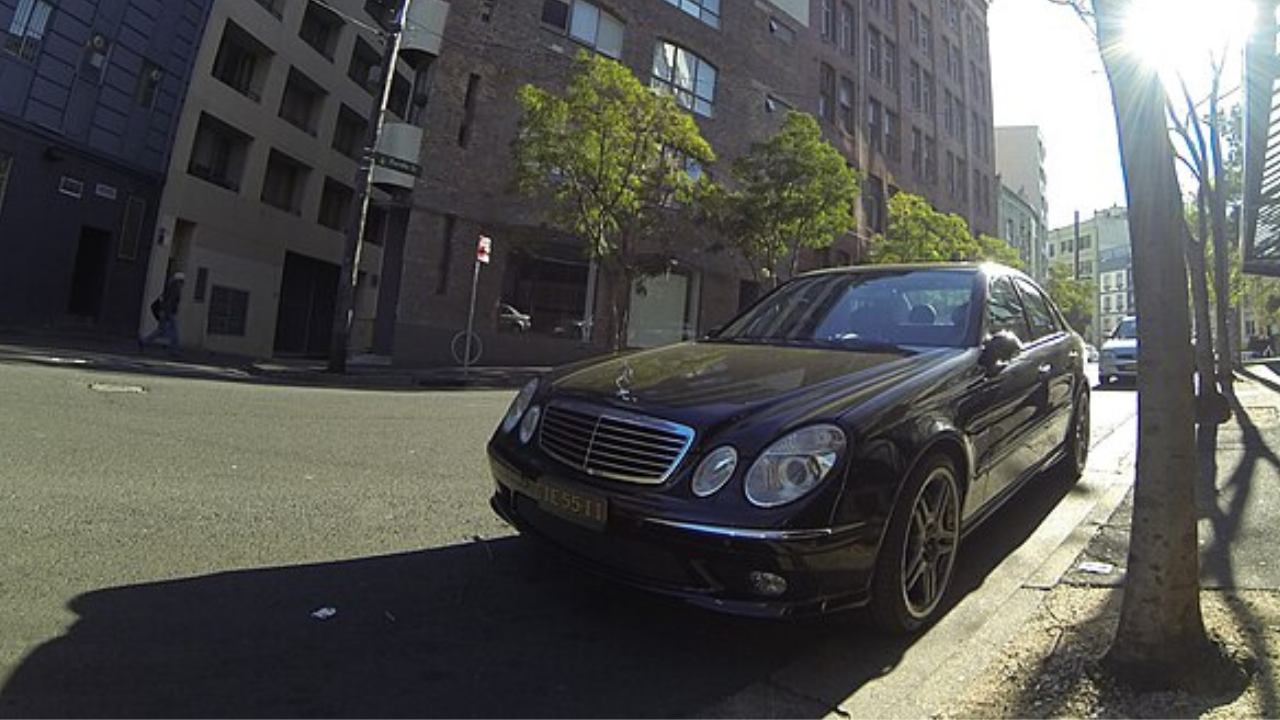
You can tell a car means business when it does not need flared arches or a giant wing to scare sports cars. The 1997 Mercedes-Benz E55 AMG was exactly that kind of machine, a sober W210 sedan that quietly packed the sort of pace you expected from serious coupes. You got the message the first time you saw one squat on its haunches and disappear up the road.
What made it special was not just the numbers, but the way it blended old-school Mercedes solidity with Affalterbach aggression. You could drive it to a client meeting in the morning, then use the same car to chase a Porsche on a back road in the afternoon, and it never felt out of its depth. That dual personality is why the E55 AMG still feels like a car that came to work, not to play.
The moment AMG and Mercedes got serious
By the late 1990s you were seeing the result of a closer partnership between Mercedes and the Affalterbach engineers who wore the AMG badge. Earlier collaborations had been exciting but a little wild, yet as the relationship deepened, the cars became more cohesive and better developed as complete packages rather than just big-engine experiments. The E55 was one of the first sedans where you could feel that maturity in every control surface and every mile.
That closer tie between Mercedes and the team meant the E55 did not simply bolt power onto a standard E-Class. AMG reworked the chassis, steering and brakes so the car behaved like a unified fast Mercedes rather than a tuner special. You felt it in the way the car turned in with more intent than a regular W210, yet still rode with the calm authority that made you comfortable crossing continents.
Power that matched its quiet confidence
Under the hood, the E55 AMG delivered the kind of shove that made you rethink what a family sedan could do. The naturally aspirated V8 gave you instant response and a broad wave of torque, so you did not need to wring it out to make serious progress. It was the sort of engine that let you surge past traffic with a short squeeze of throttle, then settle back into a low, relaxed hum that felt entirely in character for a big Mercedes.
That balance of muscle and refinement was no accident. The E55 AMG was not just about power, its refined chassis, upgraded suspension and performance-tuned brakes allowed for exceptional control when you pushed harder. You could feel how AMG had tuned the car so that the extra speed did not overwhelm the rest of the package, which is why it still comes across as a serious performance tool rather than a straight-line novelty.
Design that whispered, not shouted
When you walked up to an E55 in period, you did not see a caricature of a sports sedan. You saw a W210 that had been sharpened just enough to signal intent to those who knew what they were looking at. The stance sat a little lower, the wheels filled the arches more completely, and the details hinted at performance without turning the car into a rolling billboard.
Styling was aggressive but tasteful, with specific AMG bumpers, side skirts, twin exhausts and wider wheels that separated it from a regular E-Class without losing the underlying elegance. Owners who wanted a more practical shape could even choose the wagon, which made the car an even more compelling all-rounder. That mix of subtle aggression and everyday usability is captured neatly in period descriptions of the E55’s Styling, which consistently highlight how it managed to look purposeful without ever appearing gaudy.
A cabin that felt like peak late‑’90s Mercedes
Slide into the driver’s seat and you were reminded that this was still very much a Mercedes first. Interior Features Inside the E55 were all about tank-like build quality, real materials and a sense that the car had been designed to last decades rather than just a lease term. The doors shut with that familiar thud, the switchgear felt dense and precise, and the layout was clear enough that you could operate everything without taking your eyes off the road for long.
At the same time, AMG made sure you did not forget you were in something special. Two-tone leather sport seats, a slightly thicker steering wheel and subtle badging gave the cabin a more focused atmosphere without sacrificing comfort. Owners often describe how the E55 was not your uncle’s diesel, and that contrast is exactly what made it so appealing. You could commute in quiet luxury, then lean on the car’s performance and feel the extra intent baked into those Interior Features Inside the moment you picked up the pace.
The “Velvet Hammer” reputation and future‑classic status
Over time, enthusiasts started to see the W210 E55 AMG as more than just another fast sedan. It picked up the nickname The Velvet Hammer That Time Overlooked Before the AMG badge became a branding juggernaut, a nod to the way it combined brute force and smooth delivery. You felt that duality every time the car surged forward with a muted growl rather than a shout, and every time it soaked up a rough road without losing its composure.
That reputation has only grown as newer, more complex performance cars have arrived. Commentators now talk about The Forgotten AMG and how the Mercedes Benz E55 offers a kind of analog clarity that is getting harder to find. When you look at how enthusiasts describe The Forgotten AMG, you see the same themes repeated: a car that hits far harder than its understated looks suggest, yet does so with a level of refinement that keeps it usable every day.
More from Fast Lane Only

Leave a Reply