
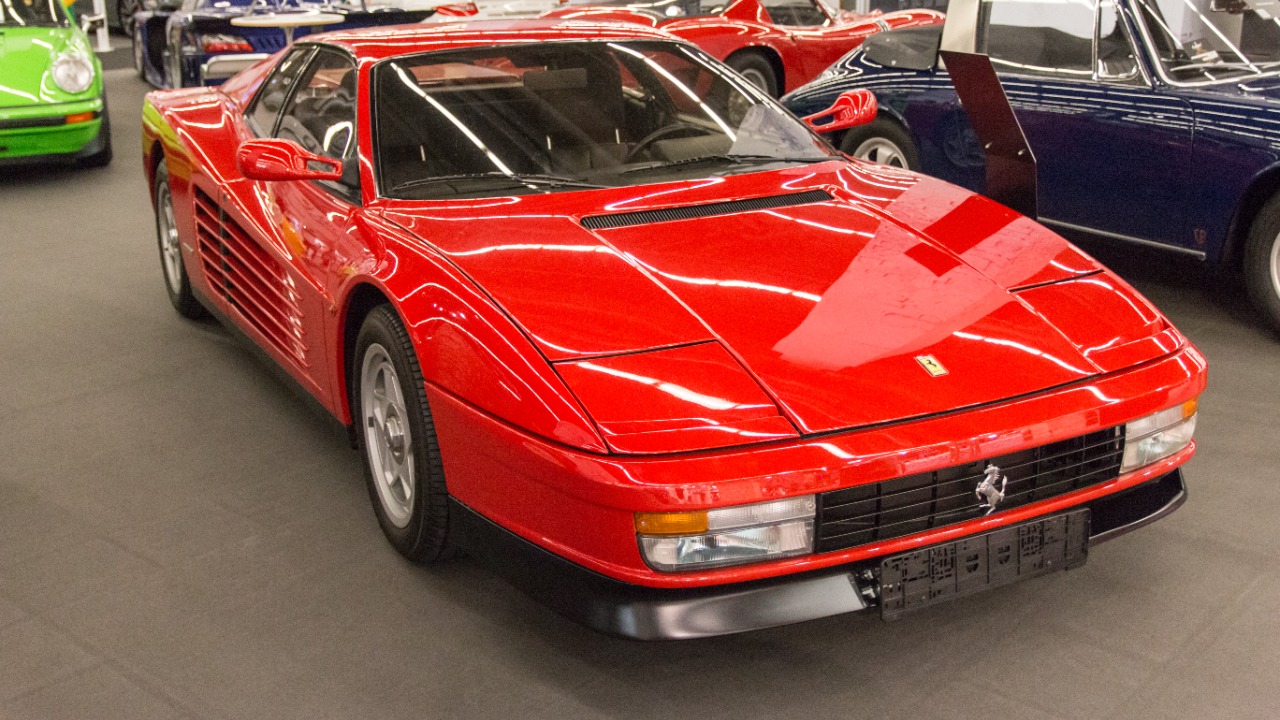
The Ferrari Testarossa did not just belong to the 1980s, it helped script the decade’s visual language of excess, speed, and celebrity. Its low, wide stance and outrageous detailing turned a technical solution to cooling and packaging into a rolling billboard for power and aspiration. Four decades on, the car still reads instantly as “the eighties,” which is why it continues to dominate nostalgia for that era’s style.
What set the Testarossa apart was not only how fast it was, but how completely it fused design, engineering, and pop culture into a single, unforgettable silhouette. I see its story as a case study in how a machine becomes a symbol, from its flat-12 heart and radical side strakes to its starring roles on screen and its enduring pull in today’s collector market.
The flat-12 supercar that reset the 1980s performance benchmark
When The Ferrari Testarossa arrived in the mid‑1980s, it landed in a supercar world still shaped by its predecessor, the Ferrari Berlinetta Box, and by wedge-shaped rivals that prized drama over usability. The new car kept the exotic layout, with a mid‑mounted flat‑12, but wrapped it in a broader, more livable package that could cross continents as confidently as it stormed an autobahn. Contemporary figures put its sprint from 0 to 60 mph at about 5 seconds and its top speed well north of 180 mph, performance that made the Testarossa one of the quickest road cars of its day and a genuine step beyond the 512i BB it replaced, as detailed in period Testarossa specifications.
Those numbers were not abstract bragging rights, they were a tangible part of the car’s mystique. Earlier reporting on the origin story notes that Forty years ago, 0‑60mph in 5.2 seconds and a 181 mph top speed were enough to feel genuinely explosive on public roads, especially when paired with a five‑speed gated manual that demanded deliberate, skilled inputs. Later analysis from a dealer perspective echoes that picture, describing how the car’s rear‑mounted radiators and flat‑12, Paired with a 5‑speed gated manual gearbox, let it accelerate from 0 to 60 mph in about 5 seconds and reach a top speed around 180 mph, figures that still read as serious even in today’s performance landscape.
The Design That Defined a Decade
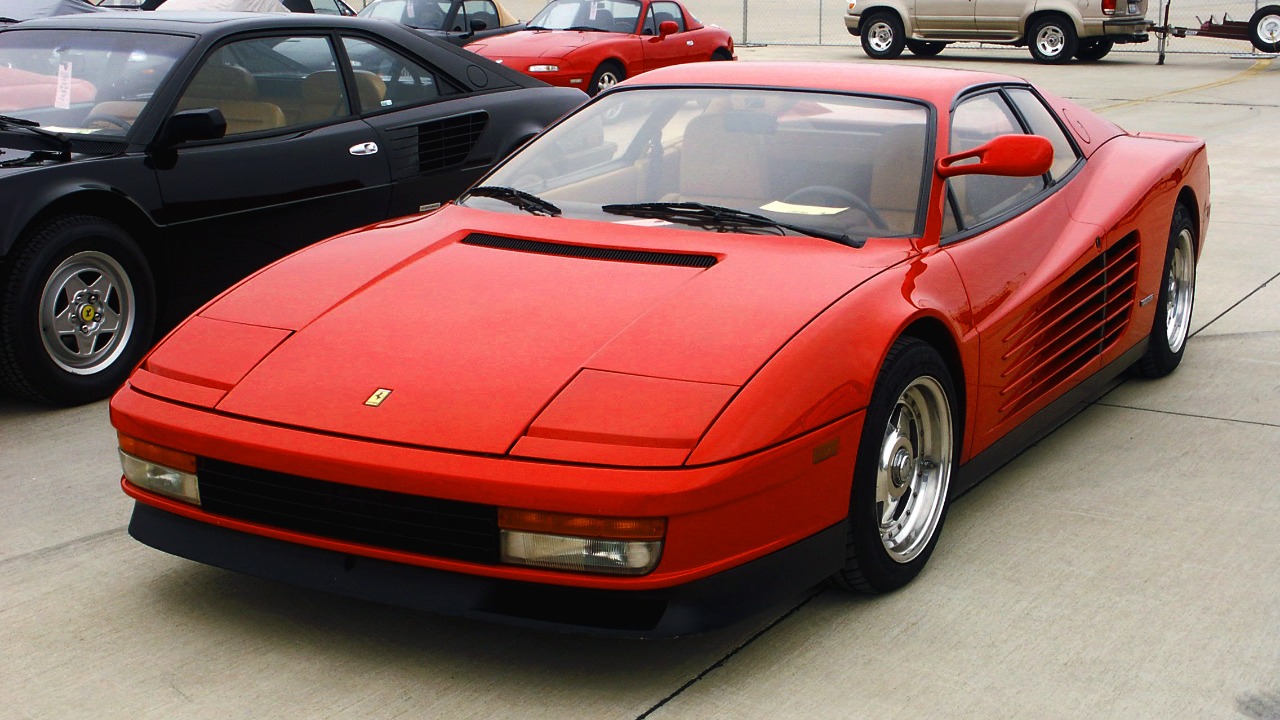
Performance alone did not make the Testarossa an icon; its styling did. The Design That Defined a Decade was the work of Pininfarina, which took the basic mid‑engine template and exaggerated it into something almost architectural. The car’s most recognizable gesture, the aggressive “cheese grater” side strakes that ran from the doors into the rear fenders, visually stretched the body and made the Testarossa look even wider and lower than it was. Later retrospectives describe how those strakes, along with the car’s broad rear track and single high‑mounted mirror on early cars, created a shape that could be recognized in an instant, a key reason it is still cited as The Design That Defined a Decade.
Those dramatic lines were not pure styling indulgence. Regulations in key markets required covered intakes, so the side strakes spanning from the doors into the rear fenders were engineered to feed air to the radiators while satisfying safety rules, a solution that turned a legal constraint into a signature flourish. Design analysts have pointed out that this functional sculpture helped lodge the car in the consciousness of automobile aficionados worldwide, cementing its status as an iconic 1980s supercar rather than a short‑lived styling experiment. In that sense, the Testarossa anticipated a modern design mantra: the most memorable shapes often emerge when engineering necessity and visual drama collide.
From overheating woes to Iconic ’80s Strakes
Underneath the glamour, the Testarossa was also a pragmatic response to a problem. The earlier Berlinetta Box models had struggled with cabin heat and cooling, particularly in traffic, because their radiators sat up front while the engine baked away behind the driver. Engineers moved the radiators to the rear on the new car, closer to the flat‑12, which demanded much larger side intakes to feed them. That packaging decision is what ultimately produced the vast, slatted flanks that defined the Testarossa’s look, a transformation that enthusiasts now summarize as The Testarossa going from overheating woes to Iconic ’80s Strakes, a journey enthusiast communities still debate in threads titled exactly that, asking whether we Are a fan.
That evolution shows how the car’s identity was forged as much in the engineering office as in the design studio. The team, led by Angelo Bellei, approached the challenge of cooling and packaging with a willingness to rethink the layout rather than patch the old formula. Later historical accounts note that this group not only relocated the radiators but also refined the flat‑12’s breathing and lubrication, creating a more robust grand touring machine that could handle real‑world use. Even the name Testarossa, meaning “red head,” reached back to Ferrari’s motorsport in the late 1950s, linking the new car’s technical advances to a racing lineage that enthusiasts still trace through detailed Angelo Bellei histories.
Style icon of the eighties and a Symbol Of Supercar Culture
By the late 1980s, the Testarossa had become more than a fast car; it was a visual shorthand for wealth and success. Commentators looking back on the period describe the Ferrari Testarossa as a Style icon of the eighties, noting that it quickly eclipsed the Ferrari Berlinetta Box in the public imagination. The distinctive side strokes were not just aerodynamic devices, they were a kind of wearable fashion, instantly signaling that the owner had arrived in every sense. That is why the car became a much sought‑after status symbol, a role chronicled in detail in features that explicitly frame the Ferrari Testarossa as the definitive style statement of its decade.
Its cultural reach extended far beyond the showroom. The Testarossa was Ferraris leading supercar in the second half of the 1980s, and it was Made famous for its role in Miami Vice and Sega’s Out Run, where its white and red avatars burned the car’s outline into millions of minds. Those appearances turned the Testarossa into a kind of rolling logo for aspiration, a presence that still shapes how people visualize the era’s supercar culture, as detailed in comprehensive The Ultimate Guide style retrospectives. When a single model can dominate both television and arcade screens, it moves from product to pop icon, and the Testarossa crossed that line with ease.
How The Ferrari Testarossa shaped celebrity and collector culture
The Testarossa’s omnipresence in media fed directly into its role in real‑world celebrity culture. Over the course of the 1980s, it became the car that actors, musicians, and financiers chose when they wanted to telegraph that they had made it. Analysts of that period describe The Ferrari Testarossa as a Symbol Of 1980s Supercar Culture, noting how it played a part in a feedback loop where on‑screen appearances drove demand among the rich and famous, which in turn reinforced its desirability among fans who saw who owned a Ferrari Testarossa. That dynamic is laid out in detail in anniversary pieces that trace how the car’s unveiling in 1984 quickly turned into a global craze, with the Ferrari Testarossa framed explicitly as a Symbol Of that Supercar Culture.
That halo has not faded with time. Modern collectors still chase low‑mileage examples, and younger enthusiasts who first encountered the car in games or reruns now have the means to buy the real thing. Contemporary market analysis emphasizes that the Testarossa is more than just a car, it is a piece of cultural history whose legacy will endure for decades to come, a sentiment echoed in detailed comparisons between classic and modern Ferraris that underline how the original still sets the emotional benchmark. When I look at those assessments, especially the ones that explicitly describe the car’s lasting legacy for decades, it is clear that the Testarossa’s grip on the 1980s was not a passing fad. It created a template for what a supercar should look and feel like, and that template still shapes how we judge automotive style today.


Leave a Reply