
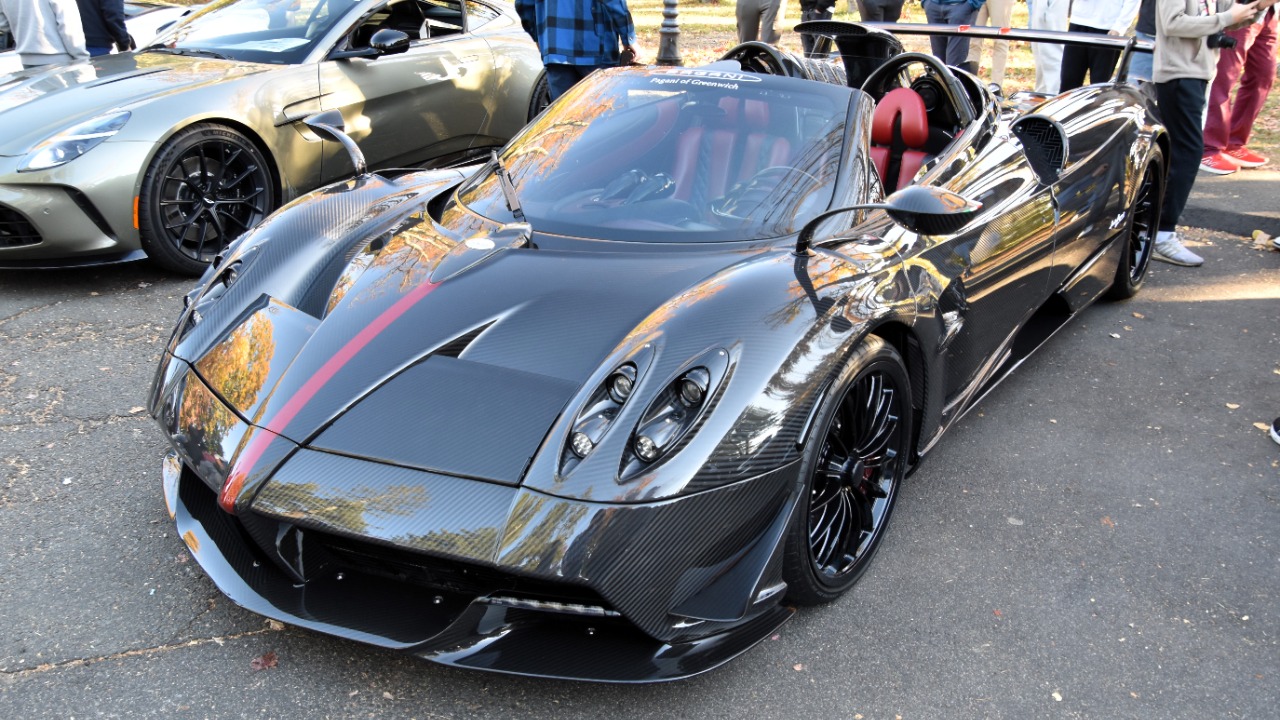
The Pagani Huayra has always felt less like a car and more like a precision instrument, a machine that treats speed as a fine art rather than a blunt-force party trick. Its blend of sculpted carbon, obsessive detailing, and ferocious performance turns every drive into a kind of choreography, which is why it still stands apart in a world crowded with fast machines. When I think about elegance as a form of power on the road, the Huayra remains the benchmark that everyone else is quietly chasing.
The art-house origins of a “weapon”
Elegance in the Huayra starts long before the engine fires, in the philosophy of the company that builds it. Pagani Automobili is an Italian hypercar maker that treats engineering like sculpture, and the Huayra is the clearest expression of that mindset. The car was conceived not as a mass-market flagship but as a rolling gallery piece, a place where exposed carbon weave, milled aluminum switchgear, and flowing bodywork all serve a single idea of beauty at speed.
That commitment to craft is matched by a ruthless sense of scarcity. Only 100 units of the original Pagani Huayra were built, a number that instantly framed it as a rare object rather than a production model. That limited run allowed Exclusivity and Rarity to become part of the car’s character, and it gave the team room to obsess over every surface and fastener. In a segment where power figures are easy to copy, that kind of hand-built focus is what turns a fast car into something that feels like a bespoke instrument.
Design that slices the air, not just the eye
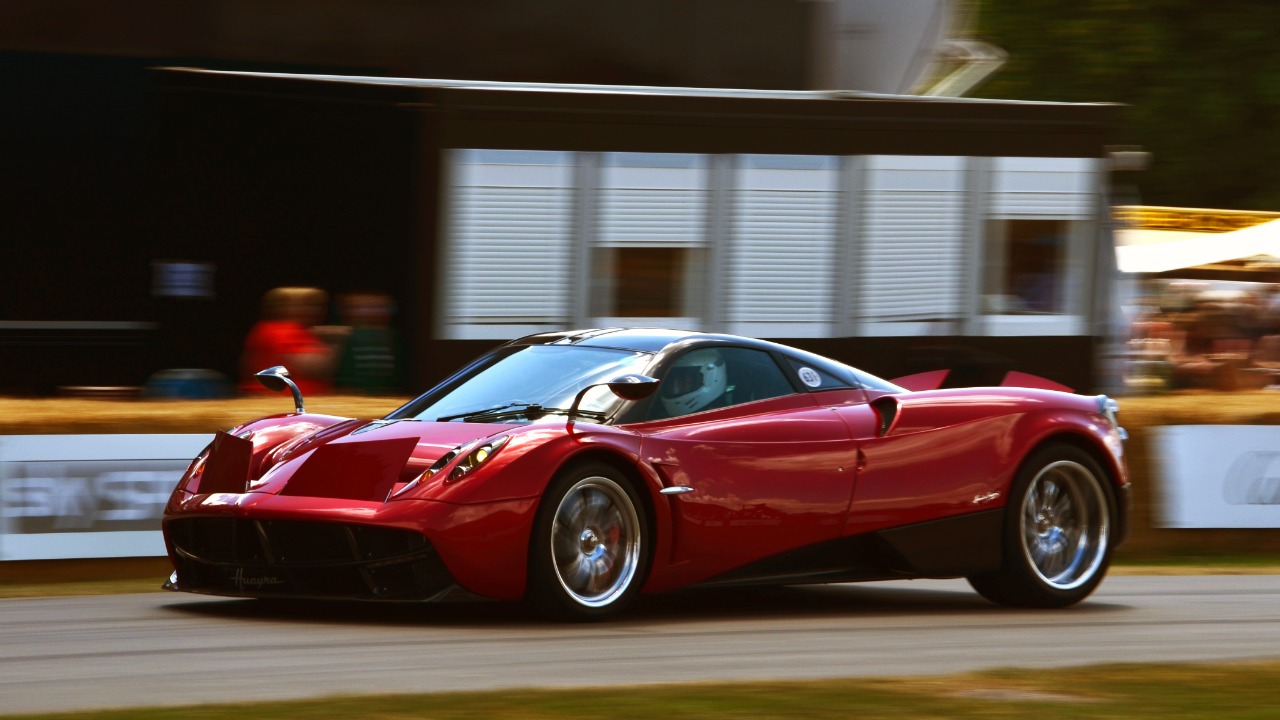
When I walk around a Huayra, what strikes me is how every curve looks like it was drawn by the wind itself. The body is not just pretty, it is purposeful, with each intake, crease, and vent working to keep the car pinned and stable. That balance between sculpture and science is why the Huayra still reads as elegant aggression rather than cartoonish excess, even parked next to newer hypercars.
Underneath that skin, the car is constantly thinking about the air it moves through. It is capable of changing the height of the front from the ground and independently operating four flaps at the corners, trimming its stance and downforce in real time. That active aero system manipulates the pressure zone around the car to generate stability and grip, turning the Huayra into a living object that reshapes itself as you drive. The result is a machine that feels as sharp as a track weapon but moves with the composure of a grand tourer, a combination that underpins its reputation as the most refined kind of “weapon on wheels.”
The Huayra Roadster and the poetry of open air
If the coupe is a blade, the Huayra Roadster is a piece of open-air poetry. Pagani describes this version as an open-air tribute to the God of Wind, and that language fits the way the car seems to channel air over its low windscreen and sculpted rear deck. The Roadster’s surfaces are described as Pure beauty, shaped as if they were carved from a block of Carrara marble, and in person the effect is almost architectural.
Yet this is still a weapon, not a static sculpture. In Roadster form, the Huayra pairs its delicately detailed cabin with serious firepower, and the way the car lunges forward with the roof off turns every straight into a sensory overload of sound and sky. That duality, the ability to be both a calm, open-air cruiser and a ferocious back-road tool, is what keeps the Huayra Roadster at the center of the Huayra legend rather than as a mere spin-off.
Power, precision and the feel of a “samurai sword”
Elegance in a hypercar is meaningless if the powertrain is clumsy, and the Huayra’s heart is anything but. At its core, at the heart of the Pagani Huayra sits a bespoke V12 that is integrated into a remarkably lightweight yet rigid structure, so the engine is not just a source of thrust but a stressed element in the car’s architecture. That integration gives the Huayra a sense of cohesion when you lean on it, the feeling that the chassis and powertrain are working as one rather than fighting each other.
The numbers are as serious as the engineering. In Roadster guise, the car is Powered by a 6.0-liter twin-turbo V12 from Mercedes-AMG that delivers an astonishing 764 horsepower in the Roadster, a figure that would be outrageous if the chassis were not so composed. On track-focused variants, that sense of precision is even more pronounced. The Huayra R has been likened to a “samurai sword on wheels,” and it earns that comparison with a naturally aspirated 6.0-liter V12 developed by HWA exclusively for Pagani, a powerplant that trades turbocharged torque for razor-sharp response and a spine-tingling soundtrack.
Inside the cockpit: where elegance meets race tech
Slip into the Huayra and the cabin feels like a bridge between a vintage watch and a prototype racer. The main dials and switches are machined like jewelry, yet the driving position and visibility are clearly set up for serious pace. That balance is taken to an extreme in the Huayra R, where the interior is designed to make the driver feel fused with the machine.
In that track-only environment, the cockpit is described as One with the Driver, with gearshift paddles mounted at the rear of the steering wheel and Secondary controls placed so they can be reached without distraction. The more extreme Ener-Core EC seats in the Huayra R Evo Roadster are covered in fireproof material and paired with six-point harnesses, turning the cabin into a place where race-car safety and artisan finishing coexist. It is a reminder that for all the leather and carbon, this is still a machine built to be driven hard, not just admired from a distance.
Variants that sharpen the blade without dulling the grace
Over time, the Huayra family has expanded, but each new variant has stayed true to the original car’s mix of beauty and brutality. Special editions like the Huayra Epitome show how far Pagani is willing to go to tailor the car to individual collectors while keeping its core identity intact. These are not simple paint-and-trim packages, they are deeply considered evolutions of the same idea.
The Designed details of the Huayra Epitome, inspired by the Imola Coupé from a client’s private collection, extend from the seven-spoke wheels to the inner radiator ducts, proof that even the most hidden components are treated as part of the aesthetic story. On the dynamic side, the broader Huayra range has been praised for acceleration that borders on ludicrous, traction that feels unshakeable, and steering and braking that deliver an old-school, communicative charm, qualities that define The Pagani Huayra experience across its many forms.
Why the Huayra still feels untouchable
In a market where new hypercars arrive with ever-higher numbers, the Huayra’s lasting power comes from the way it integrates its talents rather than from any single headline stat. It is fast, of course, but it is the way that speed is delivered, with a sense of calm precision and tactile feedback, that makes it feel like an elegant weapon rather than a blunt instrument. The car invites you to work with it, to learn its rhythms, instead of simply overwhelming you with electronics.
That harmony is why the Huayra continues to be described as more than just a supercar, often framed as a Masterpiece of Speed and Luxury. That phrase captures what I feel every time I see one in motion: a sense that the car is not just quick, but deeply considered in how it moves, sounds, and even breathes through its active aerodynamics. In an era defined by software and spec sheets, the Huayra still wins hearts the old-fashioned way, by turning engineering into emotion and reminding us that the sharpest tools can also be the most beautiful.

Leave a Reply