
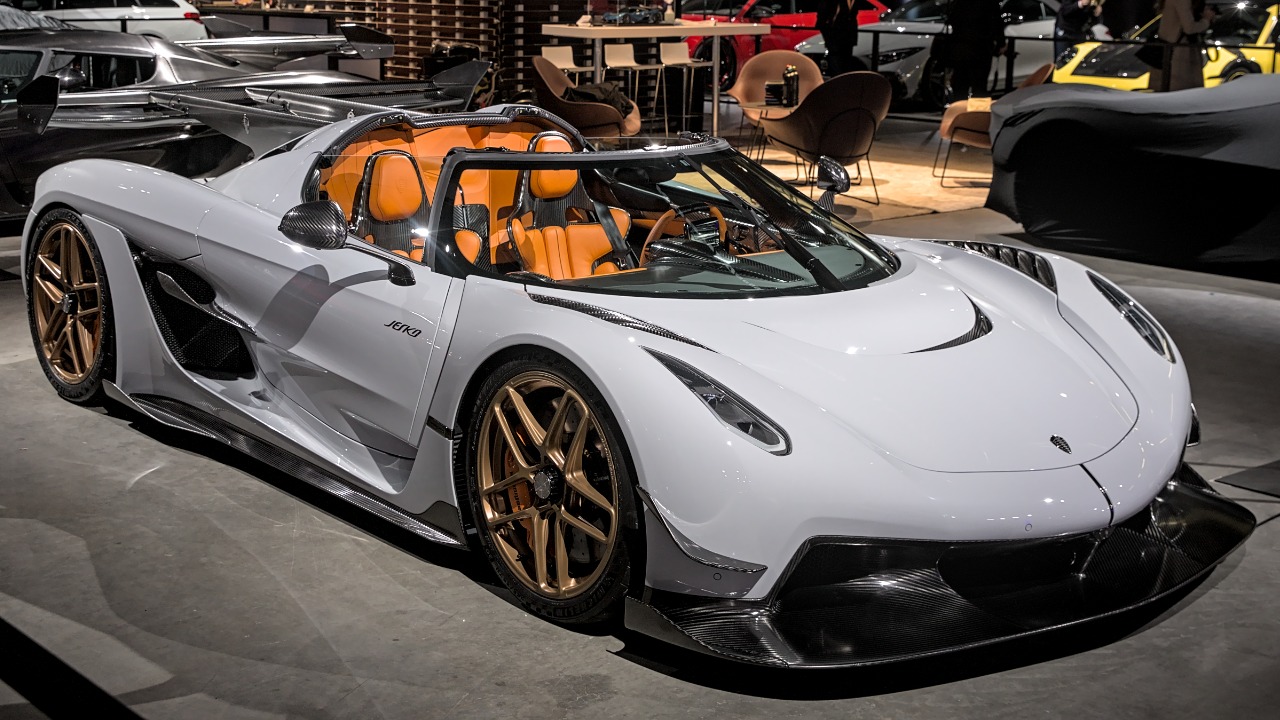
The race to be the world’s fastest road car has shifted from wild claims to carefully modeled science, and few machines embody that shift as clearly as the Koenigsegg Jesko in its Absolut specification. On paper, it is already positioned at the sharp end of the leaderboard, and in practice it is beginning to show why engineers, not just marketers, see it as the next reference point for outright speed. I see the Jesko not simply as another hypercar chasing numbers, but as a rolling thesis on how far combustion technology and aerodynamics can be pushed before physics finally calls time.
To understand why this car matters, it helps to look beyond the headline figures and into the way its creators have optimized every component for velocity. From its powertrain and transmission to its bodywork and even its crankshaft, the Jesko has been engineered with a single question in mind: how do you build a production car that can credibly chase speeds that used to belong only to land-speed record specials?
The numbers that reset expectations
Any claim to a new speed benchmark has to start with hard figures, and the Jesko’s are already reshaping the conversation. In its Absolut form, the Koenigsegg Jesko is credited with a theoretical top speed of 531 km, a figure that places it ahead of other headline-grabbing machines like the electric Rimac Nevera, which is listed at 415 km. Those numbers are not just marketing flourishes; they are the product of detailed simulations and a design that treats drag as the primary enemy.
Independent analysis has tried to stress-test those claims rather than simply repeat them. One detailed set of calculations, attributed to Jason, arrives at a potential top speed of 331 m, or 533 km, once you plug in the Jesko’s power, drag coefficient, and gearing. That kind of external scrutiny is part of why I see the Jesko as a potential benchmark: its numbers are being interrogated by engineers and enthusiasts who are trying to see where the theoretical ceiling really lies, not just accepting a glossy brochure figure.
A powertrain built for the outer edge
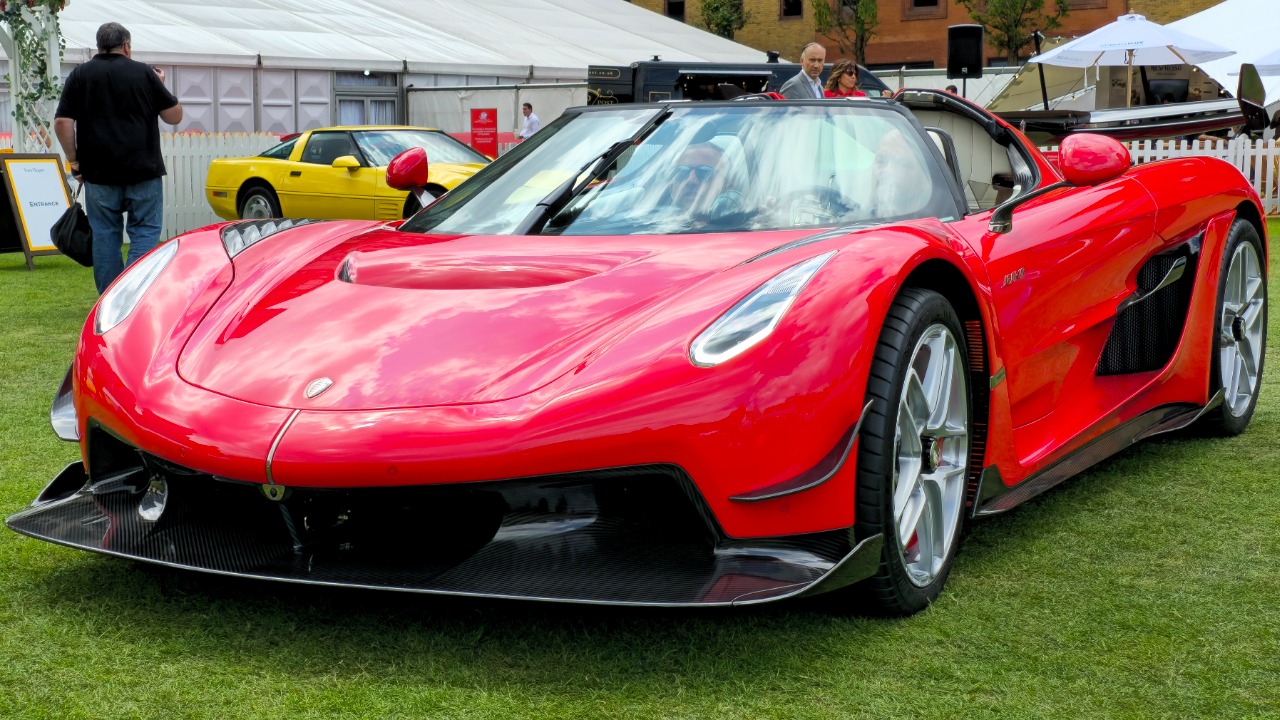
Raw power alone does not guarantee extreme speed, but the Jesko’s engine is clearly designed to give its aerodynamics something to work with. The Jesko Absolut is powered by a twin turbo charged V8 that produces 1280 bhp on standard fuel and 1600 bhp on E85, with a high 8500 rpm rev limit, a package that Koenigsegg highlights under its own “Need For Top” speed philosophy. That output is paired with what the company describes as the Lightest V8 crankshaft it has ever produced, which reduces rotational inertia and helps the engine spin up quickly even as it pushes a car designed to slice through the air at unprecedented velocities.
Underneath those headline figures sits a broader Jesko platform that has been reworked specifically for this kind of performance. The Koenigsegg Jesko uses a redesigned 5.0 litre twin-turbo V8 that produces 1280hp on standard gasoline and 1600hp on E85 biofuel, and that same core hardware underpins both the high-downforce and low-drag variants. I find that continuity important: it means the Absolut’s speed potential is not a one-off stunt engine, but an evolution of a powertrain that also has to work in more track-focused configurations. That dual role forces a level of robustness and drivability that pure record cars often lack.
Light Speed Transmission and the art of staying in the power band
Even the most potent engine will fall short if it cannot keep the car in its sweet spot as speeds climb, which is where the Jesko’s gearbox becomes central to its claim on the future of speed. Koenigsegg’s so-called Light Speed Transmission is a 9-speed unit that uses multiple clutches to allow near-instant jumps between any two gears, rather than stepping sequentially. One of the key advantages here is that the car can move directly to the ratio that best matches the engine’s torque curve at a given speed, which is crucial when you are trying to accelerate efficiently beyond 300 mph without long pauses between shifts.
From my perspective, this transmission is as important to the Jesko’s benchmark ambitions as the engine itself. Traditional dual-clutch systems are already quick, but they still rely on moving up or down one gear at a time, which can leave the car off-boost or off-cam at critical moments. By giving each gear its own clutch pack connected in a way that allows non-sequential changes, the Light Speed Transmission keeps the V8 on song as the car punches through the air. That is not a party trick; it is a structural advantage when you are trying to turn theoretical top speeds into repeatable, real-world runs.
Aero, drag, and the Absolut versus Attack split
Where the Jesko really separates itself from earlier hypercars is in the way its bodywork has been split into two distinct philosophies. The Jesko Attack is the high-downforce, default version of the Jesko, and The Jesko Attack carries a large rear wing and a more aggressive aero package aimed at track grip rather than outright speed. By contrast, the Absolut variant trades that wing for a smoother, elongated rear section that is explicitly optimized to reduce drag and stabilize the car at very high velocities.
Koenigsegg’s own description of the Absolut’s bodywork makes the intent clear. The company emphasizes that The Koenigsegg Jesko Absolut benefits from Reduced drag, with Every surface element shaped to minimize turbulence, particularly around its elongated rear hood. That low-drag focus, combined with the powertrain, is what underpins the company’s belief that the Absolut can reach speeds in the 330–350 mph window. For me, this split between Jesko Attack and Absolut is a sign that Koenigsegg is not just chasing a single number, but building a platform that can be tuned either for lap times or for the outer envelope of straight-line speed.
Real-world runs, rivals, and the road to a new benchmark
Of course, simulations and wind-tunnel work only matter if they translate into real-world performance, and that is where the Jesko’s recent outings start to look like a preview of a new standard. Koenigsegg has already used the Jesko Absolut to set multiple speed records, and the company has been open about its belief that the car can reach 330 m, even if that exact figure has not yet been logged in an official top-speed run. The key detail is that these attempts are being made with a production-intent car that still has to meet road regulations, not a stripped-back special built solely for a single pass on a closed runway.
When you set the Jesko against its most obvious rival, the picture sharpens further. Comparisons between the Absolut and the Bugatti Chiron Super Sport 300+ often frame the Bugatti as a luxurious missile that can do 304mph, while describing The Koenigsegg as a precision instrument that might do 330mph. That gap between 304mph and a potential 330mph is not just a bragging-rights margin; it represents a significant leap in the energy required to push a car through the air, which is why the Jesko’s combination of low drag, huge power, and advanced transmission feels like more than an incremental step.
Why the Jesko’s engineering makes it a future reference point
What convinces me most that the Jesko is poised to become a benchmark is the way its design choices line up with independent modeling. When Koenigsegg dropped the Jesko’s full specifications, analysts dug into the numbers and highlighted how the car’s low drag, high power, and relatively light weight, including a reduction of around 150 kilos (330.7 pounds) in certain configurations, could support the projected top speed. That kind of external validation, captured in detailed breakdowns of how fast the Jesko Absolut could be, suggests that the car’s creators are not simply stretching the truth to win a headline.
At the same time, the Jesko’s place in the broader hypercar landscape is defined by more than just its Absolut variant. The core Koenigsegg platform, with its Jesko Attack and Absolut branches, shows a manufacturer willing to build a family of cars around a single, highly optimized architecture. That approach, combined with the detailed scrutiny of figures like Mar and others who have unpacked the data, is why I see the Jesko as more than a fleeting headline. It is a car that could define what “fastest” means for a generation, not just for a single record run.


Leave a Reply