

The Koenigsegg CCX arrived at a moment when the Swedish brand needed to grow up without losing its appetite for outrageous speed. It was the car that forced a tiny manufacturer to think globally, to meet tough regulations, and to refine its engineering without dulling the drama that had made its early machines cult heroes. In doing so, the CCX became the pivot point between Koenigsegg’s raw beginnings and the sophisticated hypercars that followed.
By reworking its powertrain, rethinking its chassis, and chasing compliance in markets that had once been out of reach, Koenigsegg turned the CCX into a proof of concept for a new kind of boutique supercar maker. I see it as the moment the company stopped building curiosities for insiders and started shaping a platform that could stand alongside the most advanced performance brands in the world.
From niche experiment to globally minded supercar
Before the CCX, Koenigsegg’s early models were spectacular but essentially niche, aimed at enthusiasts willing to live with quirks in exchange for headline numbers. With the arrival of The Koenigsegg CCX, the company set out to build a mid engine sports car that could satisfy not only purists but also regulators in key markets. The car was developed by Swedish manufacturer Koenigsegg Autom with the explicit goal of meeting stringent safety and emissions rules, including those in California, which had previously kept the brand out of the United States. That shift in intent, from building the wildest possible machine to building one that could actually be sold widely, is what makes the CCX such a turning point.
In practical terms, that meant the CCX had to be more than a track toy. It needed crash structures that satisfied global standards, a powertrain that could pass emissions tests, and usability that would not intimidate owners who wanted to drive on public roads rather than only on private circuits. The result was a car that still delivered extreme performance but did so within a framework of compliance and repeatability, a balance that would underpin every major Koenigsegg project that followed.
Re-engineering the heart of the beast
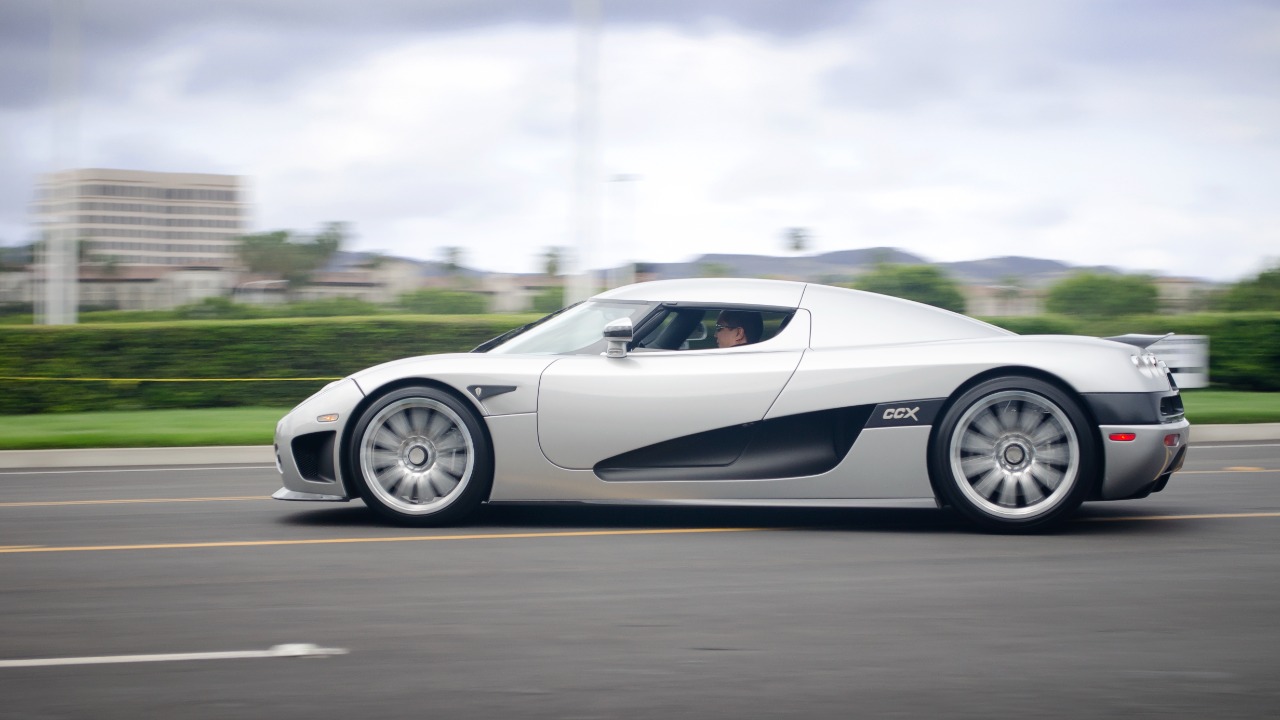
The most dramatic evidence of Koenigsegg’s new mindset sat behind the driver. Instead of simply tweaking its existing CCR engine, the company undertook what one report described as All but a clean sheet redesign of the V8. The new block reaffirmed the brand’s commitment to extreme performance while allowing the engine to run safely on lower octane fuel, including 91 octane, at full boost pressure. That combination of robustness and flexibility was essential for a car intended to operate in markets with very different fuel standards, and it showed that Koenigsegg was willing to invest heavily in engineering rather than relying on off the shelf solutions.
Reworking the engine also gave Koenigsegg a chance to refine drivability. Earlier cars had been known for ferocious power delivery that could overwhelm their chassis, but the CCX’s updated unit was tuned to provide a broader, more controllable spread of torque. By pairing that with revised gearing and improved cooling, the company created a powertrain that could handle repeated high speed runs without wilting, a key requirement for a car that aspired to be used regularly rather than only in short bursts. In my view, that focus on durability and usability, not just raw output, is one of the clearest signs that the CCX marked a new phase for the brand.
Chassis, aerodynamics, and the pursuit of balance
Power alone does not make a modern supercar credible, and Koenigsegg knew the CCX would be judged on how it put that power to the ground. Contemporary testing asked bluntly whether this was the best, most complete supercar in the world, with Ian Kuah examining how the car’s engine updates and chassis tuning worked together. Although top speed figures grabbed attention, the more important story was how the CCX combined immense acceleration with stability and feedback that inspired confidence rather than fear. That balance was not a given for a small manufacturer, and achieving it required a level of development work that went far beyond the company’s earlier efforts.
The CCX’s aerodynamics were a crucial part of that equation. Koenigsegg refined the bodywork to generate meaningful downforce without resorting to ungainly add ons, a task complicated by the need to meet pedestrian safety rules and other regulatory constraints. Suspension geometry and damping were tuned to keep the car composed at very high speeds while still allowing it to cope with real world roads. By threading that needle, Koenigsegg showed it could deliver a driving experience that was not just fast in a straight line but genuinely rounded, a trait that would become a hallmark of its later hypercars.
Designing a Koenigsegg you could live with
One of the most revealing aspects of the CCX story is how openly Koenigsegg talked about everyday usability. The company described how The CCX was designed to be driven to the limit on a daily basis, a striking claim for a machine with such extreme performance. That ambition influenced everything from seating position and visibility to cooling systems and luggage space. It also shaped the car’s ergonomics, which had to be intuitive enough that owners could jump in and drive without a learning curve every time they turned the key. For a brand that had started with far more uncompromising machines, this was a significant philosophical shift.
The CCX was also the third generation car from KOENIGSEGG, which meant it carried the weight of the company’s accumulated lessons. By this point, the brand understood that reliability and serviceability mattered just as much as lap times to buyers who were spending serious money. The CCX’s structure and components were laid out with maintenance in mind, and its electronics were developed to be more robust than those of its predecessors. In my assessment, this move toward a car you could realistically live with, rather than simply admire, is a key reason the CCX stands out as a watershed moment.
Regulations, markets, and the path to legitimacy
Behind the CCX’s engineering story sat a more strategic goal: access to the world’s most important performance car markets. The model was Designed and engineered to comply with global safety and environment regulations, with particular attention to the requirements of the U.S. market. That meant crash testing, emissions calibration, and a host of other behind the scenes tasks that rarely make it into glossy brochures but are essential for any manufacturer that wants to be taken seriously. By clearing those hurdles, Koenigsegg transformed itself from a curiosity operating on the fringes into a brand that could compete for the same customers who might otherwise buy a Ferrari, Lamborghini, or Porsche.
Regulatory compliance also had a reputational effect. Meeting tough standards signaled that Koenigsegg was not cutting corners, that its cars were engineered to a level comparable with far larger manufacturers. For a small Swedish company, that credibility was invaluable. It reassured buyers that they were not just purchasing speed but also a product that had been scrutinized and validated by independent authorities. In my view, the CCX’s success in this arena laid the groundwork for the brand’s later expansion and for the confidence with which it would tackle even more ambitious projects.
Rarity, collectability, and the CCX legacy
Even as Koenigsegg pushed toward broader legitimacy, it never abandoned exclusivity, and the CCX illustrates that tension perfectly. A recent listing described a Blue Chip Supercar, calling it a time capsule Koenigsegg and noting that it was 1 of just 49 Koenigsegg CCX variants produced globally, including all versions. That figure, 49 K in the seller’s phrasing, underlines how rare the car remains even as its influence has spread across the brand’s lineup. The CCX may have been designed with global markets in mind, but it was never intended to be a mass production model.
That scarcity has helped cement the CCX’s status among collectors, yet its real legacy lies in how thoroughly it reshaped Koenigsegg’s ambitions. By proving that the company could build a Swedish mid engine supercar that satisfied regulators, impressed testers, and still thrilled drivers, the CCX opened the door to the even more extreme and sophisticated machines that followed. When I look at the brand’s current hypercars, with their blend of outrageous performance, advanced technology, and surprising usability, I see the direct imprint of the decisions made during the CCX program. It was the car that taught Koenigsegg how to be both a rule breaker and a rule follower, and that is why it marked such a decisive turning point for the brand.





Leave a Reply