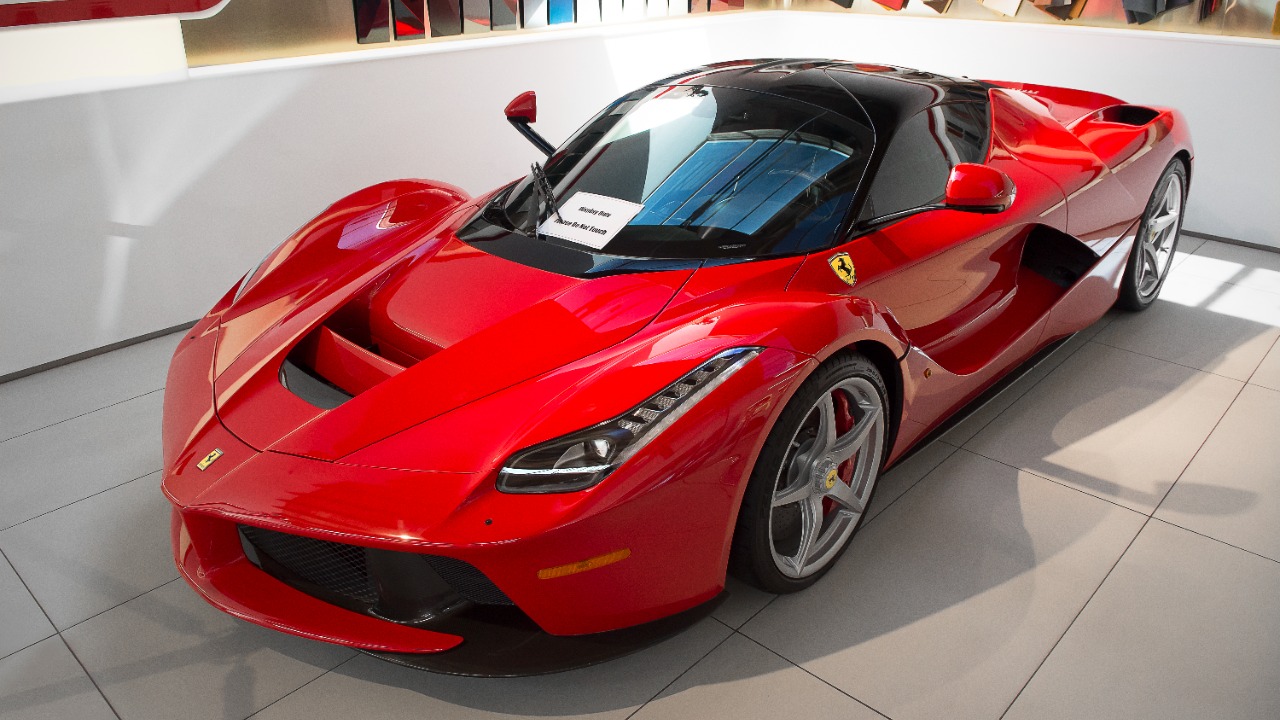
The LaFerrari arrived as a proof of concept that a hybrid could be both brutally fast and deeply emotional, and the market has only grown more obsessed with it since. Even as newer electrified flagships crowd the field, this V12‑and‑battery experiment still feels like the definitive hybrid hypercar, the one buyers chase when they want performance, pedigree, and scarcity in a single, volatile package.
When I look at why collectors keep circling back to it, I see more than nostalgia. The LaFerrari crystallized a turning point for Maranello, where cutting‑edge electronics, Formula 1 energy recovery and old‑school combustion drama fused into something that still feels ahead of the curve, which is exactly why demand has hardened rather than faded.
From controversial name to instant Hypercar Icon
I remember the first reaction to the badge: even among Ferrari die‑hards, “LaFerrari” sounded odd, almost self‑parody. Yet the car underneath that awkward name quickly silenced the jokes. At Geneva, the project that would become The Ferrari was framed as a Hypercar Icon in the making, the culmination of the brand’s hybrid research and the next chapter in the History that stretches from the 288 GTO through the Enzo. The company talked about The Vision Behind the project as a no‑compromise showcase of what a modern Ferrari could be when freed from normal production constraints.
Even critics who never warmed to the name had to concede that the hardware was something else. Contemporary coverage pointed out that while “the name still sounds as bad as it did in Geneva,” the car itself looked every bit as fresh, with a HY‑KERS powertrain tucked inside an ultra‑advanced, F1‑derived structure. That tension between slightly awkward branding and utterly serious engineering has aged well, because it underlines how little the car relied on marketing spin; the substance was always strong enough to carry it.
The hybrid system that turned efficiency into aggression
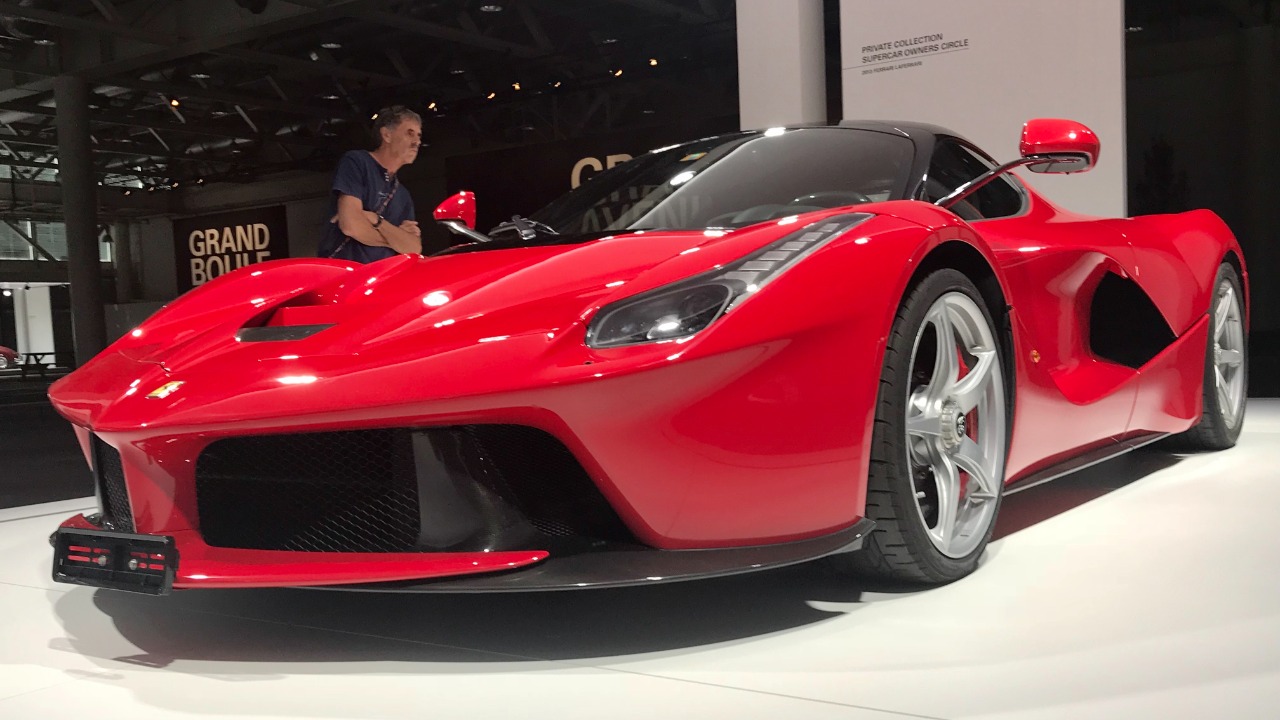
What still impresses me most is how the LaFerrari treats hybridization not as a green badge, but as a weapon. The car runs on a HY‑KERS setup, short for Hybrid Kinetic Energy Recovery System, which harvests braking and exhaust energy and feeds it back through an electric motor. Instead of chasing headline fuel‑economy numbers, the system pours that stored charge into instant torque and sharper throttle response, with the battery pack itself weighing about 60 kilograms to keep the mass penalty in check. In practice, the electric side of the powertrain feels less like a conscience and more like a turbocharger that never needs to spool.
Inside Maranello, that philosophy extended to the control software. Its electronic controls for the hybrid and aero systems were described as cutting edge, constantly juggling battery deployment, traction and downforce so the driver feels one seamless surge rather than a stack of separate systems. Later analysis of The LaFerrari ( Ferrari LaFerrari ) highlighted how the electric motor fills in the missing torque from the V12, enhancing overall performance silently and seamlessly rather than interrupting the drama. That is the trick buyers still crave: a hybrid that feels like an amplifier, not a compromise.
Lightweight aggression and the V12 soundtrack
For all the talk of batteries and algorithms, the LaFerrari still hits you first as a classic front‑row Ferrari experience: long nose, shrieking engine, and a chassis that feels carved around the driver. On the scales, it is hyper light, with a quoted curb weight of 3,489 pounds, about the same as a Toyota Camry or Honda Accord sedan despite the hybrid hardware. That figure is the result of a ruthless weight‑loss program that used carbon fiber extensively and treated every gram as an enemy of agility.
The combustion side of the equation is just as central to its appeal. The naturally aspirated V12 at the heart of the car still sings with the unmistakable sound that defines a Ferrari flagship, climbing to a spine‑tingling crescendo at high RPMs. Later commentary on the 2026 evolution of the LaFerrari concept has emphasized how that naturally aspirated character remains non‑negotiable, even as the hybrid systems grow more sophisticated. Buyers are not just paying for numbers; they are paying for the way this car sounds and feels when it is wrung out, something no spreadsheet can quite capture.
Rarity, star power and the collector premium
Exclusivity is the other pillar of the LaFerrari’s enduring pull. Only 499 coupes were built, and they were offered only to a select clientele who already had deep relationships with Maranello. One auction listing described the model as Considered one of the most exclusive and sought‑after Ferraris of the modern era, a description that has only grown more accurate as values have climbed. A separate video review framed it as The Million‑Dollar Hybrid You Can’t Have, stressing that fewer than 500 hybrid LaFerraris exist in total. That built‑in scarcity is gasoline on the fire of demand.
On today’s market, that mix of rarity and performance has firmly established the LaFerrari as a modern Ferrari icon. Its combination of extreme performance, limited production and hybrid innovation has made it one of the most desirable hypercars of the 21st century, and that status shows up in the numbers. When Sammy Hagar sent his 2015 LaFerrari across the block, it sold for $4.675 m, a $4.675 million result that set a new auction world record for the model and underlined just how far above original list these cars now trade.
Blue‑chip asset and cultural calling card
At the very top of the market, the LaFerrari has crossed from expensive toy into financial instrument. The open‑roof Aperta variant, built in even smaller numbers, has seen such rapid appreciation that one recent listing described the acceleration in value as confirmation of its status as a global blue‑chip automotive asset, one of Ferrari’s most significant hybrid V12 creations. Another deep dive into the model’s market performance framed the car through the lens of What Makes It Worth the Premium, noting that Collectors often pay over the odds for the right combination of rarity, condition and specification in this rarefied world of Ferrari hypercars. In other words, the LaFerrari has become a benchmark asset, the car against which other hybrid exotics are priced.
That financial cachet is reinforced by cultural visibility. High‑profile owners treat the LaFerrari as a calling card, a way of signaling both taste and access. Tyler, for instance, has a collection shaped by his love of rally era, Group‑inspired machinery, and among the cars of note is his LaFerrari, parked alongside McLarens. In South Korea and the United States, a white Ferrari LaFerrari Coupe (White) sits in Coco Culture’s garage, described as a hybrid hypercar with a powerful V12 and electric motor that is highly sought after by collectors. These are not anonymous chassis numbers; they are characters in a broader story about how the LaFerrari has become shorthand for a certain level of success.
How LaFerrari reshaped Ferrari’s own playbook
Inside the company, the LaFerrari did not exist in isolation. It slotted into a lineage that runs From the iconic Ferrari 250 GTO of the 1960s to the modern‑day LaFerrari hybrid hypercar, a continuum of cars that pushed what was possible in high‑performance automobiles. The lessons learned from its hybrid and aero systems filtered down into more “attainable” models, like the 488 Pista Piloti, where advanced electronics and chassis tuning ensure that each drive offers an experience that is both thrilling and refined, a harmony of technology and emotion that delivers unmatched track performance on the road, as highlighted in these features.
Inside the LaFerrari’s own cockpit, There were cabin innovations that previewed where the brand was heading, from the fixed driver’s seat with adjustable pedals to the integration of steering‑wheel controls that put more functions at the driver’s fingertips. Those ideas have since become familiar across the range, but in the LaFerrari they felt radical, a reminder that this car was as much a rolling laboratory as a status symbol. When I talk to owners and would‑be buyers, that sense of being present at a turning point in Ferrari’s own evolution is part of the draw; they are not just buying a fast car, they are buying a milestone.
Why the craving is not going away
Put all of this together and it becomes clear why demand for the LaFerrari has not softened. The car fused a pioneering KERS‑based hybrid system with a naturally aspirated V12 that still defines the brand’s identity, wrapped it in a body that weighs about as much as a family sedan, and limited production to a few hundred cars. It then went on to prove itself in the only arena that really matters to collectors: the open market, where record prices, celebrity garages and blue‑chip status have turned it into a reference point for hybrid hypercars. In a world racing toward full electrification, the LaFerrari stands as a snapshot of a brief, wild moment when batteries and gasoline shared top billing, and that is exactly the kind of moment buyers are desperate to own.