
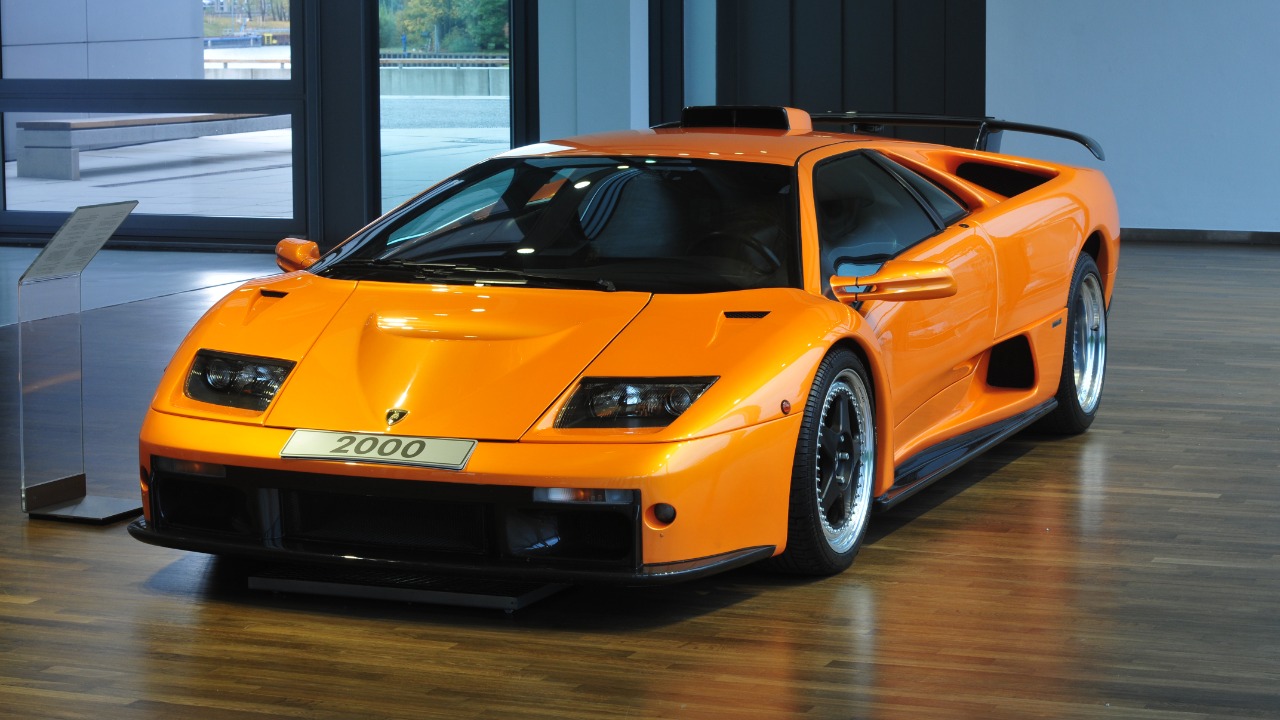
The Lamborghini Diablo arrived in the early 1990s as a barely tamed missile, and three decades later it still feels closer to a weapon than a car. Its mix of raw speed, awkward ergonomics, and unapologetically analog hardware means it can still unsettle modern drivers who are used to layers of electronic help, yet that same unruly character is exactly what keeps people obsessed with it. I have driven and reported on plenty of supercars, but the Diablo remains one of the few that genuinely feels like it might bite back if you lose focus for even a second.
The original Diablo shock: power without a safety net
When I think about why the Diablo still intimidates people, I start with how brutally simple its mission is: take a huge naturally aspirated V12, bolt it behind the seats, and give the driver almost no electronic lifelines. In one short clip, a driver casually explains that he pilots a 1991 Lamborghini Diablo “because V12, no power steering,” a throwaway line that captures how little insulation there is between the driver and the hardware in that early car, and how much physical effort it demands at low speeds before the steering lightens with velocity, a reality that modern supercar owners rarely experience in the same way, as you can see when that 1991 Lamborghini Diablo is muscled around.
The lack of electronic aids is not just a romantic talking point, it has real consequences for how the car behaves at the limit. One detailed account of a hard-driven Diablo spells it out bluntly, describing how The Lamborghini Diablo did not care about safety and instead prioritized chaos, with no traction control and no forgiveness when the V12 overwhelmed the rear tires, a reminder that this car predates the era when stability systems quietly trim your mistakes before you even notice them, and that a sudden throttle stab in the wet can still feel like the moment The Lamborghini Diablo tries to kill its driver.
Inside the cockpit: drama, discomfort, and focus
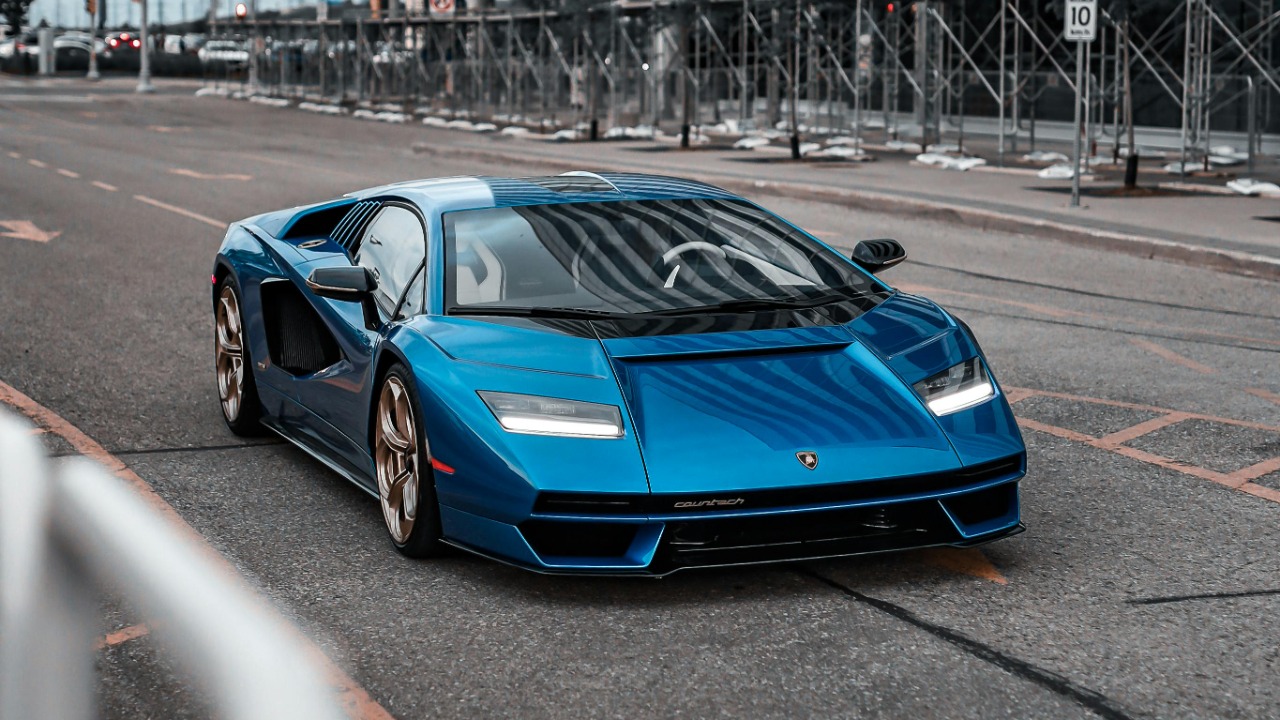
Slide into a Diablo and the intimidation factor ramps up before you even twist the key, because the cabin feels more like a bespoke race suit than a lounge. In a rare Diablo GT, one description lingers on a flat bezel with holes carved into it for individual gauges, a layout that looks almost improvised compared with the digital clusters in current supercars, and that same account notes an ultra stiff suspension that keeps the car keyed into the road but also punishes any lapse in concentration, which is why the driver compares its rawness to modern machines like a Toyota GR86 while still making clear that the Diablo GT is on another level of intensity, as that Diablo GT cockpit description makes obvious.
The ergonomics add another layer of unease that somehow deepens the appeal once you adapt. Owners talk about the offset pedals, the heavy clutch, and the way the low roof and thick pillars force you to crane your neck at junctions, and even when Lamborghini tried to civilize the formula with the Diablo VT Roadster, the result was only a slightly less terrible version of the same basic experience, with the owner of one such car openly admitting that it is still a handful while also pointing out the clever engineering touches and the likelihood that the car will appreciate in value if he can manage to hang on to it, a balance of pain and pride that comes through clearly when he walks around his Lamborghini Diablo VT Roadster.
Variants that amplify the fear factor
Not all Diablos are created equal, and some of the rarest versions dial the intimidation up even further. The Diablo GT, for instance, strips away comfort in favor of track focus, with that ultra stiff suspension, pared back interior, and more aggressive aero turning an already demanding car into something that feels like a homologation special for a race series that never quite existed, a sensation that is reinforced when you watch a driver wrestle with a rare Lamborghini Diablo GT and talk through how much commitment it takes to exploit its potential.
Even within the broader Diablo family, there are one-off and final-run cars that carry an extra aura of menace simply because of their rarity and the stakes involved in driving them. One specialist who curates high-end examples talks about having some beautiful Diablo models come through, including a blu metallizato Diablo VT and the LAST USA Diablo SE30 produced, and the way he describes the arrival and test drives of these cars makes it clear that the fear is not just about the power, it is about piloting irreplaceable history, a feeling that hangs over every mile in that Diablo VT and LAST USA Diablo SE30.
Living with the devil: ownership headaches and hidden costs
For all the adrenaline, owning a Diablo can be a grind, and that friction is part of why the car still commands respect. One long-time owner lays out in painful detail why it can suck to live with a Lamborghini Diablo, from the constant fear of scraping the low nose to the cost and scarcity of parts, and the Comments Section under that account even features a user named Formber jokingly asking “Are your parents looking to adopt?” as a way of acknowledging how much money disappears into maintenance, a mix of envy and realism that runs through the entire Comments Section where Formber writes Are.
Some of the challenges are not unique to the Diablo but are amplified by its age and temperament. Enthusiasts discussing how different it is to drive a supercar point out that Ceramic brakes might sound like a good idea, yet they need to warm up before they bite properly, and they also note how visibility, parking, and low-speed drivability can turn simple errands into small ordeals, all of which map neatly onto the Diablo experience, where cold brakes, a heavy clutch, and a wide body mean you are always a little on edge until everything is up to temperature, as anyone who has wrestled with Ceramic brake quirks in a supercar will recognize.
Why it still thrills in a world of easy speed
What keeps the Diablo relevant is not just nostalgia, it is the way it delivers speed with drama that modern cars often smooth away. A recent deep dive into the model compares it directly with contemporaries like The Testarossa and the 348, arguing that while those cars can feel like grand tourers or balanced sports cars, the Diablo is more feral, with a driving position, steering weight, and power delivery that demand you clear your head and commit every time you let it rip, a contrast that becomes obvious when the writer jumps from talking about The Testarossa and a 348 to describing how the Diablo feels like a different species entirely, as that comparison with The Testarossa and 348 makes plain.
For me, that is the heart of the Diablo’s enduring pull: it is not an easy car, and it never pretends to be. Whether you are watching Jul casually mention that he drives a 1991 Lamborghini Diablo because of its V12 and lack of power steering, listening to Dec talk through the quirks of a Diablo GT at the end of the year, or hearing Jan explain why his Diablo VT Roadster is only a slightly less terrible version of the same wild idea, the pattern is the same, each of these voices accepts the fear and the flaws as the price of admission to an experience that feels unfiltered in a way modern supercars rarely do, a truth that runs through the stories from Jul, Dec, and Jan every time they fire up their Diablos.


Leave a Reply