
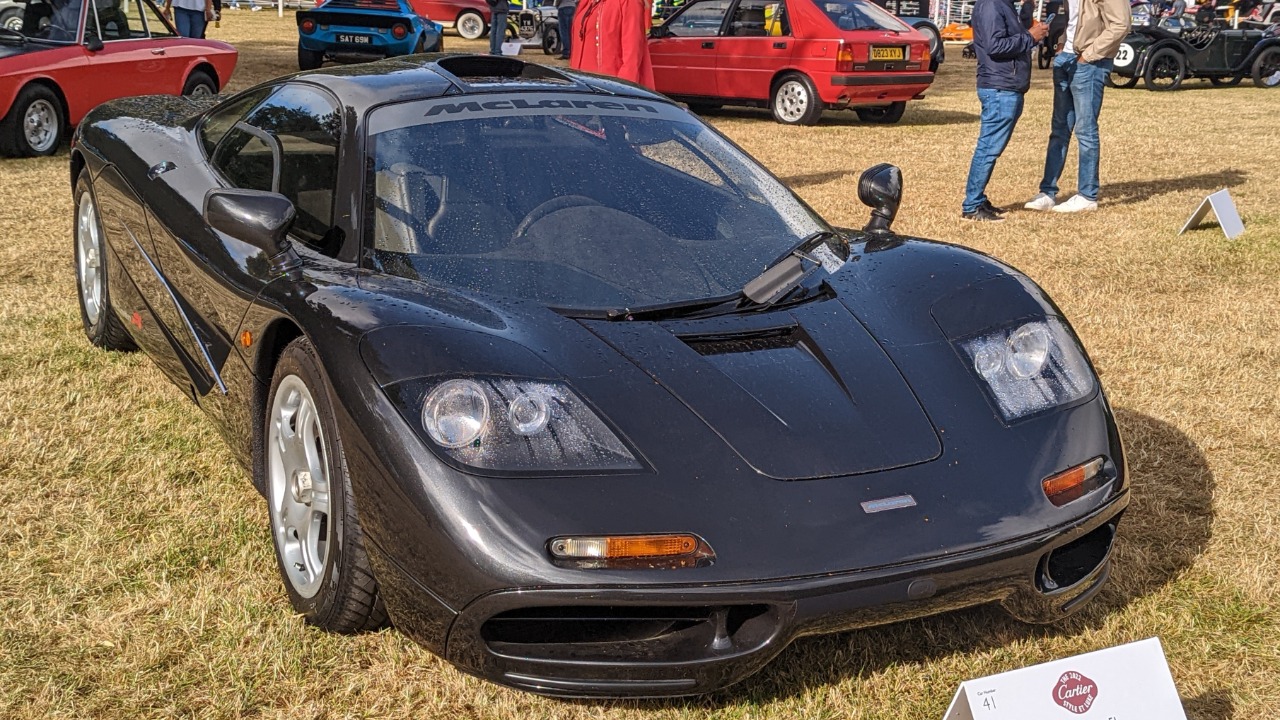
The McLaren F1 sits in a tiny group of machines that changed not just how fast a car could go, but what a road car could be. More than three decades after it first appeared, it still feels like the reference point every modern supercar is quietly measured against. I see it less as a nostalgic favorite and more as a benchmark that has refused to be eclipsed, technically, emotionally, and culturally.
To understand why it still holds that status, you have to look past the auction prices and poster nostalgia and get into the way it was conceived, engineered, and used. From its radical packaging to its racing success and the way it shaped the hypercar segment, the F1 did not just move the goalposts, it picked up the whole field and redrew the lines.
The clean-sheet vision that changed the rules
What keeps pulling me back to the McLaren F1 story is how uncompromising the original brief was. The car was conceived as a clean-sheet design, with virtually every component created specifically for it rather than borrowed from an existing parts bin, a level of focus that is rare even in the supercar world. According to detailed technical histories, the F1 was engineered so that all components except the tail lamps were built uniquely for the project, a choice that underlined how seriously McLaren treated the idea of building the ultimate road car rather than a rebodied racer, and that obsessive approach is a big part of why the car still feels so singular today, as reflected in the way the entire package was developed from scratch.
That purity of purpose came from Gordon Murray and a small team who were determined to ignore convention, even when it meant higher costs or more complexity. Internal targets like keeping the car under a strict weight ceiling and prioritizing driver feel over raw numbers shaped every decision, from the layout of the cockpit to the materials used in the chassis and engine bay. When I look at modern exotics that juggle marketing demands, emissions rules, and shared platforms, the F1’s single-minded development stands out as a moment when a company decided to build exactly one thing, as well as it possibly could, and let the rest of the industry catch up.
Carbon, craftsmanship, and that central seat
Long before carbon tubs became the default in high-end performance cars, the McLaren F1 arrived with a fully carbon-fibre monocoque body that treated weight as the enemy and stiffness as a non-negotiable. To manufacture the F1, McLaren used advanced composite construction techniques that were still exotic in road cars at the time, creating a structure that was both incredibly light and immensely strong, and that pioneering use of a carbon-fibre monocoque is documented in the way the chassis and body were designed as a single composite cell. That decision did more than shave kilograms, it set a template that later supercars and hypercars would follow, turning race-derived carbon construction into a road-going reality.
Inside that carbon shell, the F1’s most famous flourish is the central driving position, flanked by two passenger seats set slightly back. I have always thought of that layout as the clearest expression of the car’s priorities, putting the driver on the axis of the car for perfect visibility and balance while still allowing space for friends or family. The way the cockpit is arranged, with the steering wheel and pedals dead ahead and the passengers offset, gives the driver improved visibility and a sense of being at the core of the machine, and that unusual three-seat configuration is highlighted in technical descriptions of how the central driving position was integrated into the carbon structure. It is a layout that still feels futuristic, and it reinforces why the F1 is remembered as much for its design intelligence as for its speed.
The BMW V12 that rewrote the power playbook
Under the rear clamshell, the McLaren F1’s engine remains one of the most revered powerplants ever fitted to a road car. McLaren turned to BMW to create a naturally aspirated 6.1-litre V12 that would deliver huge power without forced induction, and the result was a unit that generated the highest power output for its size at the time, producing over 620 bhp while remaining tractable and reliable. That combination of displacement, specific output, and drivability is captured in factory accounts of how the 6.1-litre BMW V12 was developed to deliver more than 620 bhp. In an era when turbos were already being used to chase big numbers, the F1’s engine proved that a high-revving, naturally aspirated design could still sit at the top of the performance tree.
What impresses me most is how that engine was integrated into the broader philosophy of the car rather than treated as a standalone headline. The V12 was mounted low and close to the center of the chassis to preserve balance, and it was surrounded by meticulous details like gold foil heat shielding to manage temperatures in the compact engine bay. Even the way the powertrain was calibrated, with a focus on instant throttle response and linear delivery, reflected Gordon Murray’s insistence that the F1 be a driver’s car first and a numbers car second, a mindset that enthusiasts still celebrate when they talk about how the naturally aspirated V12 avoids the lag and complexity of modern turbocharged systems.
Speed records and real-world performance
Even if you strip away the romance, the McLaren F1’s raw performance figures still look outrageous. The car set a record-breaking top speed that stood as the benchmark for a production road car for almost 30 years, a feat that was achieved without turbochargers or hybrid assistance and that still resonates whenever new contenders chase similar numbers. Detailed performance data notes that the F1’s maximum velocity and acceleration figures were so far ahead of its contemporaries that they effectively reset expectations for what a road-legal machine could do, and that dominance is reflected in the way its top speed record held for almost 30 years.
Yet the F1 was not just a straight-line hero, and that is where I think its legend really hardens. The chassis, suspension, and aerodynamics were tuned so that the car maintained poise under braking and through high-speed corners, making it as devastating on a circuit as it was on an autobahn. Factory descriptions of the car’s dynamics emphasize how the bodywork and underfloor were shaped to keep the car stable at extreme speeds while still allowing it to ride acceptably on real roads, and that balance is captured in accounts of how the world’s fastest road car still maintained composure when braking hard. That duality, brutal speed with genuine usability, is a big part of why the F1 still feels like a complete package rather than a one-trick record car.
How the F1 created the hypercar template
When people talk about hypercars today, they often mean a blend of extreme performance, exotic materials, and tiny production numbers, but the McLaren F1 helped define that formula before the term was widely used. Enthusiast retrospectives point out that the F1 effectively established what we now call the hypercar segment, combining unprecedented speed with a host of industry firsts in design and engineering that set it apart from the supercars of its era. That influence is captured in analyses that describe how the car It Established The Hypercar Segment while featuring many industry firsts, from its materials to its packaging.
What I find striking is how many of the F1’s once-radical ideas have since become standard expectations at the top of the market. Carbon monocoques, central driving positions in track specials, dihedral doors, and obsessive weight-saving are now familiar talking points in brochures for modern exotics, yet in the early 1990s they marked the F1 out as something closer to a road-legal prototype. The car’s influence can be traced through later McLarens and rival brands that adopted similar approaches, and factory design notes even highlight how signature features of the F1 continue to appear on today’s models, reinforcing the idea that the original car did not just occupy a new niche, it created a roadmap that others have followed.
Gordon Murray’s rule-breaking philosophy
Behind the F1’s spec sheet sits Gordon Murray’s refusal to accept the usual compromises of road car design. Accounts of the project describe how he broke many of the unwritten rules of the industry, insisting on strict targets such as a maximum weight that Must not exceed 1000 kilograms and a focus on driver engagement over marketing-friendly gadgets. That mindset is captured in detailed histories that explain how Gordon Murray Broke All the Rules and Redefined the Supercar with a Must not weigh more than 1000 kilograms target and a Maxi focus on purity, turning the F1 into a car that felt engineered from the driver outward rather than the market inward.
I am always struck by how that philosophy shows up in the details owners talk about. The lack of heavy sound insulation, the manual gearbox, the absence of electronic driver aids, and the careful tuning of the steering all reflect a belief that the driver should be fully involved, even if that made the car more demanding. Enthusiast discussions often highlight how Murray’s mission was to build the ultimate driver’s car regardless of cost, and that ethos is echoed in fan accounts that describe how Gordon Murray set out to create the ultimate drivers car no matter the cost. In a world where electronics now mediate so much of the driving experience, the F1’s analog intensity feels even more special.
Rarity, value, and the aura of the unobtainable
Part of the F1’s mystique comes from how few were built and how coveted they have become. Production numbers were tiny by any standard, and the car’s combination of performance, pedigree, and scarcity has pushed values into the stratosphere, with official overviews noting that examples have traded hands for as much as $20.5 million on the open market. That kind of figure is not just a reflection of collector frenzy, it is a signal of how the OVERVIEW of the model now includes auction results reaching as much as $20.5 million, cementing its status as a blue-chip automotive asset as well as a cultural icon.
Rarity alone does not guarantee greatness, but in the F1’s case it amplifies the car’s other qualities. Commentators who have driven or studied the car often point out that it was rarer than the most exclusive rivals of its era, yet still engineered to be usable enough that an owner could, in theory, take their mom to the shops in it. That blend of scarcity and real-world capability is highlighted in reflections that describe how it was rarer than the usual exotics, Yet still comfortable enough for everyday use, and how those traits help explain why some enthusiasts still call it the most incredible hypercar of all time, as captured in analyses of why it is rarer than the competition Yet still regarded as the most incredible hypercar of all time. That aura of the unobtainable, combined with genuine engineering depth, keeps the F1 at the top of many dream lists.
Racing glory and road relevance
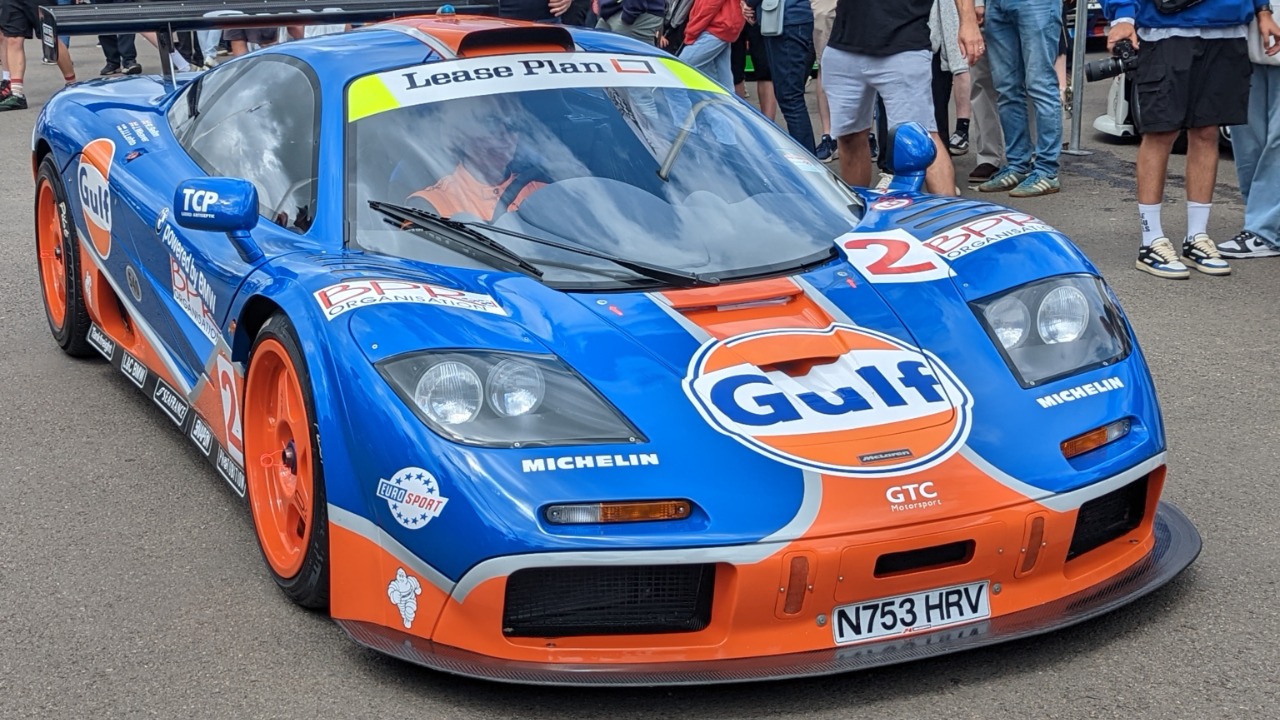
Although the McLaren F1 was conceived first as a road car, its competition record added another layer to its legend. The same core design that could carry luggage and passengers also proved capable of winning at the highest levels of endurance racing, a crossover that few other supercars have matched so convincingly. Technical histories of the program emphasize how little had to be changed to turn the road-going F1 into a race winner, reinforcing the idea that the road car’s clean-sheet design translated directly into competition success and that its basic architecture was inherently capable.
For me, that dual identity is a big part of why the F1 still feels so complete. Many modern hypercars are either track-only specials or road cars that rarely see serious circuit use, but the F1 proved its credentials in both arenas without losing its everyday usability. Owners and commentators often talk about how the same qualities that made it so fast on a circuit, such as its stability at speed and its responsive steering, also made it engaging on a mountain road or a long highway run. That continuity between road and race, rather than a split personality, helps explain why the F1’s reputation has only grown as time has passed.
Why it still feels ahead of its time
When I compare the McLaren F1 to modern supercars packed with electronics, hybrid systems, and active everything, what stands out is how contemporary its core ideas still feel. Commentators looking back on the car have described it as being way ahead of its time, pointing to its combination of low weight, naturally aspirated power, and advanced materials as a package that many current cars still struggle to match. Analyses of its legacy note that the F1’s winning point was not just its speed but the way it delivered that performance with such clarity and involvement, which is why some still call it one of the greatest cars ever made and why enthusiasts highlight how it was way ahead of its time and is still counted among the greatest cars ever made.
That sense of modernity also shows up in how the F1 anticipated trends that would later dominate the segment. Its use of a carbon monocoque, its focus on aerodynamics that work with rather than against the driver, and its integration of advanced diagnostics for servicing all foreshadowed technologies that are now commonplace in high-end performance cars. Factory design notes even mention how systems developed for the track were adapted to help identify and diagnose faults in the road car, a level of sophistication that feels very current. When I step back and look at the whole picture, from the 6.1-litre BMW V12 to the central seat and the record that held for almost 30 years, it is hard to escape the conclusion that the McLaren F1 did not just set a standard for its era, it set one that the supercar world is still chasing.




Leave a Reply