
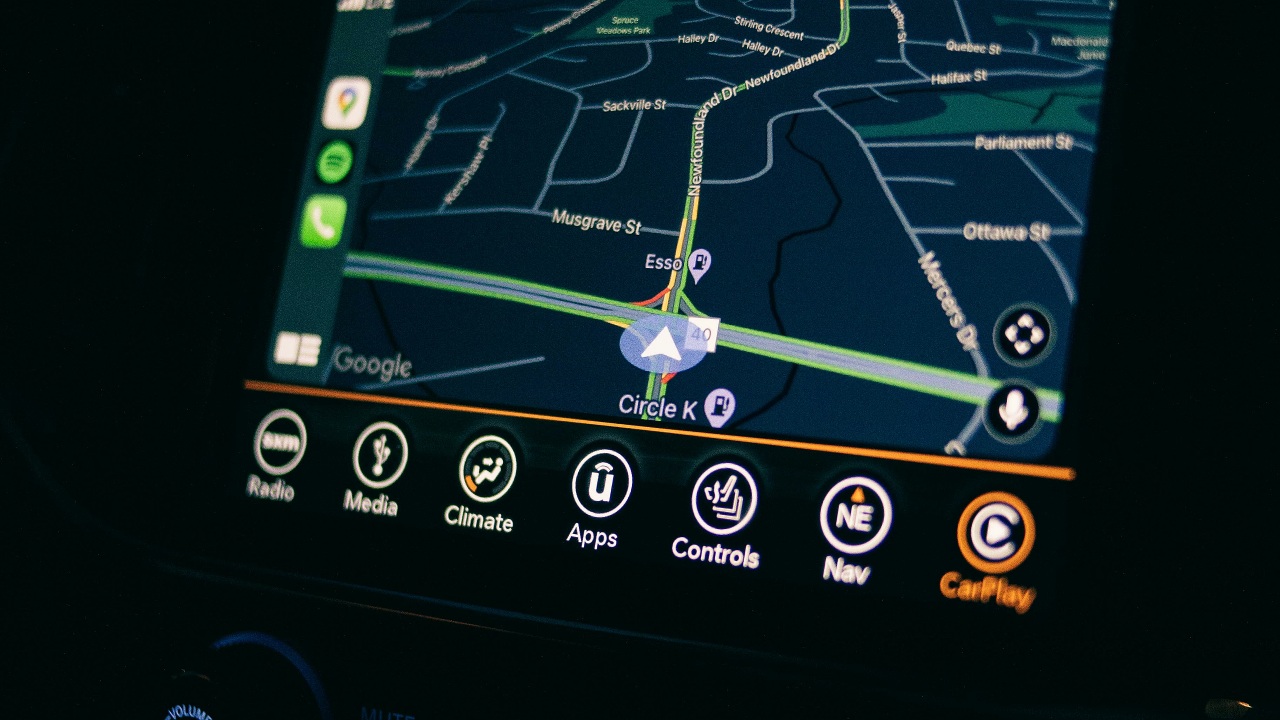
Modern cars surround drivers with digital certainty, yet one of the most basic numbers on the dashboard is quietly biased in your favor. The speedometer is designed to err on the side of reading high, while the navigation app in your pocket promises satellite precision. I want to unpack how both systems actually work, why they disagree, and which one you should trust when the next speed camera comes into view.
Why your speedometer almost never tells the full truth
Automakers do not build speedometers to be perfectly neutral instruments. They are engineered so that, in normal conditions, they never under-report your speed and usually show a figure that is a little higher than reality. That buffer protects manufacturers from legal exposure if a driver relies on the gauge and drifts over the limit, and it also accounts for the way real cars age: tires wear down, pressures change, and wheel sizes vary, all of which can push the indicated speed upward. Technical guidance cited by specialists in speedometer diagnostics notes that a reading a few percent fast is considered normal behavior rather than a defect.
The way the system measures speed makes that bias almost inevitable. Most modern vehicles infer road speed from wheel rotation or from sensors in the transmission, then translate that into the needle or digital readout. If you fit slightly larger or smaller tires than stock, or if the tires are underinflated, the rolling circumference changes and the calculation drifts. Experienced technicians who have investigated hundreds of complaints about “wrong” gauges report that the instrument is usually working as designed, with the apparent error coming from those real-world variables rather than a broken cluster. In other words, when your dashboard says 70 miles per hour and your car is actually traveling at 66, the system is doing exactly what the engineers intended.
How GPS turns position into speed, and where it stumbles
By contrast, GPS does not care about your tires at all. A receiver in your phone or car listens to signals from a constellation of more than 30 satellites in the Global Positioning System, then calculates its position on the surface of the Earth. Speed is derived from how that position changes over time, which is why a GPS unit is often described as “measuring” speed even though it is really measuring motion across the map. Under open sky, official information on The GPS signal quality indicates that position can be pinned down within a radius of a few meters, which is precise enough for software to compute a very accurate average speed over several seconds.
That method has its own weaknesses. Because GPS is constantly solving for position, it needs a clean view of the sky and a stable signal to keep its calculations tight. Urban canyons, tunnels, dense tree cover, or even heavy rain can degrade reception and introduce jitter into the reported speed. Technical notes on Broadcasting performance explain that the receiver must exchange signals with multiple satellites to know both where it is and how fast it is moving, and when that link is compromised, the speed reading can lag or fluctuate. Some devices also introduce a small delay in updating the display, especially in areas with weak signals, so the number you see can be a second or two behind your actual motion.
When GPS really is more accurate than the dash
In steady highway cruising, I find that a good GPS app is usually closer to the truth than the car’s own gauge. When you are traveling in a straight line at a constant speed, with clear sky above and no tall buildings around, the receiver can average your movement over time and smooth out the noise in its position data. Under those conditions, engineers and driving experts broadly agree that a GPS-based reading will typically be within a very small margin of your real speed, while the speedometer will still be sitting on its built-in cushion. Practical tests comparing indicated speed to satellite-derived figures often show the dash reading 3 to 5 percent high at typical motorway velocities, while the GPS stays much closer to the actual pace.
That advantage is why many technicians now tell drivers that a GPS reading is the better reference point, as long as the conditions are right. Detailed explanations from specialists who have diagnosed hundreds of speedometer concerns describe GPS as more accurate in principle, while stressing that a slightly optimistic dash reading is not a sign of failure. Other analyses of GPS speed vs vehicle speedometer performance reach a similar conclusion: on a straight, open road, the satellite-based figure is usually the best approximation of reality, and the car’s own display is intentionally conservative. Even informal comparisons by owners, such as those who note that “Your phone GPS is likely the most accurate when coasting at a steady pace with cruise control on,” echo that pattern.
Where the satellites can mislead you
The picture changes once you leave that ideal scenario. GPS speed is an average over distance and time, so it struggles with very short intervals and rapid changes. If you accelerate hard away from a traffic light or brake sharply for a toll booth, the receiver needs a moment to update its position and recalculate your pace. Technical discussions of GPS Data Update Delay point out that some devices, especially cheaper units or those with weaker antennas, can lag noticeably behind your real motion. In tight corners or on winding mountain roads, the system may also underestimate speed because it is effectively drawing straight lines between position fixes rather than tracing every curve of the asphalt.
Environmental factors can compound those issues. In dense city centers, signals bounce off glass and concrete, a phenomenon known as multipath, which can confuse the receiver about its exact location. Inside tunnels or under heavy tree cover, the unit may lose lock entirely and then snap back with a sudden jump in reported position and speed. Analyses of why GPS, OBD scanners, and speedometers show different numbers emphasize that the satellite-based reading is highly dependent on signal quality and sky visibility. In those moments, the old-fashioned wheel-based measurement in your instrument cluster, while biased high, may actually be more stable and predictable than the flickering digits on your phone.
Why the difference matters more in a world of cameras
For years, a slightly optimistic speedometer was mostly a quirk that enthusiasts debated on forums. That is changing as automated enforcement spreads and speed limits tighten. New rules on Updated Speed Limits and School Zone Rules Speed in the United States are putting more emphasis on precise compliance, and several jurisdictions are rolling out camera systems that ticket drivers based on small deviations over the posted limit. In California, for example, a New California measure taking effect Starting January in 2026 will activate speed cameras in Caltrans highway work zones, turning construction areas into tightly monitored corridors where a few miles per hour can make the difference between a warning and a fine.
In that environment, I believe drivers need a clear strategy for which number to trust. If you rely solely on the dashboard, you may be traveling a little slower than you think, which is safe but can be frustrating in fast-moving traffic. If you fixate on GPS without understanding its blind spots, you might be caught out by a lagging update as you enter a camera zone or a tunnel. Technical guidance that compares Speedometer vs GPS performance suggests a practical compromise: treat the GPS as your primary reference when you are on a clear, straight road with stable reception, but keep the speedometer in mind as a conservative backstop, especially in complex environments where satellite data can falter. In other words, your speedometer is indeed biased, and GPS can be more accurate, but the smartest approach is to understand the limits of both and drive with a margin that respects the strictest reading rather than the most flattering one.
More from Fast Lane Only

Leave a Reply