When it comes to classic muscle cars, everyone talks about horsepower, gear ratios, and 0–60 times—but paint codes? That’s where things get surprisingly interesting. Some of the rarest muscle cars out there aren’t rare because of what’s under the hood, but because of the factory color they left the line in.
This article takes a closer look at 10 iconic muscle cars and the rarest hues they ever wore from the factory. These weren’t your typical reds and blacks. These were the colors that made even seasoned collectors squint at the fender tag and say, “Wait… they made that?”
1970 Plymouth ‘Cuda – In Violet (Code FC7)

If you saw a 1970 ‘Cuda in In Violet, you were either lucky—or hallucinating. Known internally as paint code FC7, this High Impact color was part of Chrysler’s “look-at-me” palette, but very few buyers actually ordered it. Most went for Hemi Orange or Lime Light and left the purple to the brave.
The ‘Cuda itself could be optioned with engines ranging from a 340 small-block to the fire-breathing 426 HEMI. But when painted In Violet, it looked like a muscle car built for a rock concert. Only a handful left the factory in this shade, making them standout survivors today.
1970 Chevelle SS – Tuxedo Black (Code 10)
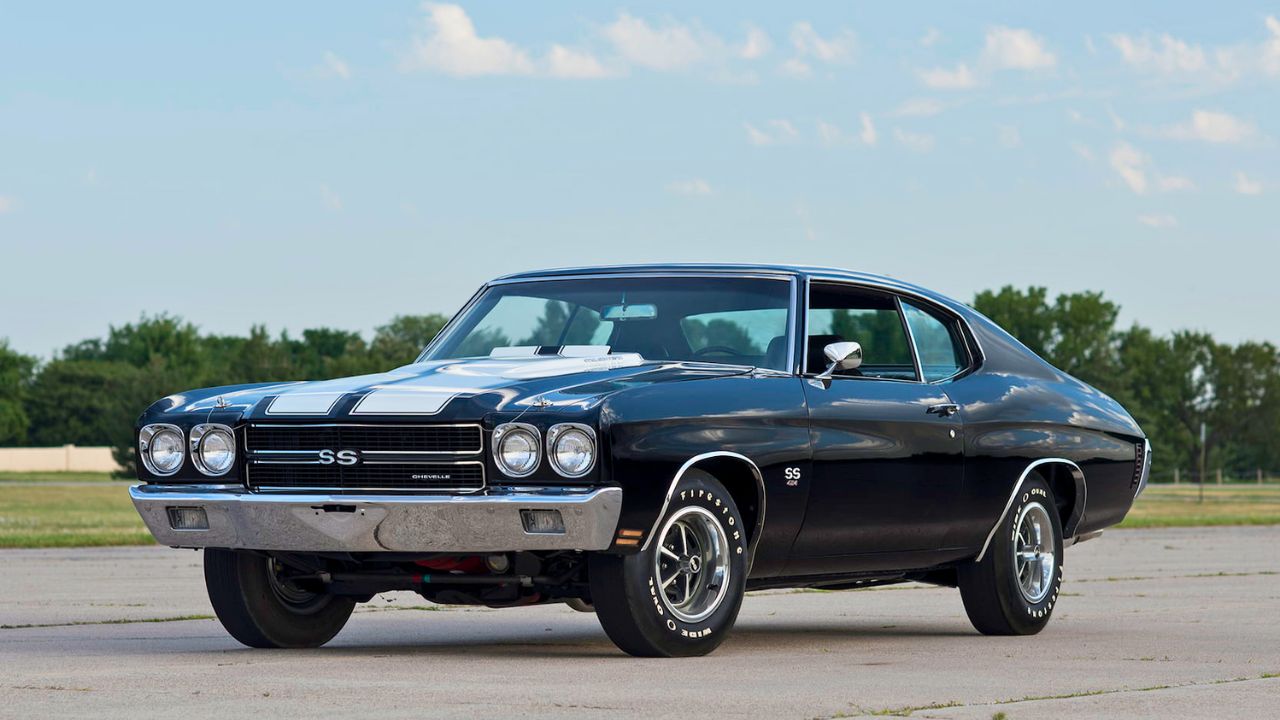
Tuxedo Black might sound like a safe choice, but in 1970, it was anything but common on a Chevelle SS. Out of the high-impact colors and stripes available, few buyers went with this deep, non-metallic black—fewer than 1% according to some production estimates.
Underneath, the Chevelle SS could pack a 396 or the fearsome LS6 454 V8 making 450 hp. But with Code 10 paint, the car looked more like it was heading to a funeral than a drag strip. That understatement now makes it one of the most desirable color/trim combos among collectors.
1969 Charger – R4 Bright Red with White Top
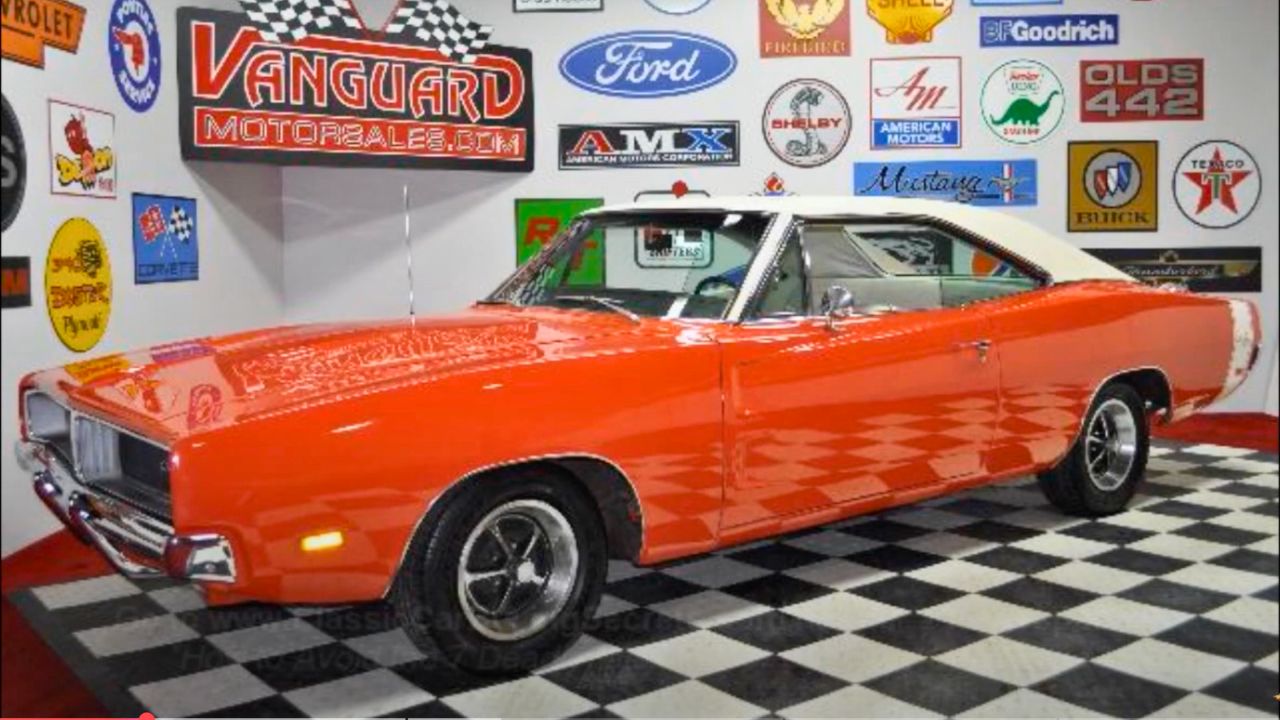
While Bright Red (R4) wasn’t rare on its own, pairing it with a factory white vinyl top and white interior made for a surprisingly uncommon combo in 1969. Most buyers opted for black or tan accents, leaving this contrasting setup off most dealer lots.
The 1969 Charger had muscle credentials to spare, especially when ordered with the 440 Magnum or 426 HEMI. But throw in R4 with a white-on-white trim package, and you’ve got something that turns heads even in a sea of orange General Lees. Rare doesn’t always mean subtle—this combo proved it.
1971 Pontiac GTO – Quezal Gold (Code 5075)
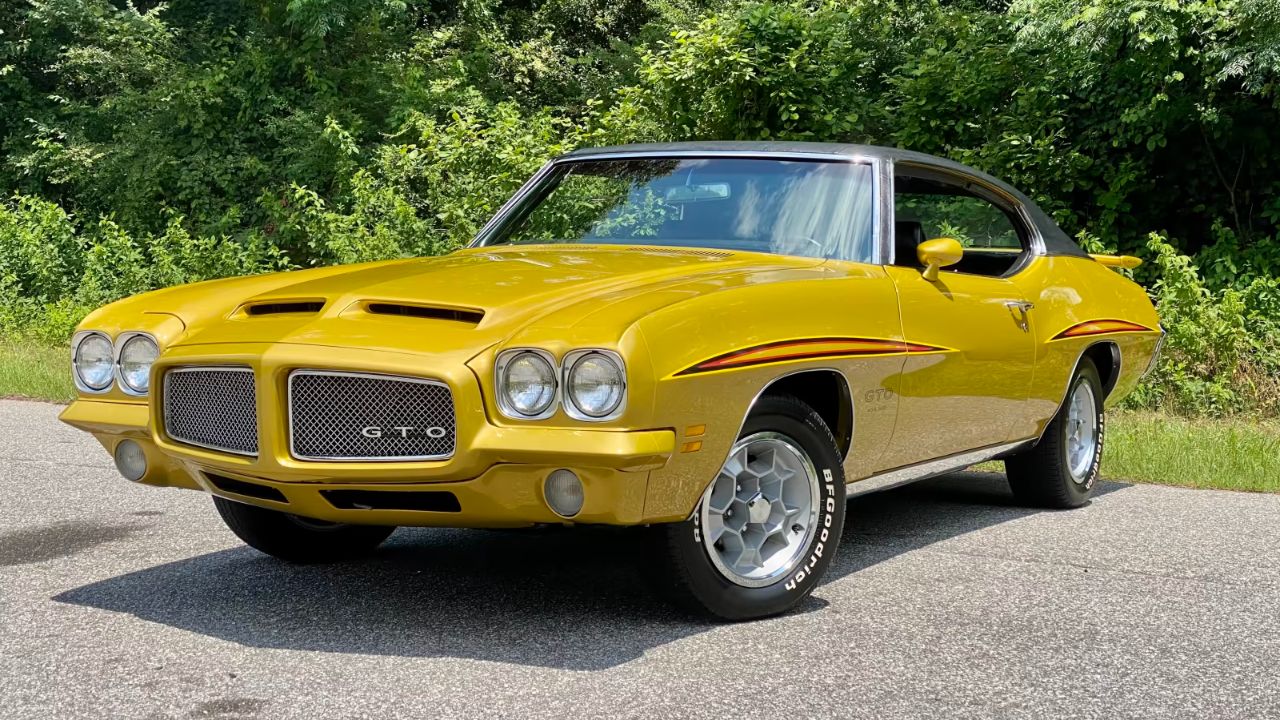
Quezal Gold wasn’t just rare—it was nearly mythical. Available for just one model year, this metallic gold hue made the 1971 GTO look like it was dipped in aged brass. Few buyers checked the box for it, probably opting for more traditional Carousel Red or Lucerne Blue instead.
The ’71 GTO had already begun dialing things back under GM’s insurance-strangled performance policies, but it still packed a 400 or 455 V8 under the hood. In Quezal Gold, though, it stood out as both brawny and strangely classy. It was muscle with a tuxedo finish—just not many were made.
1970 AMC AMX – Big Bad Green (Paint Code 00)
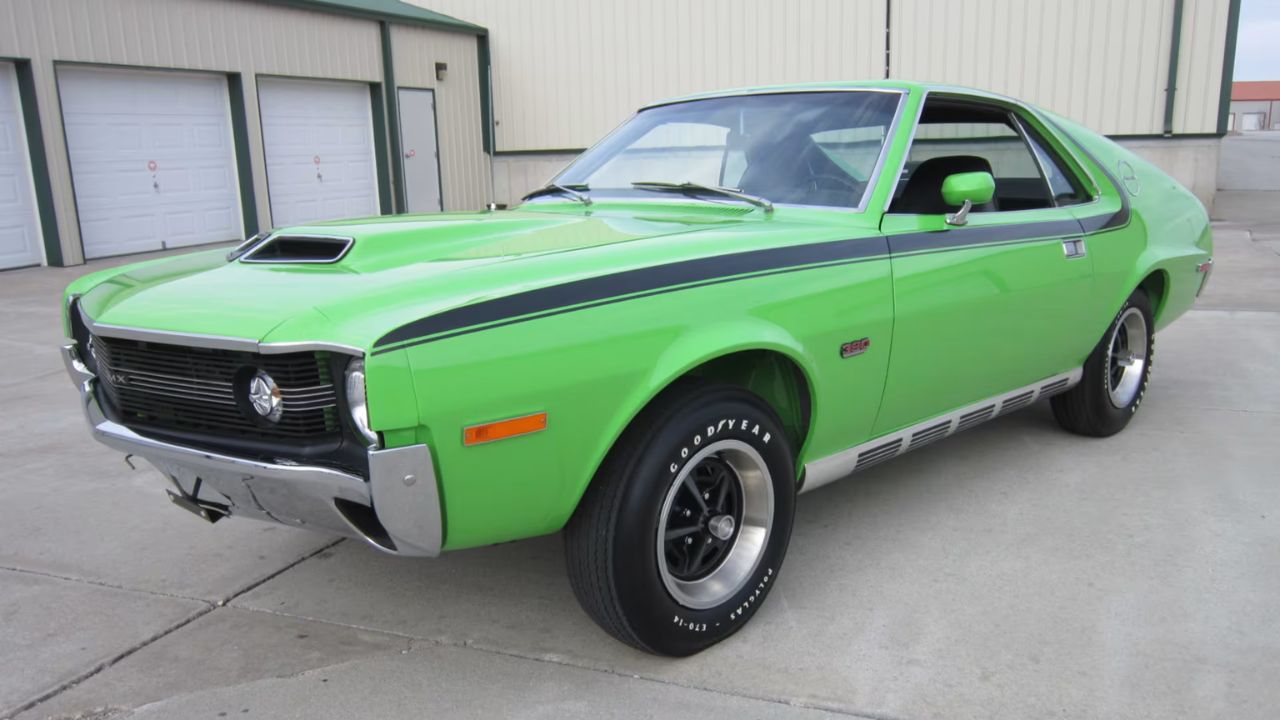
AMC wasn’t known for subtlety in the muscle car era, and the 1970 AMX in Big Bad Green was proof. This retina-searing shade was part of AMC’s “Big Bad” color lineup, offered in limited quantities and requiring a special order. Fewer than 100 AMXs reportedly left the factory wearing it.
The AMX itself was a two-seat muscle car built to take on bigger names, offering a 390 V8, short wheelbase, and no-nonsense handling. Painted in Big Bad Green, it looked like something built for a dragstrip and an alien invasion—both at the same time.
1966 Ford Fairlane GT – Emberglo (Code V)
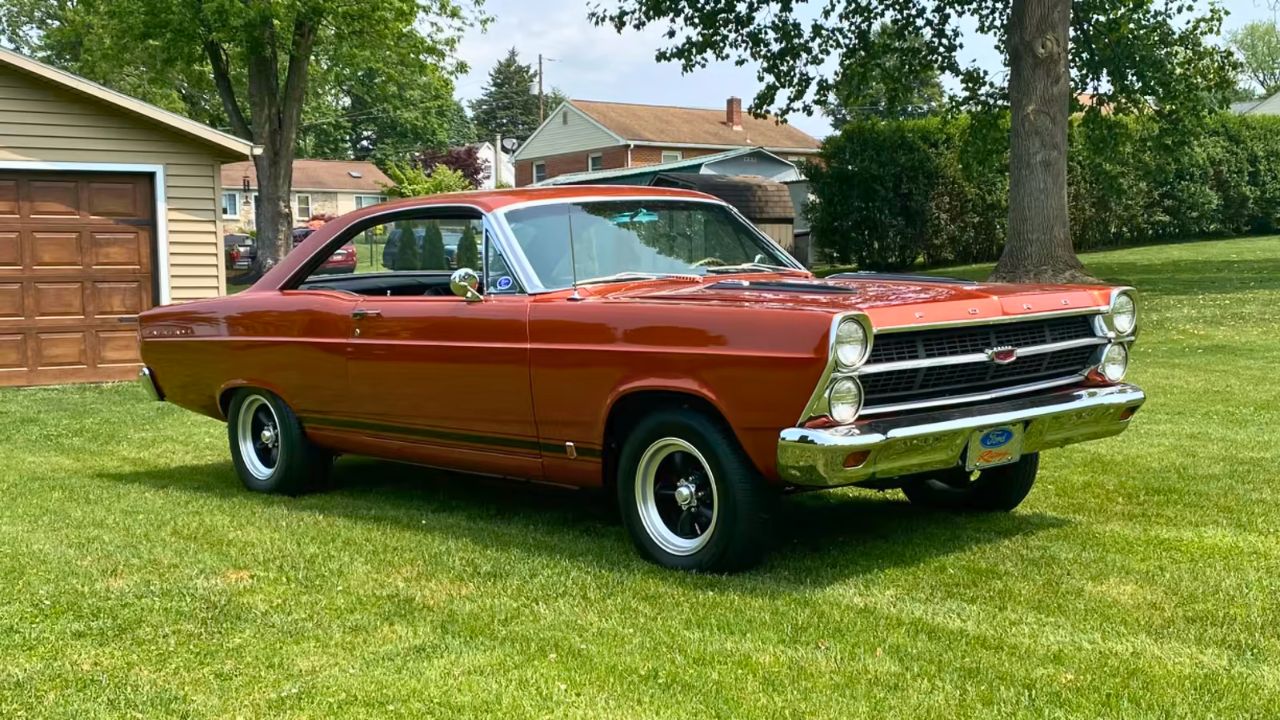
Ford’s Emberglo was one of those 1960s colors that sounded made-up and looked even more unusual in person. Somewhere between burnt orange and bronze, Code V was available on the 1966 Fairlane GT but rarely ordered—especially on performance trims like the GT or GT/A 390 models.
The Fairlane GT was no slouch with its 335-hp 390 cubic inch V8, bucket seats, and dual exhaust. But when sprayed in Emberglo, it looked like muscle wrapped in autumn foliage. Most buyers passed it up for more traditional reds and blues, which is why it’s almost never seen today.
1970 Buick GSX – Apollo White (Code 10)

While Saturn Yellow gets all the spotlight, the rarer 1970 GSX color was actually Apollo White. Out of the 678 GSXs built that year, only 187 were finished in this stark white with black and red striping. It didn’t scream for attention like the yellow, which probably explains the low take rate.
Under the hood was the legendary Stage 1 455, pumping out 510 lb-ft of torque—the most of any American car at the time. In Apollo White, the GSX looked almost restrained… until you floored it and left half the paint on the pavement.
1969 Road Runner – Bahama Yellow (Code Y2)

Bahama Yellow wasn’t part of Chrysler’s High Impact palette, but it still turned heads. Offered on the 1969 Road Runner, this tropical mustard hue was rarely selected—overshadowed by louder choices like Vitamin C or Rallye Green. As a result, Y2 cars are tough to find today.
The Road Runner was all about bare-knuckle performance, and the 383 Magnum or optional 426 HEMI backed that up. But Bahama Yellow gave it an almost cheerful vibe, like your muscle car had vacation plans. It looked better in person than on the order form—which is probably why hardly anyone ordered it.
1971 Challenger R/T – Plum Crazy Purple (Code FC7)

Yes, Plum Crazy is famous now—but in 1971, it wasn’t a volume seller. Code FC7 was one of Dodge’s High Impact colors, but buyers leaned toward Top Banana, Hemi Orange, or black when ordering the Challenger R/T. Fewer than 10% of R/Ts wore Plum Crazy that year.
The ’71 Challenger R/T could be optioned with a 383, 440, or the almighty 426 HEMI, but Plum Crazy gave it extra flair without needing to rev the engine. Today it’s one of the most desired combinations—but back then, it took a certain kind of buyer to choose purple on purpose.
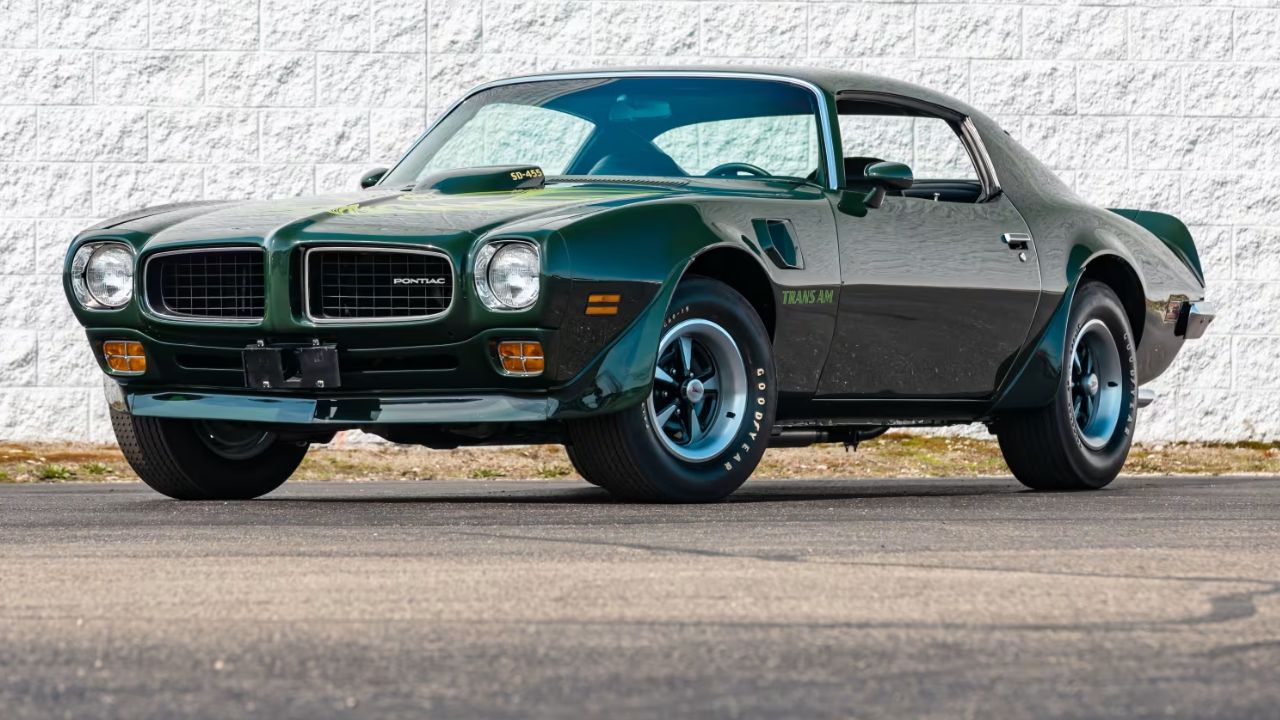
1973 Pontiac Firebird Trans Am – Brewster Green (Code 48)

Brewster Green may be one of the most understated factory colors ever offered on a Trans Am—and it’s also one of the rarest. In 1973, fewer than 800 Firebirds left the factory in this deep, forest-toned paint, making it a low-key sleeper in a sea of brighter hues.
The ’73 Trans Am came with either the 455 or the high-compression Super Duty 455, making it one of the last truly muscular cars before smog rules took over. In Brewster Green, it looked almost stealthy—if a 4-speed 455 car with a shaker hood could ever be called subtle.
Like what you read? Here’s more by us:
*Created with AI assistance and editor review.