For decades, European brands have owned the narrative on precision and pace, yet a handful of American muscle cars have quietly rewritten that script. By pairing brutal power with increasingly sophisticated chassis tuning, these machines have shocked traditionalists and humbled respected exotics. I will walk through ten muscle cars that, with verifiable performance numbers and targeted engineering, genuinely outperformed their European rivals on road and track.
1964 Pontiac GTO

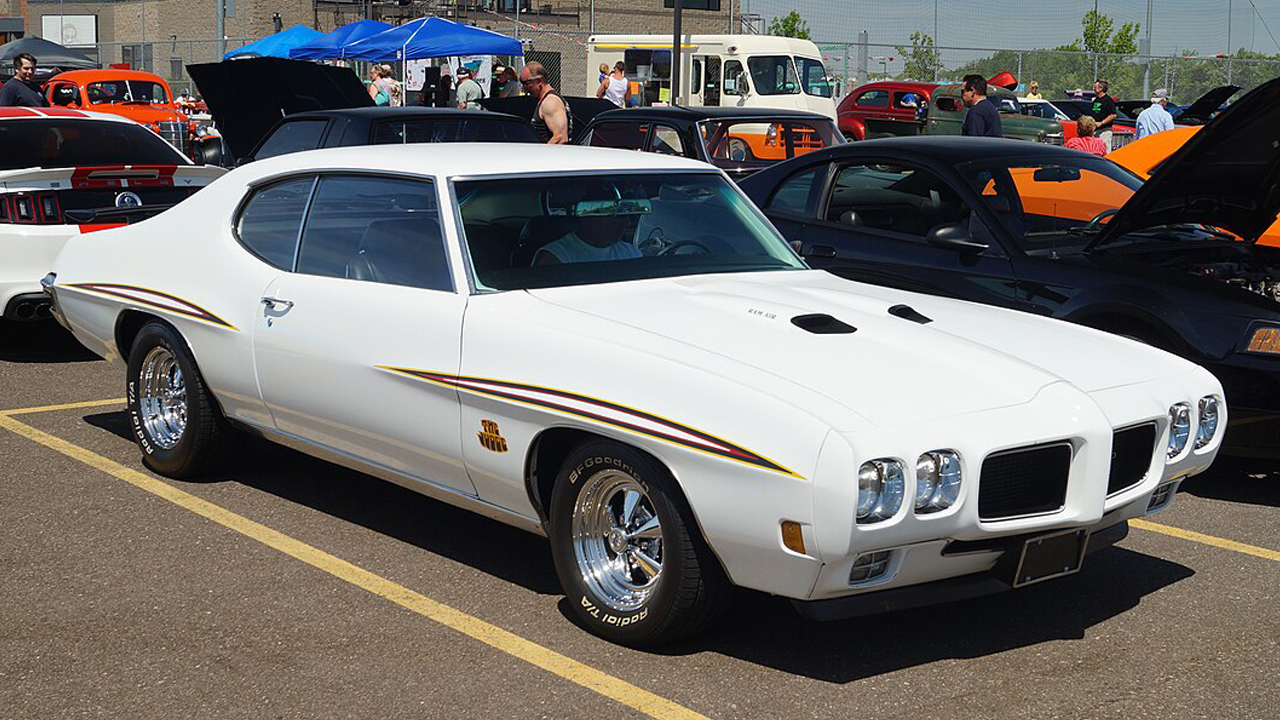
The 1964 Pontiac GTO is often credited with igniting the classic muscle era, and contemporary comparisons show why it rattled European makers. Reporting on Muscle Cars That Were Faster Than European Exotics notes that a 1963 Aston DB5 Is No Match For a Pontiac GTO in straight-line performance, highlighting how the big American V8 overwhelmed the refined but modestly powered Aston. In quarter-mile runs, the GTO’s torque-rich delivery let it leap ahead of lighter but less muscular European coupes.
That mismatch mattered because it reframed what performance buyers expected for their money. Instead of paying a premium for an Aston badge and hand-stitched leather, drivers could walk into a Pontiac showroom and buy acceleration that embarrassed grand tourers from across the Atlantic. I see that as the first clear moment when American muscle proved that raw, accessible speed could trump European prestige in real-world sprints.
Ford Mustang GT

The Ford Mustang GT has evolved from a simple pony car into a global performance benchmark, and recent coverage of top muscle models in India underscores its reach. A breakdown that lists the Ford Mustang GT first in a group of high-performance cars notes that Below is a detailed look at its speed, personality, and buying suitability, treating it as a serious option in a market crowded with imported European coupes. That positioning alone shows how far the Mustang has come in challenging traditional performance hierarchies.
What impresses me is how the Mustang GT now blends everyday usability with track-capable pace that can trouble European rivals. Strong V8 power, modern suspension tuning, and electronic aids mean it no longer relies only on straight-line bravado. In markets where European brands once had an automatic advantage, the Mustang GT now offers comparable performance with a distinctly American character, proving that muscle can be both fast and globally relevant.
2025 Mustang GTD

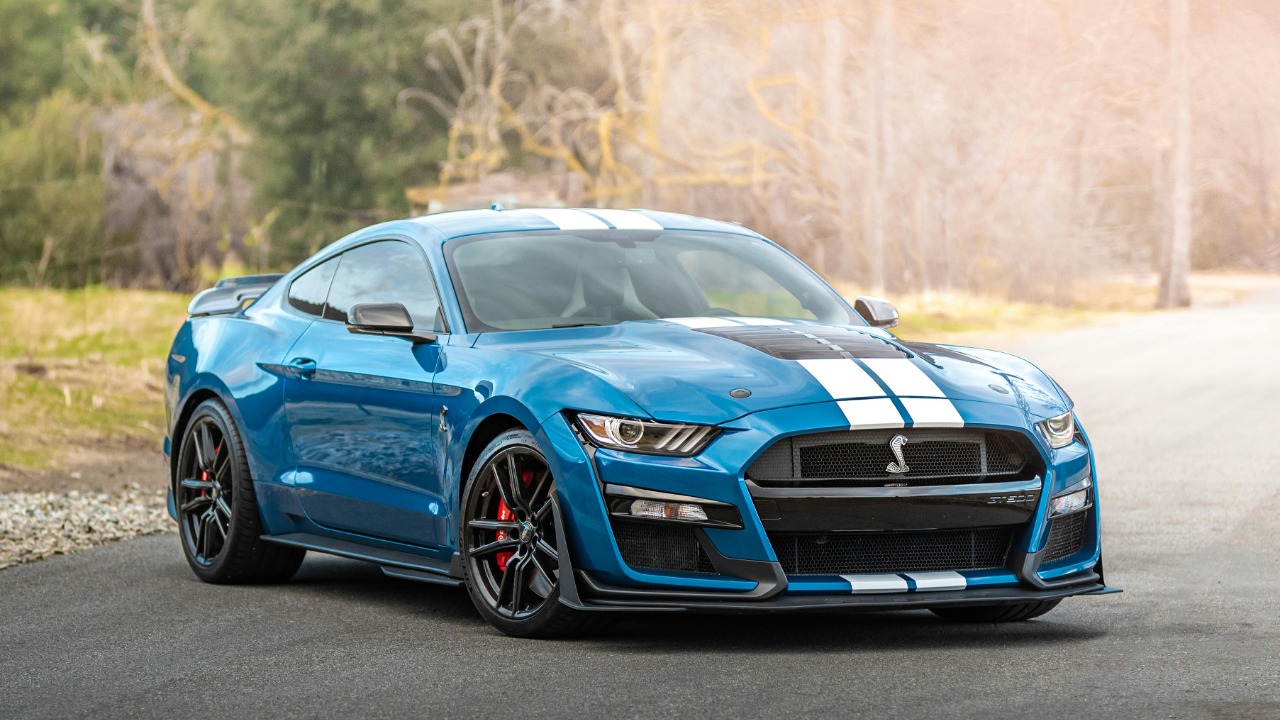
The 2025 Mustang GTD is perhaps the clearest modern example of American muscle stepping directly into European supercar territory. Official material on the Mustang GTD highlights sections like Search History, Vehicle Details, Get Info, and Overview, emphasizing its lightweight design, advanced Performance hardware, and track-focused Technology. This is not a traditional pony car, it is a road-legal machine engineered around lap times and aero efficiency, the same priorities that define elite European track specials.
Independent reporting goes further, describing how a Ford Mustang GTD Is an American Hero that Laps the Ring in 6:57.685, with an 815-hp Mustang V8 making it the first American-made production car to post such a time at the Ring. A 57.685 lap in that context places it squarely among revered European nameplates. I see that Nürburgring result as a watershed moment, proving that a Mustang-badged car can match or beat the lap pace of far more expensive European exotics.
Dodge Challenger SRT Demon
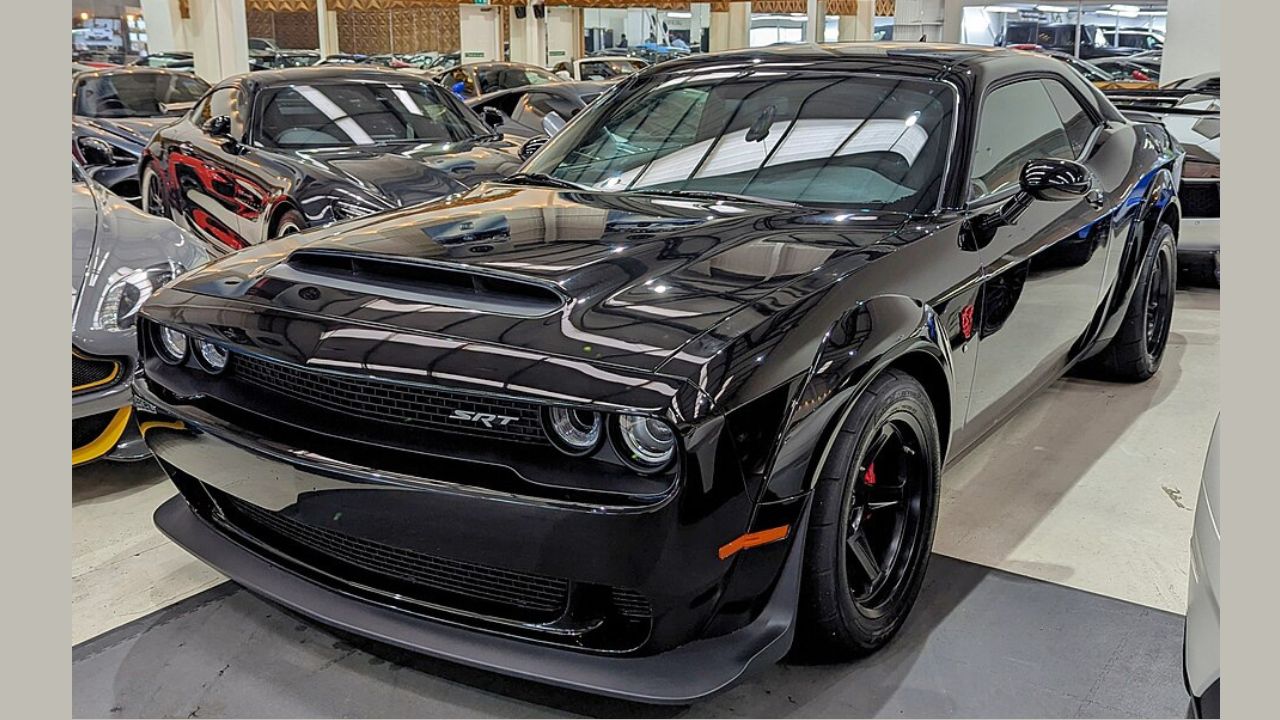
The Dodge Challenger SRT Demon took the classic muscle formula to an extreme that even many European supercars could not match off the line. Detailed coverage of the Demon notes that it is the world’s fastest production car from 0 to 60 mph, stating that Two point three seconds is how long it takes to reach 60 mph from a standstill. That 2.3-second blast is quicker than the launch times of numerous mid-engine European exotics that cost significantly more.
By focusing on drag-strip dominance, Dodge created a car that redefined what “fast” meant in everyday benchmarks. While European rivals often emphasize balanced lap times, the Demon’s ability to demolish 0–60 and quarter-mile runs gave American buyers a tangible, repeatable way to outperform prestige brands at the local strip. In my view, that democratized hypercar-level acceleration and reminded the industry that straight-line violence still matters to many enthusiasts.
Ford Mustang Dark Horse SC

The Ford Mustang Dark Horse SC shows how modern muscle can be sharpened into a track weapon that targets European rivals head-on. One detailed report introduces it with the line Supercharged Ford Mustang Dark Horse SC Is the Shelby GT500 for 2026 and adds, “Say hello to the Ford Mustang Dark Horse SC. As the name suggests, it is built for serious enthusiasts who want to drive to the circuit and enter local track days.” That framing positions it as a turnkey alternative to European track specials.
A separate analysis of Ford’s Mustang Dark Horse SC notes that it targets Porsche and BMW on the track, explicitly naming those brands as benchmarks. By pairing a supercharged V8 with upgraded suspension, aero, and braking, the Dark Horse SC aims to deliver lap times and durability that can stand beside German performance icons. I see this as a strategic shift, where American muscle is no longer content with straight-line wins but is engineered to compete in handling and consistency as well.
2005 Ford GT

The 2005 Ford GT is often remembered as a retro homage, but performance data shows it was faster than many European supercars of its era. A detailed list of American performance icons notes the 2005 Ford GT with an Average Value of $410,000, underscoring how collectors now regard it alongside European royalty. That same coverage places the Ford GT among American Cars That Were Faster Than European Supercars Of Their Time, highlighting its top speed and acceleration advantages.
With a mid-mounted V8 and aerodynamic bodywork inspired by Le Mans legends, the 2005 Ford GT delivered supercar numbers without the European badge. Owners could access performance comparable to contemporary Ferraris and Lamborghinis while paying less at the time of sale. In my assessment, its enduring $410,000 Average Value reflects not only rarity but also respect for how decisively it proved that American engineering could match European benchmarks in a mid-engine format.
Modern American track-focused Challenger

A modern, track-focused Challenger concept shows how American muscle has evolved from straight-line bruiser to road-course threat. Reporting on a potential ACR-style Challenger opens by noting, “One of the great things about American performance cars in recent years is that they have gone from being focused primarily on horsepower to challenging European cars in terms of handling and dynamics.” That shift in philosophy is crucial, because it directly addresses the traditional European advantage in chassis sophistication.
By stripping weight, upgrading suspension, and tuning aerodynamics, this kind of Challenger aims to deliver lap times that embarrass heavier grand tourers and even some dedicated sports cars from Europe. I see this as part of a broader trend in which American manufacturers accept that raw power is not enough, then engineer muscle platforms to rotate, brake, and change direction with the precision once associated only with German or Italian brands.
Contemporary American muscle outperformers

Recent coverage under the banner American Muscle Cars That Easily Outperform Their European Rivals, presented by Drivers Daily as a Story by Allison Robertson, pulls together several modern examples that beat European competitors on key metrics. The piece highlights how certain American V8 coupes and sedans deliver quicker acceleration, higher trap speeds, or better value than similarly priced European models. That synthesis of data-driven comparisons reinforces that these are not isolated flukes but part of a consistent pattern.
What stands out to me is the emphasis on “easily” outperforming rivals, suggesting that American cars often achieve these wins without exotic materials or sky-high prices. By focusing on measurable outcomes like 0–60 times, quarter-mile results, and real-world usability, the analysis undercuts the assumption that European always means superior. It also signals to manufacturers that buyers are increasingly savvy, comparing numbers and ownership costs rather than relying on heritage alone.
Broader American muscle versus European exotics
Several comparative features, including one framed around Muscle Cars That Were Faster Than European Exotics and another on American Cars That Were Faster Than European Supercars Of Their Time, provide a broader context for these individual standouts. They show that models like the Pontiac GTO and Ford GT repeatedly appeared in eras when European brands were seen as untouchable. By documenting specific matchups where an “Aston Is No Match For a Pontiac GTO”, or where an American coupe outruns a contemporary European flagship, these analyses build a compelling historical record.
I interpret this pattern as evidence that American muscle has periodically reset performance expectations across decades, not just in isolated model years. Each time a domestic car out-accelerated or outpaced a European rival, it pressured both sides to innovate. That rivalry ultimately benefits enthusiasts, who now enjoy a market where American and European manufacturers must continually raise their game in power, handling, and value.
Global perception shift for American muscle

Finally, the global spread of muscle cars, from the Ford Mustang GT appearing in lists of top performance models in India to the Mustang GTD chasing lap records at the Ring, signals a major perception shift. Where American V8s were once seen as crude compared with European engineering, detailed sections like Search History, Overview, and Performance on modern Mustang platforms now read like supercar spec sheets. The combination of 815-hp outputs, advanced Technology, and Lightweight Design shows that American brands have embraced the same engineering rigor as their European counterparts.
In my view, this global acceptance closes the loop on decades of rivalry. When buyers in diverse markets cross-shop a Mustang or Challenger against European coupes without hesitation, it proves that muscle cars have transcended their original niche. They are no longer just loud, straight-line specialists, they are credible alternatives that, in many cases, shockingly outperform the European rivals that once defined the segment.
More from Fast Lane Only