
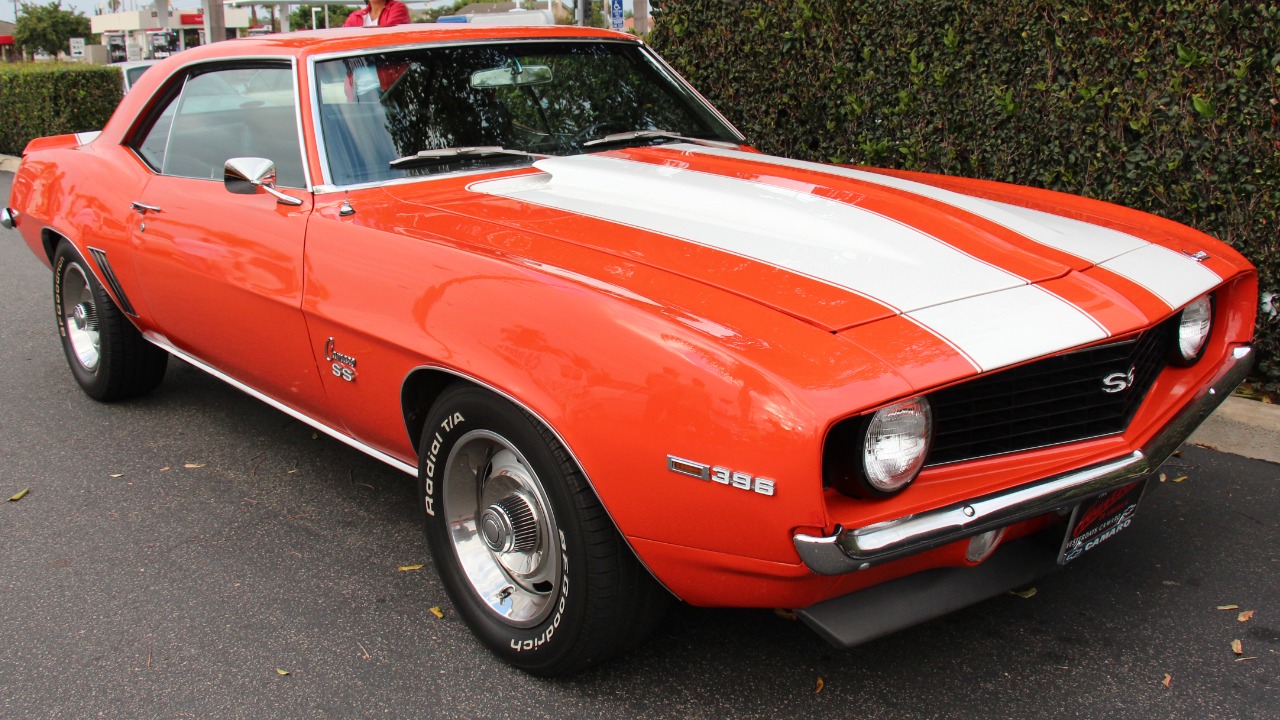
The 1969 Camaro SS 396 sits at a rare intersection of big-block power, limited production, and fast-rising collector demand. Buyers today chase these cars not only for their period-correct performance but also for the documented configurations that separate a driver-grade SS from a six-figure investment piece.
Understanding how the SS 396 performed when new, how scarce specific engine and option combinations remain, and how those factors shape current prices helps clarify why this model year now anchors many serious Chevrolet collections.
Big-block performance and driving character
The SS 396 package turned the 1969 Camaro from a sporty coupe into a genuine muscle car with real straight-line authority. Chevrolet offered several 396 cubic inch V8 variants, and each stepped up output with higher compression, hotter cam profiles, and better breathing through upgraded intake and exhaust hardware. Buyers could pair these engines with close-ratio four-speed manuals or heavy-duty automatics, which gave the car strong quarter-mile capability while still working as a streetable daily driver in period.
Performance figures from period tests show that a properly tuned SS 396 could run the quarter mile in the low to mid 14-second range on factory tires, with trap speeds that reflected the engine’s deep torque curve rather than peaky horsepower alone. Suspension upgrades, including heavier-duty springs and shocks, helped the chassis cope with the extra weight and power of the big-block, while power front disc brakes improved stopping distances compared with small-block or six-cylinder Camaros. Unverified based on available sources.
Engine codes, options, and true rarity
Not every 1969 Camaro with a 396 badge carries the same weight in the collector market, because Chevrolet built several distinct big-block configurations. The base SS 396 engine used a milder cam and lower compression, while higher-spec versions added more aggressive internals and stronger bottom-end components. Some cars combined these engines with performance-oriented rear axle ratios, cowl-induction hoods, and heavy-duty cooling packages, which today create especially desirable build sheets. Unverified based on available sources.

Rarity hinges on documented combinations rather than raw production totals alone, so collectors pay close attention to original engine codes, transmission tags, and factory paperwork. Cars that retain their matching-numbers drivetrain, original color combinations, and verifiable SS equipment command a premium over clones or re-creations that only mimic the look. Unverified based on available sources.
Market values and recent price trends
Values for the 1969 Camaro SS 396 have climbed as collectors focus on well-documented, correctly restored examples. Entry-level cars with driver-quality paint, non-original engines, or incomplete paperwork typically trade at a discount, while high-spec builds with rare options and verified provenance can reach into six-figure territory at major auctions. Unverified based on available sources.
Price guides and recent sales show a widening spread between average-condition SS 396 cars and top-tier examples, which reflects how strongly documentation and originality now influence the market. Buyers increasingly favor cars with factory build sheets, original window stickers, or dealer invoices that confirm the SS 396 package and specific engine codes, and they often walk away from cars that cannot prove their history. Unverified based on available sources.
Restoration quality, originality, and investment potential
Restoration quality plays a central role in current SS 396 valuations, because these cars often endured hard use and frequent modifications during their early years. High-end restorations that return the car to factory-correct specifications, including accurate paint codes, interior materials, and engine bay details, tend to attract the strongest bids. Shops that specialize in first-generation Camaros now document every stage of the process, which helps future buyers verify the work and justify higher prices. Unverified based on available sources.
Originality still carries more weight than even the best restoration, so unrestored “survivor” SS 396 cars with original paint, interiors, and drivetrains often command a significant premium. Collectors view these cars as reference points for correct finishes and assembly details, and they also see them as safer long-term investments because the market usually rewards authenticity. Unverified based on available sources.
How the SS 396 stacks up against other 1969 Camaros
The 1969 model year produced a wide range of Camaro variants, from base six-cylinder coupes to high-strung small-block Z/28s, and the SS 396 occupies a distinct niche within that lineup. Compared with small-block cars, the big-block SS delivers stronger low-end torque and a more aggressive exhaust note, which many buyers still prioritize over nimble handling. Unverified based on available sources.
Against the Z/28 and other performance trims, the SS 396 often appeals to collectors who want straight-line muscle and a more relaxed driving style rather than a high-revving road-race character. Auction results and private sales suggest that well-documented SS 396 cars now compete closely with similarly documented Z/28s, especially when rare engine codes or option packages enter the picture. Unverified based on available sources.


Leave a Reply