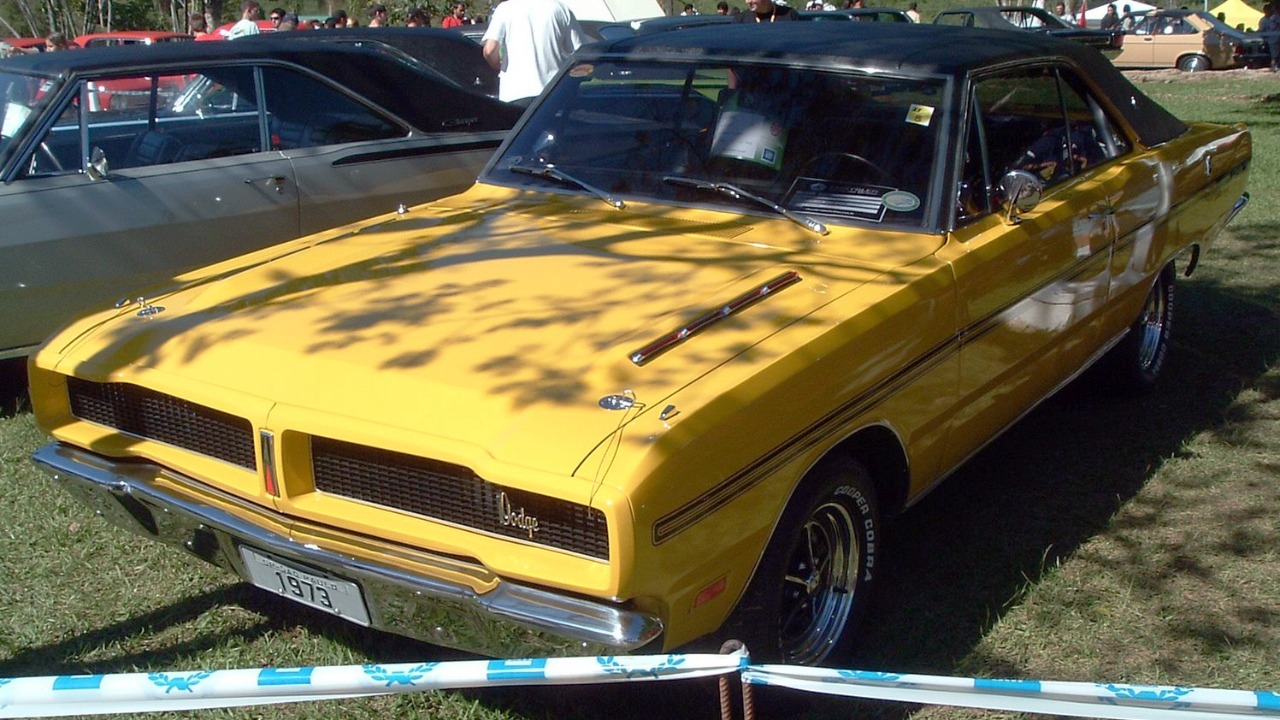
The 1973 Dodge Charger R/T looked and sounded every bit like a street brawler, yet by the standards set only a few years earlier its bite had softened. Aggressive sheet metal, a thunderous exhaust and the legendary R/T badge all suggested a pure muscle car experience, but tightening emissions rules and changing market tastes had already started to tame the mechanicals. That tension between appearance and reality is what makes the 1973 Charger R/T such a revealing snapshot of performance cars on the edge of the malaise era.
Rather than being a simple story of decline, the 1973 model shows how Dodge tried to keep the Charger’s image alive while quietly pivoting toward comfort and personal luxury. The car still projected menace at idle and on the move, yet its real-world performance and engineering priorities had shifted toward a more relaxed, grand touring character. In that sense, the 1973 Dodge Charger R/T sounded fiercer than it truly was.
From hardcore muscle to personal luxury coupe
By the early 1970s, the Charger name had already evolved from a bare-knuckle muscle car into something more complex. The 1973 Dodge Charger sat within the first generation lineage but leaned harder into comfort, with the Dodge Charger SE (Special Edition) explicitly marketed as a blend of bold styling and increased luxury. Period descriptions of the SE highlight formal roof treatments and upscale trim that pushed the car toward the personal luxury segment rather than a stripped performance machine, a shift that influenced how any R/T version of the same body was perceived.
This repositioning meant the Charger family now had to satisfy buyers who wanted both presence and plushness. The SE’s emphasis on comfort features and visual drama, from its landau-style roof to richer interior appointments, showed how Dodge was responding to drivers who wanted muscle car attitude without muscle car compromises, as seen in contemporary accounts of the Dodge Charger SE. Within that environment, the R/T badge became as much an image enhancer as a guarantee of unfiltered performance.
The shadow of the 426 Hemi glory years
Any judgment of the 1973 Charger R/T has to sit in the shadow of the late 1960s and very early 1970s, when the nameplate was synonymous with raw speed. With the 426 Hemi, the Charger R/T could reach 0 to 60 mph in just 4.8 seconds and run the quarter-mile in 13.4 seconds, figures that cemented the earlier car as a high-performance legend. Those numbers, quoted in period retrospectives that celebrate the 426 Hemi package, set a benchmark that later emissions-strangled versions of the Charger simply could not match, even if they wore the same badges and body lines.
That earlier dominance did not last. Enthusiast analysis of the muscle car era makes clear that 1971 was the final year for the 426ci Hemi V8, described as a legendary wondermill that defined the Golden Ag of Mopar performance before regulations and insurance costs began to bite. The same reporting notes that the Hemi’s disappearance marked a turning point, with the engine portrayed as a victim of emissions regulations and changing fuel realities that shaped what Dodge could install in a Charger R/T by 1973.
What R/T meant once the 426 was gone
Stripped of the 426, the R/T badge had to rely on other hardware and a strong dose of branding. Commentary on Dodge’s performance hierarchy explains that R/T is an abbreviation that stands for Road and Track, and that when it first appeared in the late 1960s it signaled a car engineered for both straight line speed and capable handling. By 1973, that heritage still carried weight in advertising and driveway bragging rights, even if the underlying engines had been detuned and the chassis tuned more for cruising than apex hunting, as outlined in modern explanations of what R/T actually.
Under the hood, the 1973 Dodge Charger could be equipped with either a 440 V8 or a 400 Magnum big-block engine, paired with available manual or automatic transmissions according to enthusiast breakdowns of available powertrains. Those sources describe how these engines still delivered strong torque and a deep exhaust note, but also how rising fuel costs and stricter emissions regulations reshaped their output and tuning. The result was a car that still sounded ferocious when blipped at the curb, yet no longer threatened the stopwatch in the way its 426 powered ancestors had.
Performance in a slower, heavier 1973 world
The broader performance context of 1973 makes the Charger R/T’s softened edge easier to understand. Lists of the fastest cars of that year show machines like the Porsche 911 recording 6.8 seconds to 60 mph, while sports cars such as the Datsun 240Z posted 8.8-second runs. Those figures illustrate how even purpose-built performance cars were slowing compared with the peak of the muscle era, underlining how difficult it was for a heavier, comfort-oriented American coupe to keep up in an environment shaped by emissions controls and insurance pressure.
Within that slower landscape, the Charger still leaned on visual drama and mechanical theater. Contemporary owners and reviewers describe the 1973 Dodge Charger as a standout in the early 1970s thanks to its aggressive styling, long hood and wide stance, while also noting that the car had become a fine cruiser rather than a track terror. Modern road tests of surviving examples praise uprated brakes and a torquey feel yet characterize the overall experience as relaxed, a verdict that fits a car that roars on startup but settles into a more measured pace once underway, as reflected in later reviews of the 1973 Dodge Charger.
Why the 1973 Charger R/T still matters
Even with its tempered performance, the 1973 Charger has become a collectible favorite for enthusiasts who appreciate style and character as much as raw numbers. Enthusiast groups describe the 1973 Dodge Charger as part of a first generation lineup that blended classic muscle car cues with improved comfort and features, noting that its appeal lies as much in its presence as in what is under the hood. That dual identity helps explain why survivors attract attention on valuation tools that track Charger prices and why project cars, including rough Charger SE examples discovered in yards, still spark debate over whether they should be restored or parted out.
More from Fast Lane Only