
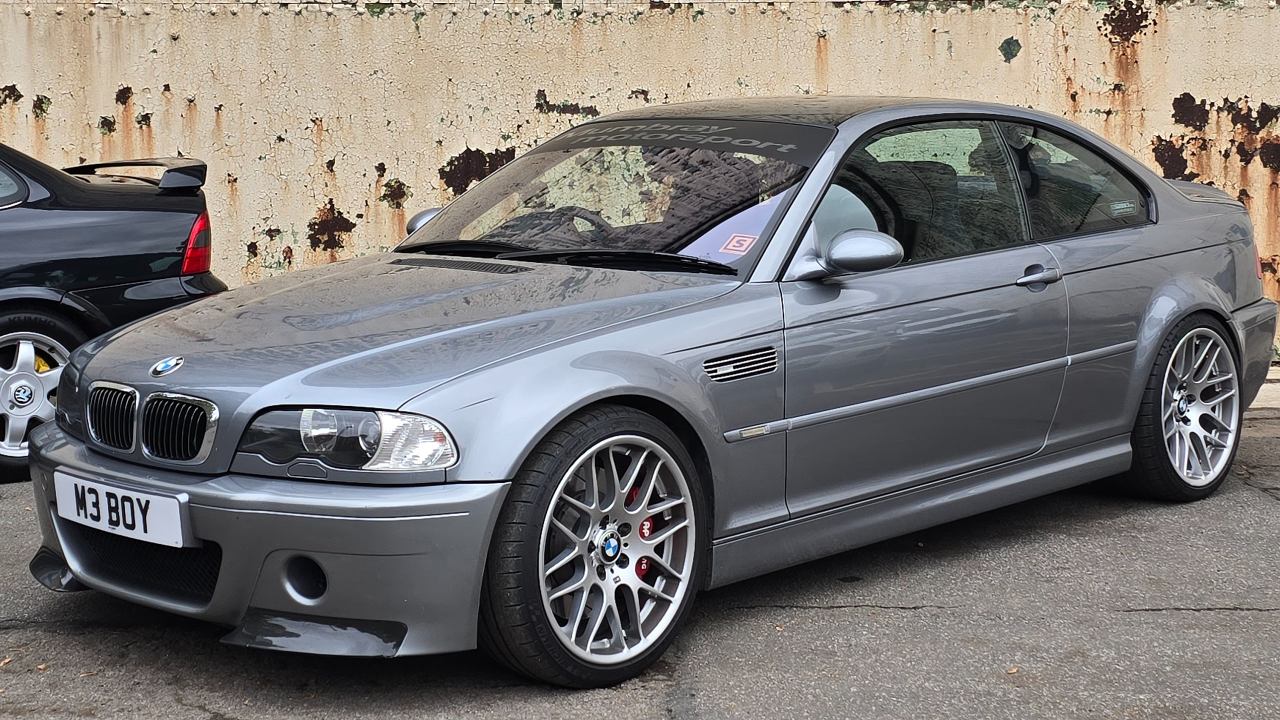
The 2003 BMW M3 CSL arrived as a shock to drivers who thought they already understood what an M3 could be. Instead of chasing power at any cost, BMW M’s engineers treated weight as the central problem to solve, creating a car that redefined how a modern performance coupe should be engineered. It was the first contemporary M model conceived from the outset around aggressive weight reduction, and it set a template that still shapes BMW’s most focused cars today.
By stripping mass from almost every component and pairing it with targeted gains in grip and response, the M3 CSL turned the familiar E46 platform into something sharper, louder and far more serious. I see it as the bridge between BMW’s motorsport-rooted past and the data-driven track specials that followed, a car that revived the old “Coupe Sport Lightweight” philosophy for a new generation.
From 3.0 CSL heritage to a new lightweight manifesto
BMW did not invent the idea of a light, homologation-style coupe in 2003, it revived it. The badge “CSL” traces directly back to the BMW 3.0 CSL, a car described by the company as “THE PIONEER” that combined Lightweight construction, motorsport intent and even art car culture in a single package. That earlier CSL used thinner steel, stripped interiors and a dramatic aerodynamics package to underline its purpose, and it embedded the idea that a serious BMW performance car should save mass before adding power.
When the E46 generation M3 arrived, it was already praised as a balanced, everyday performance coupe, but BMW M wanted something closer to a road-legal track car. Internally, the answer was “Intelligent lightweight technology,” a philosophy that meant choosing the most suitable material for each part rather than simply removing equipment. Official material on the M3 CSL describes this approach explicitly, explaining that the specialists at BMW M focused on using different materials at the front and rear ends of the car to trim weight while preserving rigidity and safety. In other words, the 2003 BMW M3 CSL was conceived as a modern echo of the original 3.0 CSL, but executed with contemporary composites and engineering tools.
How the M3 CSL actually shed weight
What separates the M3 CSL from a regular E46 M3 is not a single dramatic change but a long list of targeted reductions that add up. The car’s curb weight is listed as 1,385 kg, or 3,053 lb, which makes it 110 kg, or 240 lb, lighter than the standard M3. That figure is echoed in contemporary reviews that describe the CSL as 110 kg lighter than the stock car, a substantial saving for a coupe that still retained basic road equipment. The numbers matter because they show that BMW did not just market the CSL as lighter, it delivered a measurable, structural difference.
To get there, the engineers attacked every major area of the car. The roof panel was replaced with carbon fiber reinforced plastic, lowering the center of gravity and cutting mass high in the body. Body panels and bumpers used composite materials where possible, and the front structure incorporated lighter components as part of the Intelligent lightweight strategy. Inside, the M3 CSL swapped conventional seats for fixed-back buckets, removed much of the sound insulation and simplified the door panels. Even the rear side windows and boot floor were chosen with weight in mind, and the exhaust system was tuned not only for sound and flow but also for reduced mass. Enthusiast breakdowns of the car’s specification list many of these weight saving measures, and they align with BMW’s own description of the CSL as a car where lightweight construction was not just a buzzword but a guiding principle.
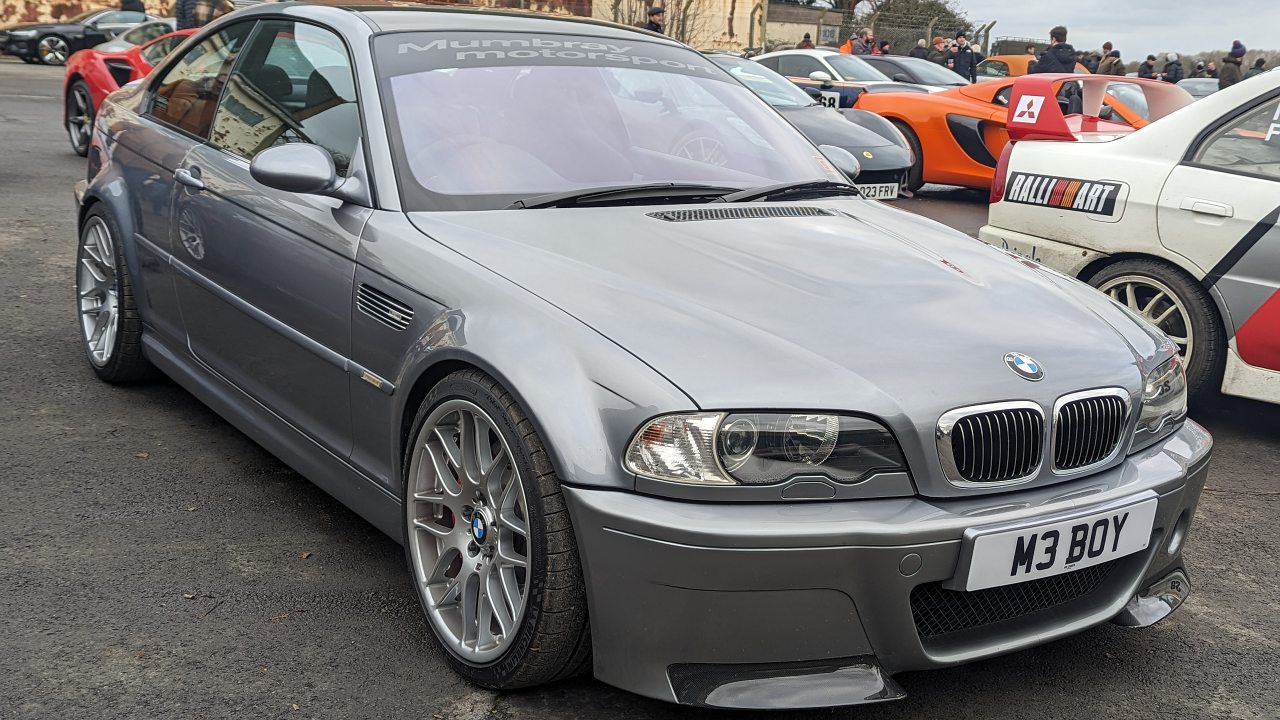
CSL: three letters that defined the car’s character
The name itself signaled that this M3 was different. “CSL” is widely understood to stand for Competition, Sport, Lightweight, or in German, Coupé Sport Leichtbau. BMW’s own historical material on the 3.0 CSL reinforces that the letters are tied to Lightweight construction and motorsport, and later commentary on the M4 CSL repeats the same translation. In the case of the 2003 M3, the company leaned into that heritage, describing the car as a new sports coupe that embodied the core of the BMW brand in its most original style and explicitly “Taking up the heritage” of the earlier CSL.
Other observers underline the same point. One detailed enthusiast analysis notes that The BMW CSL quite literally has “lightweight” in its name, spelling out Coupe Sport Lightweight and arguing that this is not marketing flourish but a statement of intent. BMW’s own retrospective on The BMW M3 CSL goes further, calling it a LIGHTWEIGHT LEGEND and stating that CSL are three letters that give every sports car fan goose bumps. When I look at that language alongside the engineering choices, it is clear that BMW wanted the badge to carry real technical meaning, not just nostalgia.
Driving focus: from “ultimate M masterclass” to track benchmark
On the road and track, the weight loss program translated into a very different personality from the standard E46 M3. Contemporary video features describe the E46 M3 CSL as BMW’s “ultimate M masterclass,” arguing that in 2003 BMW distilled the M3 to its purest form with the CSL coupe. That assessment is echoed in later retrospectives that place the CSL alongside the E30 M3 Sport Evo as one of the ultimate BMW M3s, highlighting how the reduced mass, sharper steering and more aggressive chassis tuning combined to create a car that felt far more immediate than its siblings.
Performance testing backs up the subjective praise. In one widely shared acceleration run, Mat Watson of Carwow fame drove the M3 CSL in a 0 to 60 mph test, treating it as the ultimate E46 of that era. The car’s lighter weight and revised gearing helped it launch harder than the regular M3, while the more focused suspension and sticky tires delivered higher cornering speeds. BMW’s own description of the CSL emphasizes that the car was designed to offer the ultimate driving experience, and independent reviews note that the trade offs in comfort and noise were accepted in pursuit of that goal. From my perspective, this is where the CSL’s weight-first philosophy becomes most obvious: the car feels different not because of a headline power figure, but because every input is met with less inertia and more immediacy.
The CSL’s legacy in modern M cars
The influence of the 2003 M3 CSL is easiest to see in the way BMW has approached later special models. The company’s own history of BMW M Automobiles points to the 3.0 CSL as the original Lightweight pioneer, but the E46 CSL is the car that translated that idea into the modern era of electronic aids and safety regulations. When BMW launched the New BMW M3 CS, it explicitly framed the car as more powerful, lighter and more track friendly than the standard M3, a formula that mirrors the CSL’s mix of modest weight cuts and focused chassis tuning. The M3 CS uses specific components, such as a lighter exhaust that reduces weight by 8 pounds, to trim mass in the same targeted way that the CSL did with its roof, seats and body panels.
BMW’s own magazine feature on The BMW M3 CSL reinforces this continuity, calling the car a LIGHTWEIGHT LEGEND and highlighting how lightweight construction was not just a marketing slogan but a comprehensive approach that extended from the body to the interior and even the sound system. Modern commentary on the E46 CSL, including detailed reviews that revisit the car years later, often argue that it remains a benchmark for how far BMW is willing to go when it commits to a track oriented M car. When I look at the current crop of CS and CSL badged models, I see the 2003 M3 CSL as the template: a car that proved customers would accept fewer comforts and a higher price in exchange for a purer, lighter driving experience.
More from Fast Lane Only:



Leave a Reply