
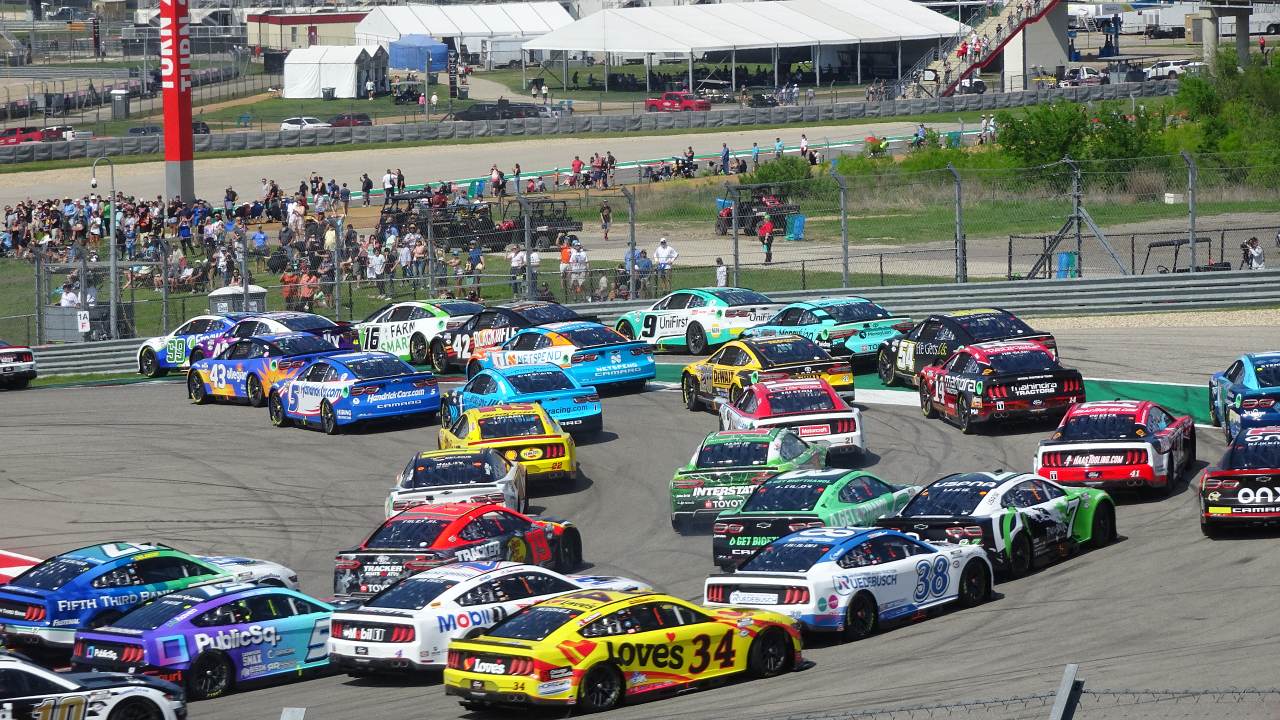
Michael Jordan’s antitrust showdown with Nascar did more than restore two race teams’ place on the grid. It forced a structural reset that leaves every chartered owner sitting on a far more valuable asset and a richer share of the sport’s future revenue. What began as a high‑risk legal gamble by Jordan’s 23XI Racing and Front Row Motorsports has ended with a settlement that shifts hundreds of millions of dollars and long term leverage away from the France family and toward the garages.
The settlement, reached after a bruising federal trial, spared Nascar the threat of a billion‑dollar judgment while locking in permanent gains for team owners who had complained for years that the business model was tilted against them. By prying open Nascar’s closed system and forcing changes to charters, revenue sharing and governance, Jordan’s side has effectively made every existing team worth more on paper and in practice.
How Jordan’s lawsuit cracked Nascar’s old power structure
The core of Michael Jordan’s case was simple: Nascar controlled the schedule, the rulebook and the money, and teams were expected to accept whatever terms were handed down from Daytona. Jordan’s 23XI Racing and Front Row Motorsports argued that this setup crossed the line from tough bargaining into an antitrust violation, because the sanctioning body allegedly used its dominance to lock teams into unfavorable revenue deals and strip charters from those who pushed back. That claim put Nascar’s entire business model on trial and forced the France family to defend decades of centralized control in open court.
In federal testimony in CHARLOTTE, an economist told the jury that Nascar had effectively shorted the teams by hundreds of millions of dollars through its revenue practices, estimating that the series owed more than $364.7 million to the organizations suing over a revenue sharing dispute. Another expert in CHARLOTTE put the figure at more than $300 million, underscoring how far apart the sides were on what teams deserved. Those numbers, combined with internal documents and testimony about how charters were revoked, helped convince Nascar that the risk of a courtroom loss was too great, setting the stage for a negotiated settlement instead of a verdict.
The settlement that avoided a billion‑dollar disaster
By the time both sides agreed to end the trial, Nascar was staring at the possibility of a judgment that could have topped a billion dollars once damages and legal exposure were fully tallied. Settling meant the series could cap its liability, protect its media relationships and avoid a precedent that might invite more antitrust challenges. For Jordan and his partners, accepting a deal rather than a verdict traded the chance of a spectacular win for guaranteed structural changes and immediate financial relief.
Reporting on the confidential agreement describes a package that includes $300 M in damages and other financial concessions, with the settlement framed as “Settlement and $300 Million Million Damages The” outcome of a bruising fight with the France family. Separate coverage notes that by cutting a deal, Nascar “minimizes potential damage” and eliminates the possibility of more than $1 billion in exposure that could have followed an outright loss at trial, a reminder of how high the stakes had become for the series once Jordan’s lawyers put its inner workings under a microscope.
Why 23XI and FRM’s charter victory matters to every owner
The most immediate win for Jordan’s 23XI Racing and Front Row Motorsports is the restoration of their charters, the licenses that guarantee entry into Cup Series races and a share of central revenue. Those charters had been stripped when the teams refused to sign new agreements they viewed as unfair, forcing them to compete as “open” entries without the security and income that charter status provides. Getting those charters back is not just symbolic, it restores the core asset that underpins each team’s valuation and long term planning.
According to detailed accounts of the settlement, Now 23XI Racing and Front Row Motorsports, the two plaintiffs, will regain their charters after racing unchartered while the case played out. Another analysis notes that They, meaning 23XI and FRM, “won that fight,” and as a result so did every Nascar team owner fortunate enough to hold a charter. Because the settlement locks in stronger protections and more favorable economics for those licenses, the restored charters for Jordan’s group are now worth significantly more than when the lawsuit began, and the same is true for every other charter on the market.
How the business model shifted in teams’ favor
For years, Cup Series organizations complained that they shouldered the bulk of the sport’s operating costs while receiving a minority share of the money generated by media rights and sponsorships. The antitrust case forced Nascar to confront those grievances in front of a jury, and the settlement reflects a recognition that the old split was no longer sustainable. The new framework gives teams a larger, more predictable slice of the central revenue pie and greater security that their investments will not be wiped out by unilateral decisions from Daytona.
One detailed breakdown of the agreement notes that all teams felt the previous model was unfair and that the league has now agreed to change its business structure in response to the lawsuit brought by Jordan’s 23XI Racing and Front Row Motorsports. Another report describes how the victory Jordan achieved on Thursday was so significant for stock car racing because, Previously, team owners paid tens of millions of dollars for charters that could be revoked and had little say over the revenue structure. By forcing Nascar to codify stronger revenue sharing and charter protections, the settlement effectively rewrites the sport’s financial constitution in favor of the garages.
The $300 million signal to the rest of the garage
The headline number attached to the settlement, the $300 Million in damages and related payments, is more than a one time windfall for the plaintiffs. It is a public acknowledgment that Nascar’s previous practices left teams significantly underpaid, and it sets a benchmark for what the series must provide going forward if it wants to avoid another antitrust challenge. When an economist testifies that Nascar owes more than $300 million and the eventual deal lands in that same neighborhood, the rest of the garage takes notice.
In CHARLOTTE, the expert who pegged Nascar’s shortfall at $364.7 million gave owners a concrete figure to rally around, and the final settlement, framed as “Settlement and $300 M,” confirmed that Nascar was willing to write a check of that magnitude to make the case go away. For existing teams, that payout is a powerful signal that their equity has real legal and financial weight, and for potential investors, it is proof that the series can no longer treat team revenue as a discretionary expense.
From “dinosaurs” to a more modern Nascar
Beyond the money, Jordan’s lawsuit accelerated a cultural shift inside Nascar, pushing the sport away from what one analysis described as “dinosaurs” and toward a more modern, partnership driven model. For decades, the France family ran the series as a tightly controlled fiefdom, with limited transparency and little formal input from teams on major decisions. The antitrust trial exposed that approach to public scrutiny and made clear that the next era of stock car racing would need to look more like other major leagues, where franchises have formal rights and a real voice.
As the finer details of the agreement filtered out, one account noted that there was no doubt the victory belonged to Jordan’s side and that Nascar “lost that fight,” a reference to the push by 23XI and FRM to drag the series into the future. Another section of the same reporting points out that They, meaning 23XI and FRM, won that fight and, as a result, so did every Nascar team owner fortunate enough to hold a charter, including organizations tied to other sports such as Jordan’s longtime home, the NBA. By forcing Nascar to accept a more balanced power structure, the settlement nudges the series closer to the governance models used in leagues like the NBA and NFL, where team equity is protected and collective bargaining is the norm.
Why Nascar settled without a clear winner or loser
On paper, the antitrust trial ended without an official winner or loser, a reflection of the fact that both sides had strong incentives to compromise before the jury could rule. Nascar avoided the existential risk of a massive judgment and a court order rewriting its rulebook, while Jordan’s camp secured the structural changes and financial relief it needed without gambling on an all or nothing verdict. The result is a negotiated peace that leaves each side claiming partial victory, even as the balance of power clearly tilts more toward the teams than before.
Coverage of the deal notes that The Nascar antitrust trial ended without an official winner and without an official loser either, but that the series minimized potential damage by reaching a settlement that eliminated the possibility of more than $1 billion in exposure. At the same time, detailed reporting on the settlement emphasizes that Nascar agreed to change its business model and restore charters to Jordan’s group, while another account stresses that Nascar “lost that fight” over the sport’s future direction. Taken together, those descriptions show why the series was willing to compromise and why team owners, even those not named in the lawsuit, emerged in a stronger position.
How Jordan’s win reshapes team valuations
The most tangible way Jordan’s legal fight leaves Nascar team owners millions ahead is through the impact on franchise values. Charters that once looked like revocable licenses now resemble permanent equity stakes, backed by stronger legal protections and a richer share of central revenue. That shift instantly increases what a buyer would pay for a team, whether it is a mid pack operation looking to sell a single charter or a powerhouse organization exploring a partial equity sale to private investors.
One analysis of Jordan’s victory notes that, Previously, owners paid tens of millions of dollars for charters that could be taken away and that did not guarantee a fair share of the sport’s income, a combination that depressed valuations and scared off outside capital. Another report explains that They, meaning 23XI and FRM, won a fight that benefits every Nascar team owner fortunate enough to have a charter, because the new model makes those licenses more secure and more lucrative. When you combine that structural upgrade with the $300 Million settlement signal and the economist’s estimate that Nascar had shorted teams by $364.7 million, it is clear that the market will now price Cup Series teams as more valuable, more stable assets than they were before Jordan went to court.
What comes next for Nascar’s owners and leadership
The settlement does not end the tension between Nascar’s central office and its teams, but it does reset the terms of engagement. Owners now have proof that collective action and legal pressure can deliver concrete gains, and they are unlikely to forget that lesson when the next round of media rights or rule changes comes up for debate. For the France family and Nascar’s leadership, the challenge is to adapt to a world where teams are partners with enforceable rights rather than contractors who can be overruled at will.
Reports on the agreement suggest that the new structure will both stabilize Nascar’s leadership and constrain it, since the series must now operate within a framework shaped by the antitrust fight. One detailed account notes that the victory Jordan achieved was significant enough to reshape Nascar’s leadership structure while also stabilizing it, because the settlement locks in a more predictable business model. Another emphasizes that Nascar reached a settlement after eight days of testimony that put the France family under intense scrutiny, a reminder that the series will want to avoid a repeat performance. For team owners, that combination of legal precedent, financial gain and cultural change is the real payoff from Jordan’s gamble, one that will keep adding value to their organizations long after the courtroom lights have gone dark.




Leave a Reply