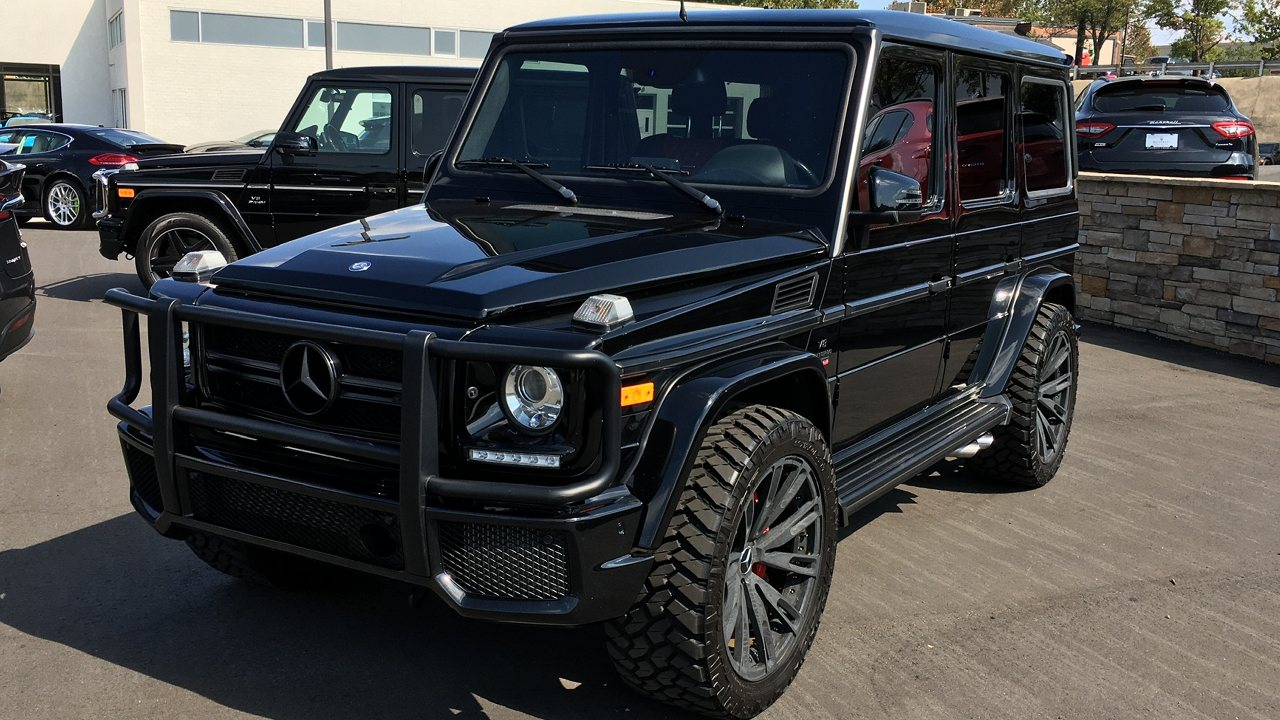
Mercedes is edging closer to signing off a compact sibling to the G‑Class, and the latest spy images of the so‑called Baby G suggest the project is moving from design sketch to production reality. The prototype’s boxy silhouette, upright glasshouse, and stubby overhangs make clear that the company intends to shrink the icon without diluting its character, positioning a new entry point into the G‑family just as demand for premium off‑roaders keeps climbing.
With development vehicles now testing in public and executives openly acknowledging a “little G,” the question is no longer whether this model will happen, but how faithfully it can translate the G‑Class formula into a smaller, more attainable package. The emerging picture is of a body‑on‑frame off‑roader that leans heavily on electrification, targets a 2027 launch, and aims squarely at buyers who want the G‑Wagen look and capability without the full‑size footprint or six‑figure price.
Spy shots confirm a shrunken G‑Class, not a soft crossover
From what I have seen of the latest development cars, Mercedes is not using the Baby G project to sneak in another soft‑edged crossover. The camouflaged prototype still wears a near‑vertical nose, flat roof, and squared‑off wheel arches, all of which echo the full‑size G‑Class rather than the brand’s smoother SUV range. Even through the disguise, the stance looks purposeful, with short front and rear overhangs that signal genuine off‑road intent rather than a styling exercise.
Those proportions match earlier descriptions of a “little sister” to the current G‑Class, with more compact dimensions but a clear visual link to the original. At Mercedes, plans have already been laid for a small G that will sit below the existing model while still offering petrol, diesel, and electric powertrains, which helps explain why the test car’s body appears engineered for serious hardware rather than shared with a road‑biased crossover. Fresh images of a Baby G prototype, fully covered in camouflage, reinforce that impression by revealing a profile that looks exactly as expected for a scaled‑down G‑Wagen, rather than a derivative of the GLA or GLB.
Body‑on‑frame construction keeps the G‑Wagen spirit intact
The clearest sign that Mercedes is treating this as a true off‑roader is the decision to stick with body‑on‑frame construction. I read that the company has already confirmed the Baby G will use a ladder‑frame layout, a choice that prioritises durability, towing strength, and suspension articulation over the lighter weight and sharper on‑road manners of a unibody platform. In other words, this is not a styling spin‑off, it is a structural commitment to the same philosophy that underpins the larger G‑Class.
That approach aligns with the brand’s broader strategy for the G‑family. Executives have spoken about expanding the G‑Class line with a new “baby G‑Wagen” that will carry a different product name but still deliver what customers expect from the G‑Class in terms of toughness and off‑road credibility. The ladder‑frame decision also dovetails with the company’s celebration of 600,000 G‑Class units produced, where At Mercedes they highlighted a planned small G with compact dimensions and a full spread of combustion and electric powertrains, underscoring that this new model is meant to extend a proven formula rather than replace it.
Electric‑leaning powertrains and a 2027 launch window
Powertrain strategy is where the Baby G diverges most from its ancestor. I understand that the “little G” is being prepared primarily as an electric vehicle, with development framed around a battery‑powered version that will arrive after a possible reveal at the end of 2026 and a market launch in 2027. That timing fits with the broader electrification of the G‑Class range and gives Mercedes room to refine the packaging of batteries and motors within a compact, off‑road‑capable frame.
At the same time, the company appears keen to keep its options open. Reporting on the future small G notes that At Mercedes they have already planned a compact sister to the current G‑Class with petrol, diesel, and electric powertrains, suggesting that the Baby G could mirror the larger model’s multi‑energy approach, at least in some markets. The brand’s work on the next‑generation MMA architecture for compact models, which supports both combustion and electric setups for future A‑Class successors and the upcoming GLA and GLB SUVs, shows how Mercedes and Benz are building flexibility into their smaller vehicles, even if the Baby G itself is expected to rely on a dedicated off‑road platform rather than MMA.
Pricing, positioning, and the fight for entry‑level off‑roaders
Where the Baby G sits in the market will be just as critical as how it is engineered. Early estimates suggest a starting price somewhere between $55,000 and $65,000, a band that would make it a far more attainable entry point into the G‑family than the current G‑Class, which starts at $148,250 in the United States. That pricing strategy would place the compact G squarely in the premium off‑roader bracket, above mainstream crossovers but below the full‑size luxury bruisers it visually resembles.
Its proportions could, therefore, position it as a direct rival to JLR’s incoming Defender Sport, a similarly conceived entry‑level SUV that aims to distil the Defender’s image into a smaller, more accessible package. By targeting that space, Mercedes is not only chasing younger buyers but also defending the G‑Class brand from imitators that trade on rugged styling without the same heritage. The Baby G’s expected 2027 arrival, following a reveal pencilled in for the end of 2026, would see it land just as this new wave of compact off‑roaders reaches showrooms, giving Mercedes a timely answer to the Defender Sport and other emerging competitors.
Design responsibility and the risk of shrinking an icon
For all the commercial logic, shrinking an icon is a delicate exercise, and Mercedes designers appear acutely aware of that pressure. In a detailed preview of the project, the team acknowledged that “there will be a smaller version of one of our most iconic shapes” and that “Yes there will be a little G,” while stressing that they fully understand the responsibility that comes with reinterpreting such a recognisable silhouette. That language suggests an internal debate not about whether to mimic the G‑Class, but about how far they can push modern proportions, aerodynamics, and safety requirements without losing the visual cues that make a G instantly identifiable.
The latest spy photography indicates that the balance is tilting toward fidelity rather than reinvention, with the Baby G prototype closely echoing the big G’s stance and detailing even under heavy camouflage. Just last month, Mercedes dropped a hint that we would see its new junior G‑Class “very soon,” and Today the first undisguised elements, from the upright grille to the squared shoulders, are beginning to peek through on test cars. For a brand that has already teased a broader G‑Class family and celebrated the model’s production milestones, the Baby G is emerging as both a design challenge and a strategic tool, one that must carry the weight of history while opening the door to a new generation of buyers.
More from Fast Lane Only