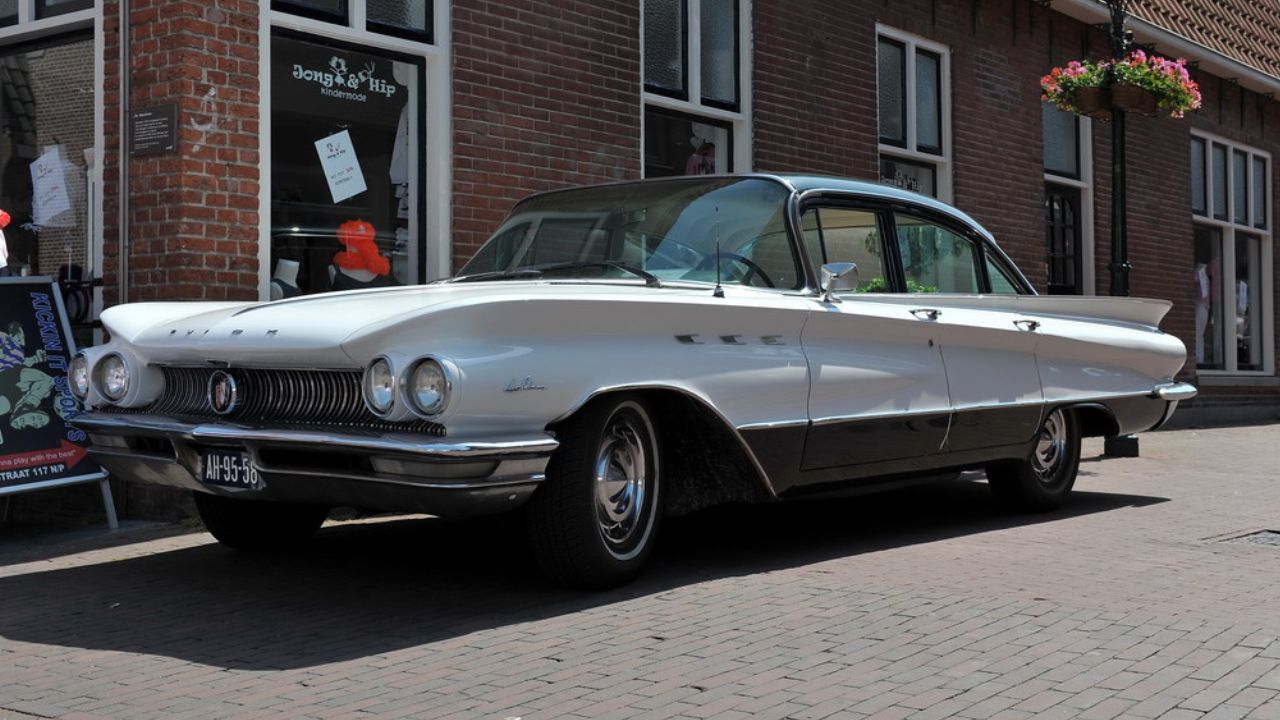
Size did not automatically equal sluggish in Detroit’s peak full-size era, and the 1970 Buick LeSabre is one of the clearest reminders. You get a car that stretches across the driveway, yet still responds when you lean into the throttle and ask it to hustle. If you are used to equating “big Buick” with soft, sleepy cruising, this is the model that quietly proves you wrong.
To understand why, you have to look at the LeSabre’s place in Buick’s lineup, the engines it shared with more overt performance models, and the way owners still talk about these cars. Once you do, it becomes clear that this was a family sedan with more in common with American muscle than its formal roofline and bench seats might suggest.
The full-size Buick that borrowed from muscle
When you slide behind the wheel of a 1970 LeSabre, you are sitting in a car that grew out of a long line of big Buicks that mixed comfort with serious power. Earlier in the decade, models like the Invicta and Electra 225 were already pairing upscale trim with strong V8s, and sources note that Invicta and Electra versions used a 401-cubic-inch engine while the LeSabre carried a 364-cubic-inch unit. That history matters because it shows you that Buick never treated its entry full-size as a weakling, and by 1970 the formula had only become more confident.
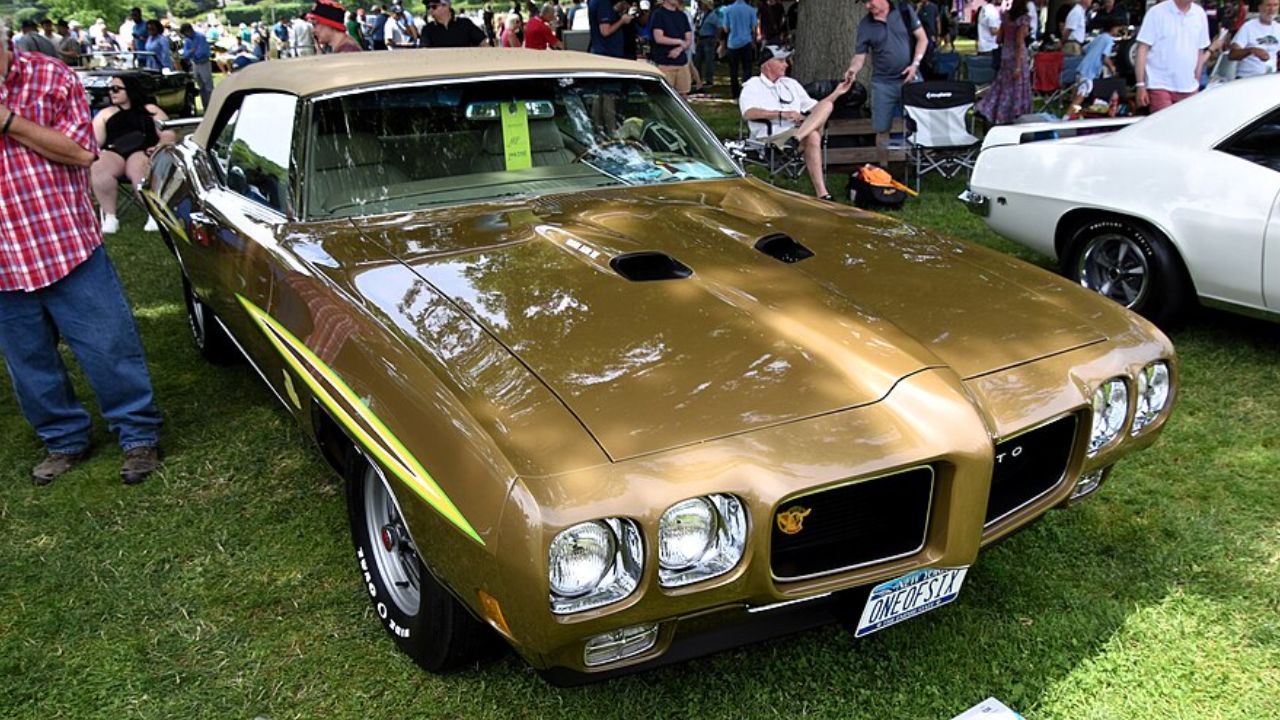
Under the skin, the LeSabre shared engineering DNA with Buick’s performance cars, which is why you feel more urgency than you might expect when you roll into the throttle. The same corporate mindset that produced the Gran Sport line also shaped the big sedan’s drivetrains, and you can see the family resemblance when you look at the 1970 Gran Sport GSX, which packed a 350 horsepower 455 cubic inch V8 and a quoted 510 ft-lbs of torque under its Ram Air hood, according to the Gran Sport GSX heritage listing. You are not getting that exact specification in a LeSabre, but you are drawing from the same parts bin and engineering philosophy, which is why the car never feels as lazy as its footprint suggests.
Engines that made “big” feel quick
If you want to understand why a full-size Buick could surprise you at a stoplight, you have to look closely at the engines Buick was building in 1970. The company’s small-block performance car, the GS 350, used a 350 cubic inch V8 that enthusiasts describe as quietly powerful and tuned for everyday enjoyment, and that same displacement appears in coverage of the 1970 Buick GS 350 as a 350 cubic inch engine. When you drop that kind of torque into a big chassis, you get the sort of rolling, effortless acceleration that makes a car feel faster than the spec sheet might suggest.
Above that, Buick was also building its biggest V8s, and those cast a long shadow over the entire lineup. Coverage of the company’s largest engines highlights a 455 cubic inch V8, and later in the decade the quoted output for a base 455 was listed at 250 hp after a shift to the SAE net rating system, as noted in analysis of 455 performance. When you see that same displacement celebrated in personal accounts of a 1970 Buick Wildcat with a Big block 455 that an owner describes as a blast to drive, you get a sense of how much shove Buick was comfortable putting into its full-size cars, and that Wildcat story, shared in a Buick Wildcat group, helps you picture what a similar engine could do in a LeSabre.
Sharing DNA with Buick’s fastest
To really appreciate how far from slow a big Buick could be, it helps to look at the company’s top-speed heroes from the same era. Rankings of the brand’s quickest cars by top speed highlight the 1970 Buick GSX, and in that context you see references to a table labeled Table_title: 135 MPH and a specification line that calls out a 7.5-liter unit in the Buick GSX Overview Engine column, as noted in one MPH breakdown. When a company is comfortable selling a 135 M capable coupe with a 7.5-liter V8, it is not a stretch to see how some of that attitude trickled down into the engines and gearing that found their way into the LeSabre.
That connection is reinforced when you look at the official heritage description of the Gran Sport GSX, which spells out that the car carried a 350 horsepower 455 cubic inch V8 and 510 ft-lbs of torque under a Ram Air hood, details preserved in the Gran Sport GSX archive. You are not going to fling a LeSabre to the same top speed, but when you share blocks, heads, and tuning philosophies with a car like that, you end up with a sedan that feels eager in real-world driving, especially in the 30 to 70 mph range where torque matters more than raw horsepower.
Real-world stories from the LeSabre family
Numbers tell part of the story, but you really feel the LeSabre’s character when you listen to the people who have lived with these cars. One enthusiast recounts how friends’ parents bought a 1968 Buick LeSabre 400 Brand new and even filled out the order sheet themselves, a detail preserved in a social media post that celebrates that Buick and its 400 badge. Another video walkaround of a survivor 1968 Buick Lasabre 400 flavor, which had been parked off the road for nearly three decades, shows how these big cars can sit for years and still roar back to life once someone cares enough to refresh the fuel system, as you see in footage of that Buick Lasabre waking up again.
Those stories matter because they show you how owners treat these cars less like disposable appliances and more like long-term companions. A separate reflection on a later 1978 Buick LeSabre Custom, framed as The One the writer Should Have Kept, underlines how attached you can become to a big Buick that mixes comfort with surprising pace, and that sentiment runs through the account of that COAL era car. When you put those experiences alongside the performance credentials of Buick’s muscle models, you start to see the 1970 LeSabre as part of a broader culture of big, fast, and unexpectedly agile American sedans.
Torque, not spec-sheet bragging
If you are comparing a 1970 LeSabre to modern performance cars, you might be tempted to dismiss it based on published horsepower alone, but that would miss how these drivetrains actually behave. Enthusiasts discussing older American cars point out that Horsepower figures often dropped in the 1970s because of smaller carburetors, conservative cams, and lower compression, yet the low-end torque was still there, a point made explicitly in a Horsepower thread. That observation fits the LeSabre perfectly, because what you feel in daily driving is the surge off idle and through the midrange, not the peak number on a brochure.
You can see the same philosophy in the way Buick tuned its smaller performance engines. Coverage of the GS 350 emphasizes that the 350 cubic inch V8 was engineered for everyday driving enjoyment rather than dragstrip heroics, and that balance of quiet power and usability is exactly what you experience when you roll into the throttle in a big sedan, as described in the Buick performance summary. When you combine that kind of tuning with the long wheelbase and weight of a LeSabre, you get a car that feels planted and confident as it gathers speed, which is its own kind of quick.
More from Fast Lane Only