You can trace the fiercest years of Detroit’s luxury rivalry to a single moment when Lincoln stopped chasing Cadillac and started swinging back. That moment arrived with the 1969 Lincoln Continental Mark III, a personal luxury coupe that turned a long‑running competition into a very specific duel with the Cadillac Eldorado. If you want to understand how Cadillac’s dominance was challenged, you follow the trail straight to that sharp‑edged Lincoln with the formal roof and the fake spare tire hump.
By the time the Mark III hit showrooms, Cadillac had already defined what an American status symbol looked like, and the Eldorado sat at the top of that pyramid. Lincoln’s big coupe did more than copy the formula. It reframed the contest around style, presence, and personal luxury, and for a brief window at the end of the 1960s, it pulled the spotlight away from Cadillac and onto Dearborn’s flagship.
The road to a two‑car showdown
If you step back to the mid‑1960s, you see Cadillac comfortably leading the American luxury market, with a full line of sedans, convertibles, and coupes that defined success for an entire generation. The brand’s modern lineup still trades on that heritage, and when you look at today’s Cadillac range you are seeing the descendant of the same prestige play that once crowned the Eldorado as the aspirational coupe. Lincoln, by contrast, had a respected Continental sedan but no single halo car that could match Cadillac’s glamour one‑on‑one.
That changed when the Lincoln Continental Mark III arrived as the division’s flagship personal luxury car. The Lincoln Continental Mark was positioned as the top expression of the Lincoln brand, a low‑slung coupe that still carried the Continental name but shifted the focus from chauffeured formality to owner‑driven indulgence. You were no longer just buying a big luxury car, you were buying a statement that you, not your driver, belonged behind the wheel.
How the Mark III was aimed at Eldorado
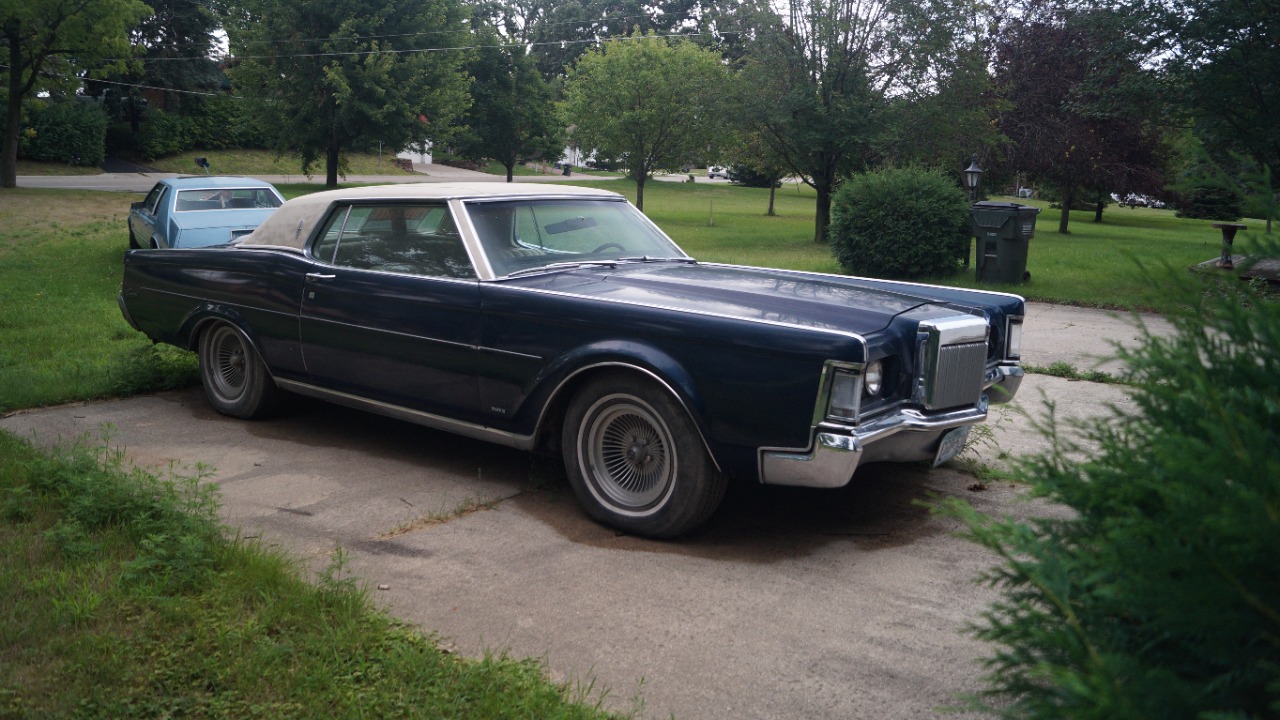
Lincoln did not hide what it was doing. The Mark III was Designed to compete with the Cadillac Eldorado, right down to its proportions and visual drama. It carried a bold, imposing grille and that signature “spare tire” hump on the trunk lid, a styling cue that instantly separated it from the smoother, more modern lines of the Eldorado. Where Cadillac leaned into a clean, almost futuristic look, Lincoln doubled down on classic cues that signaled old‑money taste even as it chased new‑money buyers.
The front end made the point before you even opened the door. Period descriptions highlight a Prominent upright grille, inspired by Rolls‑Royce, with vertical slats and a large center emblem that made the Mark III look like it was arriving from a different tax bracket. In your rearview mirror, that face read as authority and money, and it gave Lincoln a visual identity that could stand toe‑to‑toe with Cadillac’s stacked headlights and sharp fenders.
Lee Iacocca’s calculated gamble
Inside Ford, the Mark III was not an accident. It was a calculated move championed by executives who understood how much image mattered in the late 1960s. Video retrospectives point out that it is hard to fault Lee Iacocca for the way he read the market, coming off the success of the Mustang and newly promoted to Vic president when he pushed for a personal luxury flagship. If the Mustang and other sporty Fords proved you could sell style and emotion in volume, the Mark III was his answer for how to do the same thing at the very top of the price ladder.
That strategy worked because the car delivered the kind of presence buyers craved. Even though some early reviews were skeptical, the public responded quickly. One account notes that, Despite some critical reviews by the automotive press, the Mark III found roughly 7,000 buyers during the remainder of its first model year. For a high‑priced coupe, that was a strong signal that Lincoln’s gamble on a Cadillac‑fighting halo car was paying off.
Dimensions, drivetrains, and the feel behind the wheel
To understand how sharply Lincoln aimed at Cadillac, you have to look at the hardware. Enthusiast comparisons point out that The Continental rested on a 126-inch wheelbase with a length of 224-inches, while the Mark III had a 117-inch platform that still delivered full‑size presence. That shorter wheelbase gave the coupe a more personal, almost tailored stance compared with the long‑roof sedans that shared its showroom. You felt like you were driving something carved out of the bigger Lincoln, not just a two‑door version of the same car.
On the Cadillac side, the Eldorado brought its own engineering flex. The Cadillac Fleetwood Eldorado of that era used front‑wheel drive, a layout that enthusiasts still highlight when they describe the Cadillac Fleetwood Eldorado and Lincoln Continental Mark III rivalry from 1969 to 1971. Another period note reminds you that the 1966 Eldorado was the first American‑made car to feature front‑wheel drive, a point that still shows up in dealer walk‑around clips where Patrick from Cable Armor Cadillac opens with “Did you know” before explaining how the Cadillac Eldorado broke that technical ground. Lincoln stuck with rear‑wheel drive and a massive V‑8, so when you slide behind the wheel of each car today, you are feeling two very different interpretations of what a luxury coupe should be.
Sales, perception, and the moment Lincoln pulled ahead
Numbers alone do not tell the whole story, but they show how seriously buyers took the Mark III. One detailed breakdown notes that in 1968 the Mark III sold 7,770 examples, with 1969 sales spread over a longer window that pushed the total even higher. For a car that cost as much as a well‑equipped house in some parts of the country, those figures signaled that Lincoln had finally built something people were willing to stretch for, even if they had grown up assuming Cadillac would be their default choice.
Contemporary comparison tests captured that shift in perception. A widely discussed matchup between the 1968 Cadillac Eldorado and the 1969 Lincoln Continental Mark III concluded with a clear nod toward the Lincoln, a verdict that generated enough reader reaction that the test was reprised when Cadillac reskinned the Eldo for a later model year. When a magazine that had long treated Cadillac as the default king suddenly closed a comparison with a line that essentially said “Long live King Lincoln,” you knew the rivalry had reached a new temperature.
More from Fast Lane Only