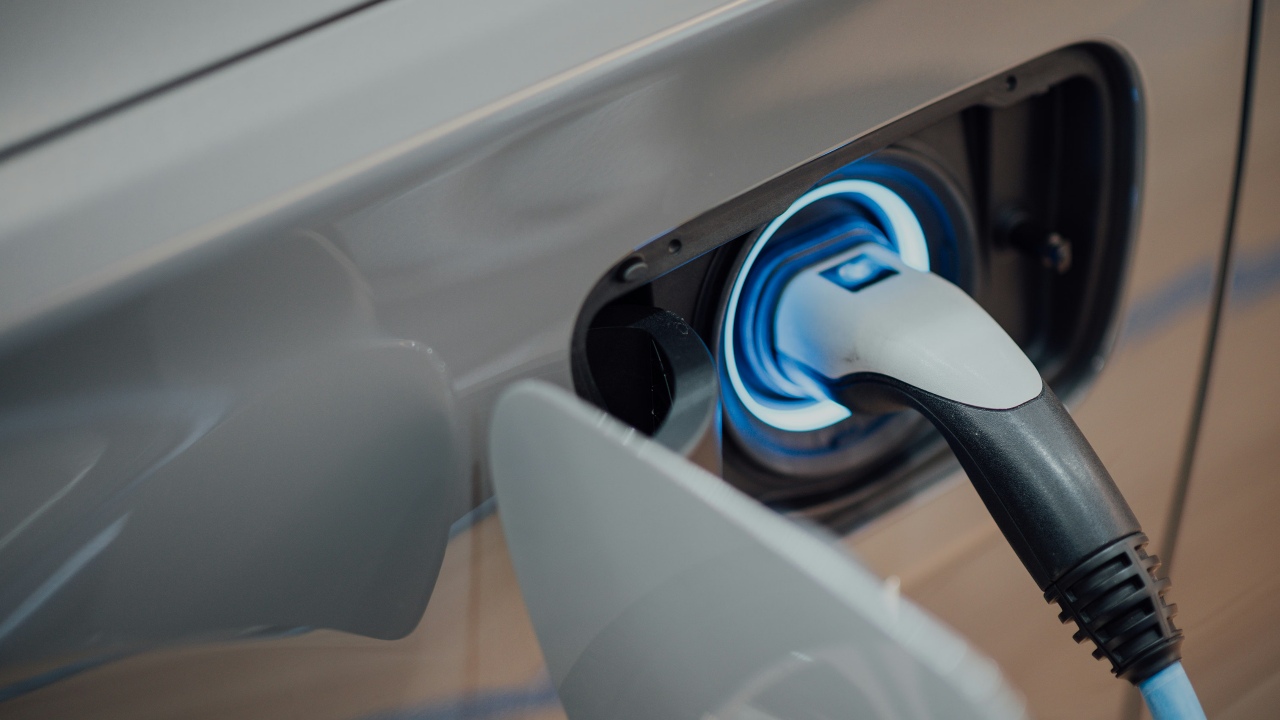
California is preparing to spend state money to keep electric cars attractive just as federal support is pulled back. Governor Gavin Newsom has proposed setting aside $200 million in his latest budget to revive rebates for buyers of battery powered vehicles and to blunt the impact of President Donald Trump’s decision to end a key federal tax credit. The move signals that Sacramento intends to keep pushing toward cleaner transportation even as Washington steps away.
Newsom’s $200 million pitch and the hole Trump created
Governor Gavin Newsom has framed his new spending plan as a way to keep California’s climate agenda on track while the federal government changes course. In his proposed 2026–2027 budget, he calls for $200 million to restart a statewide rebate program that would cut the upfront cost of electric cars for households that qualify. The money would be routed through the California Air Resources Board and is explicitly designed to replace support that drivers lost when Trump halted federal incentives, a gap that state officials estimate at roughly the value of the former $7,500 federal tax credit for many models.
The federal benefit disappeared when Trump ended the nationwide electric vehicle tax credit for new purchases, eliminating up to $7,500 per car that buyers had been able to claim. California is now moving to backfill at least some of that lost $7,500 by offering its own rebates at the point of sale, rather than waiting for tax season. Newsom’s budget documents describe the $200 million as a “light-duty zero-emission vehicle” initiative that would sit alongside other climate investments, even as the state manages a projected $3 billion deficit. In practical terms, the proposal would give Californians who are considering a Tesla Model 3 or a Chevrolet Equinox EV a state-backed discount to replace what the federal government has taken away.
How the new rebates would work for California drivers
Although final program rules are still being drafted, the broad contours of the plan are already clear. The $200 million would fund a new round of rebates for buyers of qualifying electric vehicles, with an emphasis on making the cars more affordable for lower and middle income households. State officials have signaled that the incentives would apply to both new and used models, and that they want the money to be available at the dealership or online checkout so that the price reduction is immediate. That structure is meant to mirror the simplicity of the former federal tax credit while avoiding the lag that came with waiting for a refund.
The proposal also fits into a larger package of clean transportation spending that includes charging infrastructure and support for zero emission trucks and buses. In earlier rounds of state incentives, California combined rebates with perks such as access to carpool lanes, which helped boost sales of vehicles like the Tesla Model Y in crowded regions. The new $200 million pool is expected to be paired with stricter income caps and vehicle price limits so that the bulk of the benefit flows to buyers who would otherwise struggle to afford an electric car. By focusing on light duty vehicles, the program targets the segment that still produces a large share of the state’s greenhouse gas emissions.
A state level response to the loss of federal EV support
I see Newsom’s proposal as a textbook State Level Response to the Loss of Federal EV Support. When Trump cut off the federal tax credit, he did not just remove a line on a tax form, he altered the economics of electric car ownership in a way that could slow adoption. California’s answer is to use its own budget to keep momentum going, effectively telling automakers and drivers that the state will not let national politics derail its climate targets. The $200 million is modest compared with the overall cost of decarbonizing transportation, but it sends a clear signal that Sacramento is willing to step in where Washington has stepped back.
That signal matters because California has long served as a bellwether for clean vehicle policy. When the state tightens emissions rules or offers generous rebates, manufacturers respond by prioritizing models that meet those standards, and other states often follow. By moving quickly to replace at least part of the lost $7,500 federal benefit, California is trying to prevent a stall in sales that could ripple through the market. The new incentives are framed as a bridge, keeping electric cars financially accessible for California consumers while the state continues to build out charging networks and while automakers work to bring down battery costs through scale.
Budget trade offs and political stakes in Sacramento
Committing $200 million to electric vehicle rebates is not a trivial choice in a year when California is wrestling with a projected $3 billion shortfall. Newsom has already trimmed or delayed other initiatives, and his budget team has emphasized that every new dollar must be justified against competing priorities such as housing, education, and wildfire prevention. By carving out this funding, he is betting that voters will accept short term belt tightening elsewhere in exchange for long term gains in cleaner air and climate resilience. The proposal also reflects confidence that the economic benefits of an expanding EV sector, from manufacturing jobs to utility investments, will help offset the upfront cost.
Politically, the move positions Newsom as a foil to Trump on climate and energy, a contrast that has defined much of California’s relationship with the current White House. By explicitly tying the $200 million to the end of federal rebates, the governor is inviting a debate over who should bear the cost of decarbonizing transportation. Supporters argue that the state has little choice if it wants to meet its own emissions targets and maintain its leadership role. Critics question whether direct rebates are the best use of scarce funds, suggesting that investments in public transit or grid upgrades might deliver more bang for the buck. The budget hearings that follow will test how much appetite legislators have for maintaining aggressive climate spending in a tighter fiscal environment.
What it means for car buyers and the broader EV market
For individual Californians, the most immediate question is how much money this program could put back in their pockets. While exact rebate amounts have not been finalized, the intent is to narrow the gap created when the federal government removed up to $7,500 per vehicle from the equation. A buyer looking at a mid range electric crossover priced around $40,000 could see the effective cost drop by several thousand dollars once state support is applied, especially if they qualify for enhanced incentives based on income. That kind of reduction can be the difference between sticking with a gasoline powered Honda CR V and switching to a battery electric alternative.
The broader market implications are just as significant. Automakers that have invested heavily in electric platforms, from Tesla to legacy brands like Ford and Hyundai, are watching California closely because it remains one of the largest EV markets in the world. A robust state rebate program can help stabilize demand at a time when some manufacturers are reconsidering the pace of their electric rollouts in response to shifting federal policy. By committing $200 million to keep adoption moving, California is effectively telling the industry that it still expects a rapid transition to zero emission vehicles, and that it is prepared to use its budget to back that expectation. If the program succeeds in keeping sales on an upward trajectory, it could provide a template for other states that are also grappling with the fallout from the loss of federal support.
More from Fast Lane Only: