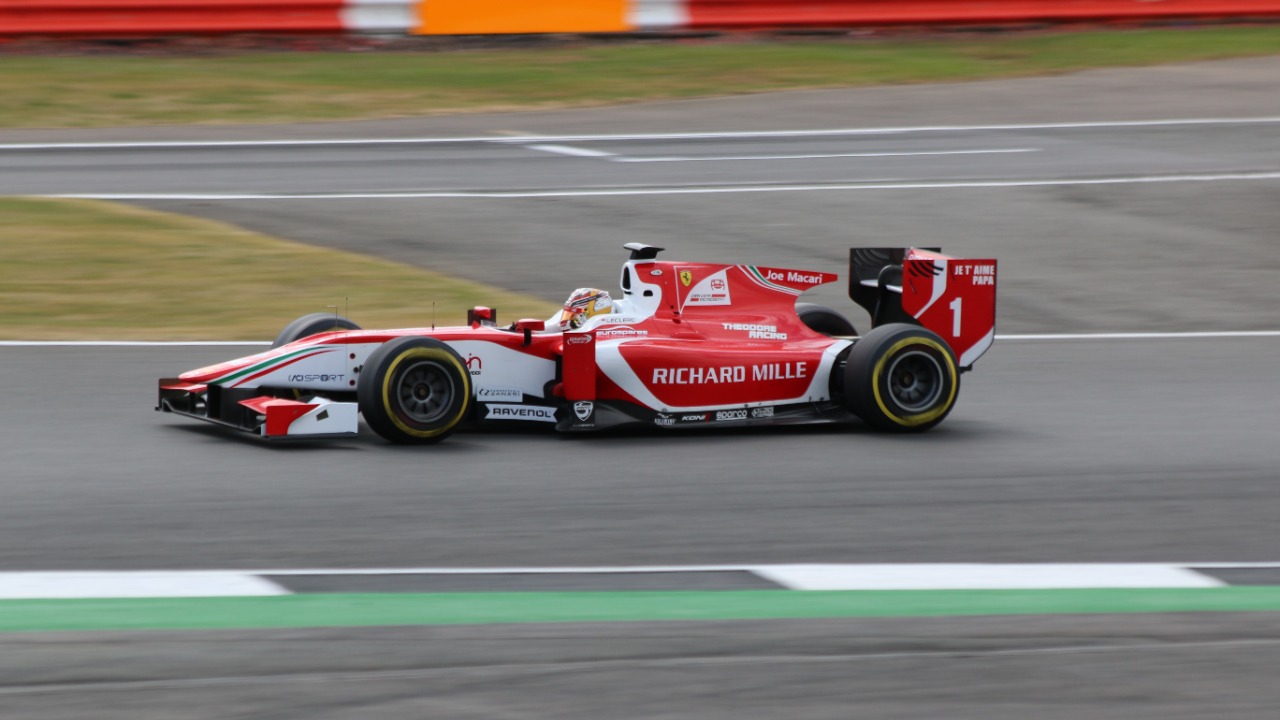
Charles Leclerc has spent his entire Formula One career being measured against expectations that arrived ahead of schedule. From the moment he stepped into a Ferrari seat as a precocious newcomer, the conversation has never been whether he is good enough, but whether the team around him can match the level of his driving. That tension, between a rare talent and a giant still trying to rediscover its old certainty, is exactly why Ferrari continues to stake so much of its future on him.
I see Leclerc as the driver who best captures Ferrari’s modern dilemma: a superstar capable of brilliance over a single lap and long seasons of frustration, yet still convinced that the most meaningful victories of his life will come in red. Understanding why the team keeps doubling down on him means looking not just at his statistics, but at the way his style, mentality, and loyalty align with what Ferrari wants to be again.
From prodigy to Ferrari cornerstone
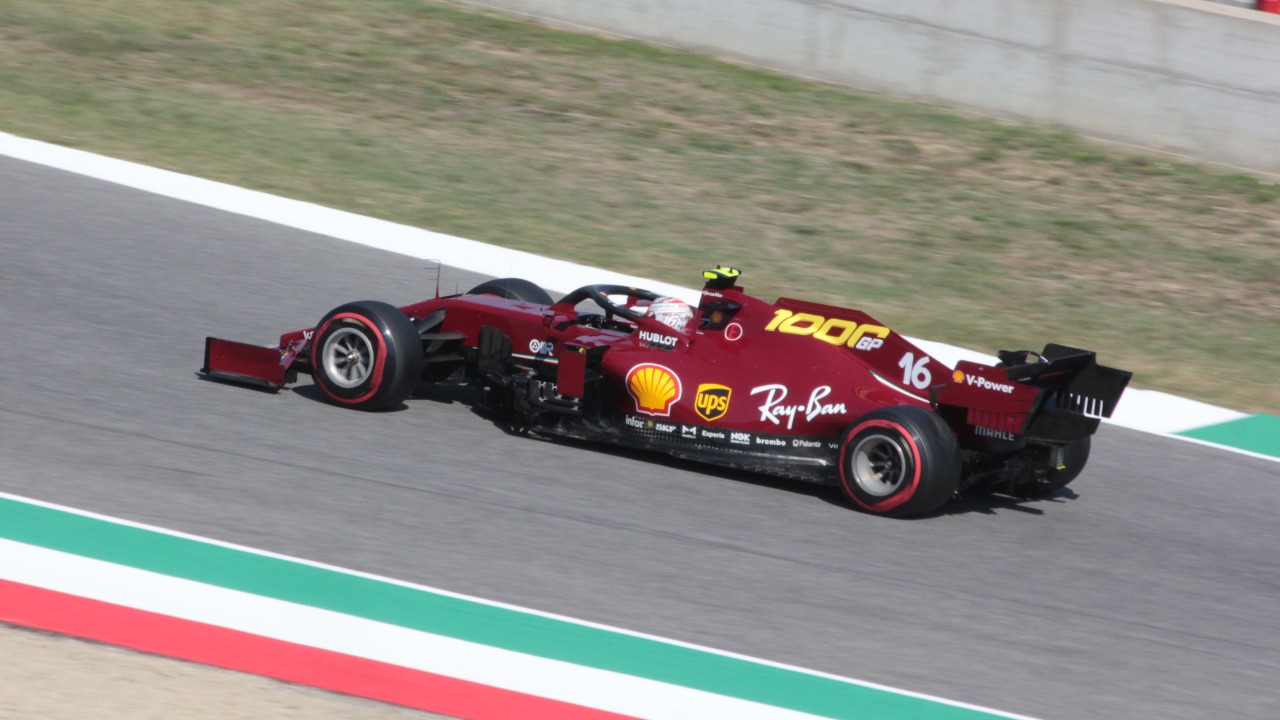
Leclerc’s rise was not gradual, it was a surge that forced Ferrari’s hand. After arriving in Formula One and impressing immediately, he joined Ferrari for 2019 to partner Sebastian Vettel, becoming the second-youngest polesitter in Formula One history at the Bah circuit and turning what was supposed to be a learning year into a direct challenge to an established champion, a trajectory laid out in his early Ferrari for story. I read that season as the moment Ferrari stopped treating him as a prospect and started seeing him as the driver around whom a generation could be built.
The numbers since then have only hardened that view. As of the Abu Dhabi Grand Prix, Leclerc has stacked up eight race wins, 11 fastest laps, and 50 podiums in Formula One, a body of work that already places him among the most productive drivers of his era even without a title to his name, as reflected in the official tally for As of the Abu Dhabi Grand Prix. When I look at those 50 podiums, I see a driver who has turned raw speed into sustained output despite the inconsistency of the machinery beneath him.
What makes Leclerc’s talent different
On pure driving, Leclerc is not just quick, he is distinctive. His reputation has been built on qualifying laps that look like tightrope walks, the car dancing on the edge of adhesion while he still finds time in the final sector, a style that detailed profiles of Charles Leclerc in Formula competition describe as a signature approach that trades comfort for ultimate peak performance. That willingness to live with a nervous rear end and brake later than seems reasonable is exactly what turns a good car into a pole-position car.
Yet the more I study his races, the more I see that his skill set is broader than the “qualifying specialist” label suggests. Detailed breakdowns of his career point to several factors that keep him near the front: precise car control, an ability to adapt to changing grip, and a capacity to stay cool under pressure that has been highlighted in analyses of his time with Scuderia Ferrari. When I watch his best drives, I see a pattern of managing tyre degradation intelligently while still attacking when the window opens, a balance that separates the very good from the genuinely elite.
How peers and fans rank him among the elite
Talent in Formula One is often defined as much by who respects you as by what you win, and on that front Leclerc’s standing is striking. In a candid assessment of the current grid, Max Verstappen singled out Charles Leclerc and Fernando Alonso as the standout drivers in Formula competition right now, a nod from the sport’s dominant force that underlines how highly he rates Leclerc’s skills, racecraft, and mentality in his own assessment. When the benchmark driver of an era puts you in that kind of company, it carries more weight than any marketing slogan.
Among fans, the debate is more nuanced but still revealing. In one widely discussed thread, supporters argued that while Very few people consider him better then Verstappen, who is in turn regarded as an all time great, if not the GOAT by some, they still see Leclerc as one of the few drivers who can match prime Verstappen along Hamilton on raw pace, a view captured in a detailed Very few people discussion. I read that as a kind of backhanded compliment: he is judged against the very highest bar, and even when he falls short in the standings, his underlying speed keeps him in that rarefied conversation.
The Ferrari project and Leclerc’s loyalty
Ferrari’s long-term bet on Leclerc is not just about lap time, it is about alignment of ambition. When he extended his contract, he was explicit that They gave me the opportunity to get into Formula 1, they gave me the opportunity of being a Ferrari driver, and getting that chance early in his career has clearly shaped his sense of responsibility to the team, a sentiment he tied directly to his belief in the project in a detailed They gave me explanation. When I hear him talk about Ferrari, it sounds less like a contract and more like a shared mission.
He has been equally clear that his decision to stay was driven by conviction rather than comfort. Asked why he committed for so long, he said More than anything, I think what made me sign for a longer contract is because I believe in the project, stressing that he wants to finish his story in red on the highest note possible, a stance he laid out in detail in a More than anything interview. From my perspective, that kind of public commitment gives Ferrari cover to plan aggressively around him, knowing their lead driver is not looking over the fence at every contract cycle.
Why Ferrari keeps building around him
Inside the team, Leclerc is treated less as a star employee and more as a central pillar of the future. Official communications from Maranello describe him as Known for his exceptional abilities over a qualifying lap and note that at just 26 years of age he is already second in the list of Ferrari drivers with the most pole positions, a status that the team’s own Known for profile frames as a foundation for the next era. When I read that, I see a team that has stopped hedging and is instead structuring its competitive window around his prime years.
The strategic intent is echoed in independent analysis of Ferrari’s driver choices. Commentators have noted that If Carlos Sainz has been somewhat set aside, there is a clear sense that the combination with Leclerc is expected to continue for many more years, a reading of the situation that one detailed If Carlos Sainz breakdown presents as a deliberate pivot toward a single, long-term reference point. From my vantage point, that is Ferrari finally behaving like the big team it is supposed to be, backing one driver as the face of its project rather than constantly juggling short-term options.
Greatness delayed, not denied
Of course, betting on Leclerc has not spared Ferrari from criticism, especially when the car has fallen short. Some observers argue that it has been a poor season for the team in red but Charleslair the man himself has been one of the most underrated drivers on the grid, a sentiment voiced in a widely shared Charleslair the video that frames Ferrari’s recent struggles as a waste of his incredible driving. I share that frustration: too often his mistakes are magnified while the structural weaknesses around him are treated as background noise.
Yet those who have worked closest with him remain convinced that the best is still ahead. A former Ferrari race engineer described him as a Talent Destined for the Top and argued that while the team lost out to rivals in the Constructors battle, Leclerc is now ready to be really great, a view laid out in a detailed Talent Destined for the Top assessment. When I weigh that insider confidence against the public impatience, I lean toward the idea that his peak seasons have been delayed by circumstance rather than defined by them.
The emotional core of the partnership
What ultimately binds Leclerc and Ferrari is not just performance data, it is emotion. Winning for Ferrari is a desire that has burned throughout Leclerc’s life, shaped by Watching the annual F1 race in his native Monaco and dreaming of one day being the driver in red that the crowd roars for, a personal history he has shared in depth in a reflective Winning for Ferrari interview. When I listen to him describe that childhood connection, it becomes obvious why he is willing to endure the pressure and scrutiny that come with being labelled “The Chosen One.”
That emotional weight is part of why opinions on him can be so polarized. Some fans push back on the idea that he is a super raw and unrefined talent, insisting that, Exactly because he has already shown such a high baseline, his errors are overblown, a counterpoint voiced by the user Throwawayayayalove in a thoughtful Throwawayayayalove discussion. I find myself agreeing with that view: the very fact that his bad days are dissected so intensely is a backhanded tribute to how high his good days can be.
Why Ferrari’s long game still makes sense
Looking across his career, I see a driver whose trajectory justifies Ferrari’s patience. He was signed by the Scuderia Ferrari team for the 2019 season and has continued to perform at a high level, regularly fighting at the front when the car allows it, a pattern that long-term statistical breakdowns of his time with Dec Scuderia Ferrari underline. In a sport where driver peaks and team cycles rarely align perfectly, Ferrari appears convinced that its next competitive upswing will coincide with Leclerc’s prime.
From my perspective, that is a rational gamble. Profiles that frame Charles Leclerc as one of the most compelling and dynamic figures in modern Formula competition, highlighting both his raw speed and his capacity to learn from painful defeats, such as the in-depth Nov analysis, paint a picture of a driver still adding layers to his game. If Ferrari can finally give him a car worthy of those qualities, the team’s long-standing bet on his talent will look less like faith and more like foresight.