
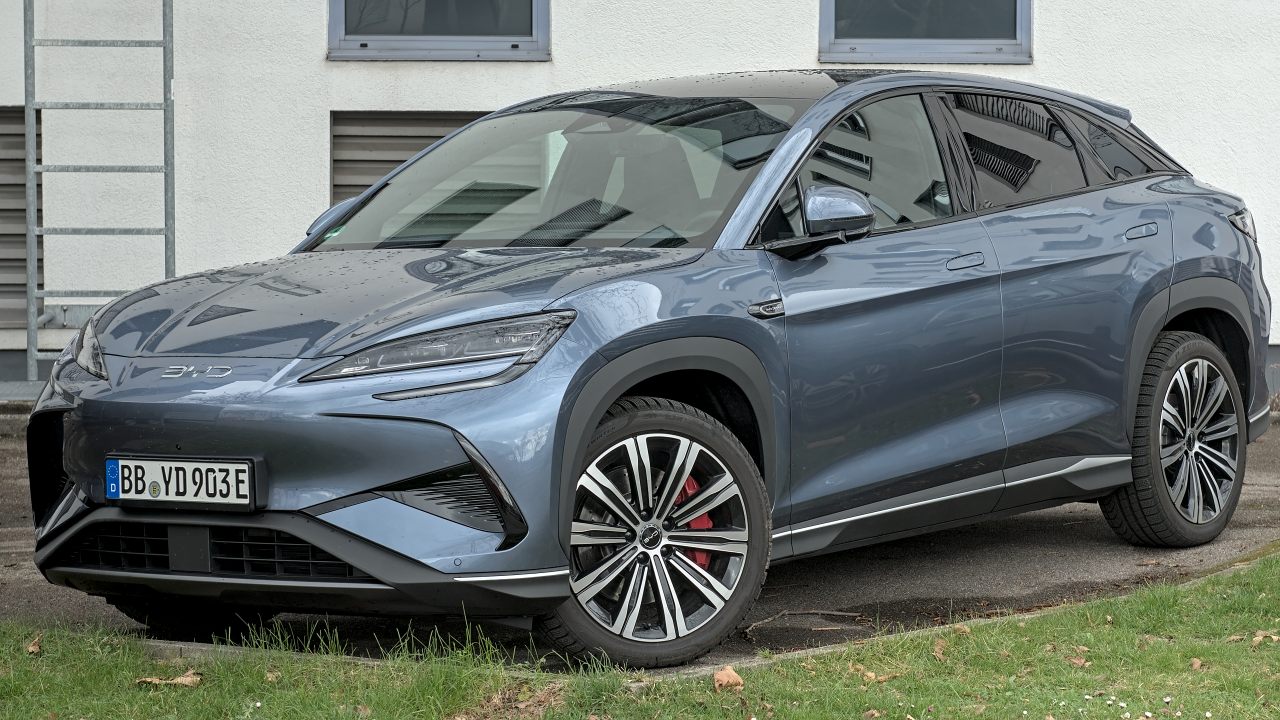
Chinese electric vehicle makers are tightening their grip on North America, not by charging directly into the United States, but by building scale and political leverage on its northern and southern flanks. Mexico and Canada are emerging as the preferred gateways, giving Chinese brands a way to test local tastes, refine logistics and, eventually, challenge entrenched players in the U.S. market. The strategy is already reshaping competition in both countries and raising pointed questions for policymakers in Washington.
Mexico becomes the southern beachhead
Mexico has quickly turned into a showcase for how aggressively Chinese brands can move when price, product and policy line up. BYD has seized a commanding position, with BYD claiming that it now accounts for 70% of EV and PHEV sales in Mexico, a share that would be unthinkable for a foreign brand in the United States. That dominance is not limited to passenger cars, since BYD has also built a commercial footprint, with reports that 700 BYD trucks are already operating in Mexico and that the company expects to close 2025 with the sale of 1,200 units, underscoring how deeply it is embedding itself in local fleets.
The country’s appeal is not only about demand, it is also about trade architecture. Under existing North American trade rules, Chinese automakers that manufacture in Mexico can ship vehicles into the United States at significantly lower tariff levels than if they exported directly from China, provided they meet content and origin requirements. Analysts have noted that this structure allows Chinese companies that invest in Mexican production to move EVs into the U.S. market at reduced tariffs, turning Mexico into a potential export springboard as well as a domestic growth story. That prospect is already influencing corporate strategy, with BYD publicly reconsidering whether to install a full manufacturing plant in Mexico amid tariff uncertainty and wider geopolitical tensions, a sign that boardrooms are weighing both the opportunity and the political risk.
Canada opens the northern door
While Mexico gives Chinese automakers a cost efficient base close to U.S. consumers, Canada offers something different, a relatively open regulatory environment that is hungry for affordable EVs. BYD has signaled that Canada is central to its next phase of expansion, with company plans to sell more than 1.3 million plug in models outside China and a specific focus on a Canadian foray as part of that overseas push. Separate reporting notes that BYD is already sending full electric and plug in hybrid sedans, crossovers and pickups to Mexico, but has not yet begun exporting passenger vehicles into Canada, which makes the planned move north a significant escalation of its North American presence.
Canadian policymakers have also played a role in shaping the landscape. Ottawa has been willing to use trade policy as leverage, for example by linking EV related tariffs to other sectors such as agriculture, including discussions over whether to slash tariffs on Canadian canola in negotiations that also touch on electric vehicle access. At the same time, industry observers in Canada have warned that the rapid advance of China based EV makers, combined with the country’s own climate targets, could put pressure on domestic and U.S. manufacturers that are still struggling to deliver low cost electric models at scale. The result is a northern market that is more open to Chinese brands than the United States, but increasingly aware that those decisions will reverberate across the continent.
BYD’s global scale raises the stakes
The company at the center of both the Mexican and Canadian stories is BYD, whose global ambitions are now large enough to unsettle incumbents far beyond China. BYD vehicles are already sold in over 112 cities across 102 countries on six continents, according to the company’s own figures, a reach that gives it unmatched experience in tailoring products to different regulatory and consumer environments. According to AlixPartners, that global spread, combined with BYD’s tight control over its battery supply chain, allows it to undercut rivals on price while still investing heavily in new models.
Those capabilities are now being directed squarely at markets outside China. BYD has outlined a goal of selling about 1.3 million EVs and plug in hybrids abroad, with expansion into Canada explicitly framed as part of that overseas conquest. At the same time, the company is weighing further growth in Europe and has been reassessing its manufacturing strategy in Mexico in light of shifting tariff expectations and geopolitical pressures. The combination of a dominant position in Mexico, a planned entry into Canada and a vast global footprint means that when BYD eventually turns its full attention to the United States, it is likely to arrive with both scale and experience that few Western automakers can match.
Nio and others probe the Americas
BYD is not the only Chinese brand mapping out a two sided approach to North America. Nio has been steadily extending its reach, first by moving into its initial market in the Americas, Costa Rica, as part of a broader effort to grow its global footprint. Company executives have previously described North America as a key long term objective, with earlier comments indicating that Nio was still debating the exact timing of a formal entry into the region. That caution reflects both the complexity of U.S. regulations and the need to build brand recognition in nearby markets before committing major capital.
Signals from Nio’s own community suggest that Canada could become an early focal point. In one public Comments Section, enthusiasts reacted to hints of a North America expansion by openly calling for Onvo or Nio models in Canada and pledging that they Will place orders as soon as vehicles become available. That kind of grassroots anticipation, even if anecdotal, illustrates how Chinese EV brands are cultivating demand in markets adjacent to the United States, building a base of potential customers that could later support a broader regional rollout. It also shows that the competitive threat to U.S. and Canadian automakers is not limited to price, but extends to software heavy, tech forward brands that appeal to younger buyers.
Washington watches from the middle
As Chinese EV makers deepen their presence in Mexico and Canada, the United States finds itself in an increasingly uncomfortable position. President Donald Trump has backed steep tariffs on Chinese made vehicles, a policy designed to slow direct imports and protect domestic manufacturing. Those measures have so far kept brands like BYD out of U.S. showrooms, even as their cars become familiar sights on streets in Mexico City and, soon, Canadian cities. Industry experts have warned that this divergence could leave U.S. consumers paying more for EVs while neighbors to the north and south gain access to cheaper, well equipped models from China.
The strategic question for Washington is whether tariffs alone can hold the line if Chinese companies decide to manufacture within North America’s trade zone. Analysts have pointed out that if Chinese automakers build plants in Mexico, they can, under current rules, export vehicles to the United States at reduced tariffs, provided they satisfy content thresholds. That possibility has already prompted political pushback, including calls to tighten rules of origin and to scrutinize any new Chinese backed factories in Mexico or Canada on national security grounds. At the same time, industry voices in Michigan and other manufacturing hubs have argued that the rapid advance of China based EV makers in North America, particularly as Canada opens its market further, That Worries Industry Experts who see a risk of domestic producers losing share in the very segment that is supposed to define the industry’s future.
More from Fast Lane Only


Leave a Reply