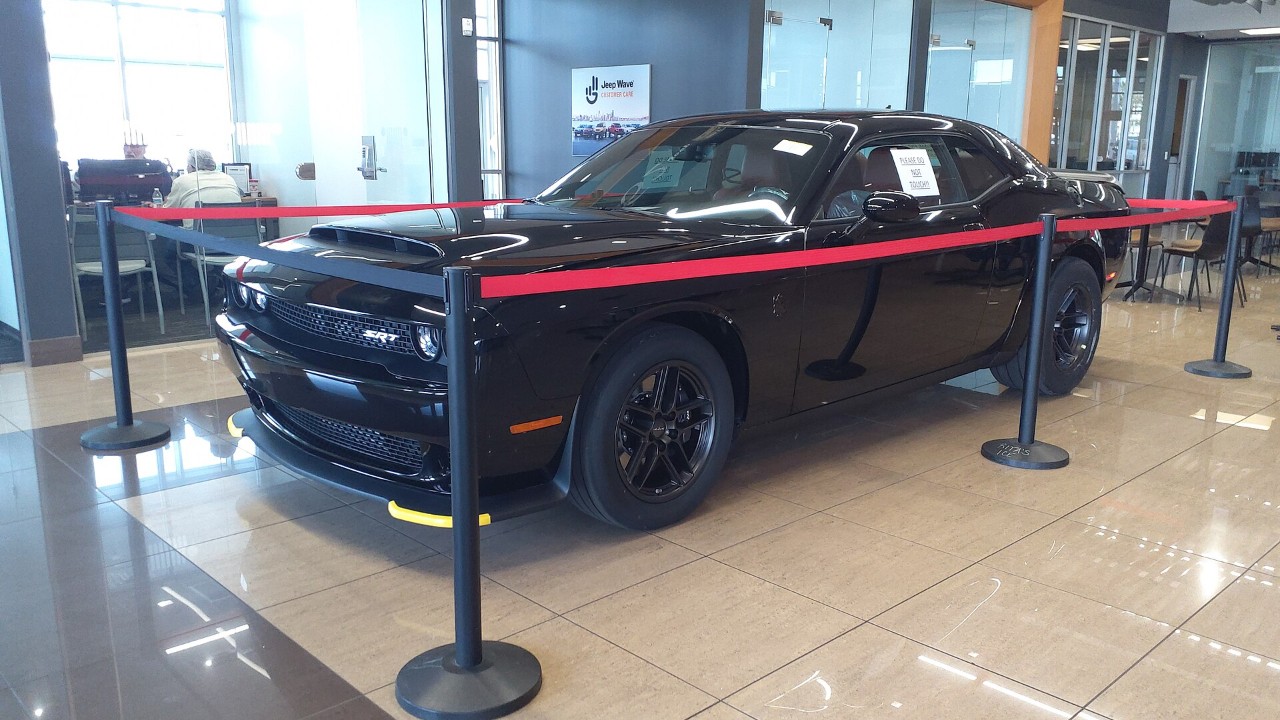
Police in the Greater Toronto Area are searching for a highly organized crew after a daring theft of high‑end vehicles valued at roughly 2 million dollars. Investigators say the operation, which stripped a dealership of multiple luxury models in a matter of minutes, reflects a growing shift from opportunistic car theft to professional, assembly‑line crime. As officers work through surveillance footage and cross‑border alerts, the case has become a test of how well local forces can keep pace with thieves who treat luxury cars as fast‑moving financial assets.
I see this heist not as an isolated spectacle but as a sharp snapshot of a market that now prizes stolen vehicles as much as legitimate inventory. The same networks that quietly move SUVs out of residential driveways are capable of emptying a showroom when the risk‑reward equation tilts in their favour. What happened inside that dealership is part of a broader pattern in which repeat offenders, weak deterrence, and global demand intersect on the polished floors of luxury brands.
The precision hit that emptied a luxury showroom
Investigators describe a crew that moved with the confidence of people who had rehearsed every step, from breaching the building to driving the cars off the lot in tight succession. The target was a cluster of high‑end models, the kind of vehicles that can be resold quickly overseas or stripped for parts that command premium prices. By the time staff arrived, eight luxury vehicles were gone, the alarms had been defeated, and the thieves had left behind little more than tire marks and a jumble of broken security hardware.
What stands out to me is not only the dollar figure, roughly 2 million dollars in losses, but the way the theft compresses a complex criminal economy into a single night’s work. Each stolen car represents a chain of handlers, from the drivers who took them off the lot to the brokers who will arrange fraudulent paperwork or clandestine shipping. The brazenness of hitting a dealership, rather than picking off vehicles one by one from driveways, suggests a crew that understands both the vulnerabilities of commercial security and the appetite of buyers who do not ask many questions once a luxury badge is parked in front of them.
A pattern of repeat offenders and thin deterrence
Behind the polished veneer of this heist sits a more familiar figure in Canadian policing: the repeat violent offender who cycles through the system with little lasting consequence. In a widely shared clip tied to the broader debate over auto theft, a commentator points to a suspect described as a repeat violent offender with 75 PRIOR CONVICTIONS, involved in 12 prior incidents, and still back on the street. The post, tagged with the handle notonjoeswatch and viewed by an audience that includes at least 865 users, has become shorthand for a public frustration that stretches far beyond one Instagram reel.
When I look at that example, I see more than a viral talking point. It captures a structural problem in which a small group of chronic offenders can inflict outsized damage on communities and businesses. If someone with 75 convictions can still find room to reoffend, then the deterrent effect of sentencing, bail conditions, and supervision is clearly not matching the scale of the crime. The luxury car heist fits neatly into that context, a high‑value crime that likely draws on people who already know the system, understand its limits, and are confident they can navigate around them.
How organized crews turn stolen cars into global currency
The sophistication of the dealership theft mirrors what police have been warning about for years: stolen vehicles are now a form of global currency. Once a crew has eight luxury cars in its control, the next steps are almost scripted. Some vehicles are driven to so‑called “cool‑down” locations, quiet industrial units or suburban garages where plates are swapped and trackers are disabled. Others are quickly funneled toward ports, where containers can hide a late‑model SUV behind stacks of legitimate goods, bound for buyers who will never see the original vehicle identification number.
From my vantage point, the most troubling element is how seamlessly these cars can vanish into legitimate‑looking paperwork. Fraudulent registrations, cloned VINs, and forged export documents turn a stolen vehicle into something that can cross borders and pass roadside checks with little scrutiny. The crew that hit the dealership is almost certainly plugged into that infrastructure, because there is no point in stealing 2 million dollars in inventory unless there is a reliable way to convert it into cash. That is what makes this more than a local crime story: it is a reminder that a showroom in Ontario can be the first link in a chain that ends in a distant port city where the car is sold as if it had never been reported stolen.
Police tactics and the limits of current enforcement
Police forces in and around Toronto have responded to the surge in auto theft with a mix of targeted projects, joint task forces, and technology‑driven investigations. In the wake of the dealership heist, detectives are leaning heavily on surveillance video, license plate readers, and data from connected‑car systems that can sometimes track a vehicle even after thieves believe they have disabled its locator. The hope is that by mapping the crew’s movements before and after the theft, investigators can link this incident to other unsolved cases and build a conspiracy file that reaches beyond the drivers who physically took the cars.
Yet I find the limits of this approach increasingly stark. Technology can help recover some vehicles and identify some suspects, but it does not change the underlying calculus for organized crews. If the worst outcome is the occasional seizure of a shipment or the arrest of a low‑level participant, the business model remains intact. The example of a repeat violent offender with 75 convictions circulating freely in the community underscores how difficult it is for police to translate investigative success into lasting disruption. Without sentencing that reflects the scale of the damage and supervision that actually constrains high‑risk individuals, each takedown risks becoming a temporary setback rather than a turning point.
What this heist reveals about public safety and political will
The dealership theft has quickly become a touchstone in a broader conversation about public safety, especially in cities where residents already feel that property crime is edging closer to their front doors. When eight luxury vehicles can disappear from a commercial lot in a single coordinated strike, it sends a message about who currently holds the initiative. The viral focus on repeat offenders, amplified through accounts that urge viewers to Follow and share, reflects a sense that the balance between offender rights and community protection has tilted too far in one direction.
From where I sit, the real test is not whether police eventually identify the crew behind this 2 million dollar haul, but whether the response addresses the conditions that made the crime viable in the first place. That means confronting the reality of chronic offending, tightening the gaps that allow people with extensive records to reoffend with minimal constraint, and treating auto theft as a strategic threat rather than a series of isolated insurance claims. Until that happens, each new heist will feel less like an aberration and more like a business decision made by people who have correctly judged that the rewards still outweigh the risks.
More from Fast Lane Only