Corvette buyers spoke loudly in 2025, and the message was not what General Motors wanted to hear. After several years of pent‑up demand and record-breaking buzz, sales of the American sports car icon dropped sharply as production snags, recalls, and economic pressure converged. The result was a year in which the brand’s engineering highs were overshadowed by the simple fact that far fewer cars reached customers.
The Corvette ended 2025 with 24,533 sales, a 26.4% slide from the previous year, when GM was able to move 33,330 units. That reversal undercut expectations that the mid‑engine generation would keep climbing and instead highlighted how fragile momentum can be when supply, safety, and pricing all turn into headwinds at once.
From record buzz to a steep sales drop
The core story of 2025 is numerical and unforgiving: The Corvette ended 2025 with 24,533 sales, down 26.4% over the previous year, when GM was able to move 33,330 units. For a nameplate that had been riding a wave of enthusiasm since the mid‑engine redesign, that kind of contraction is more than a blip, it is a reset of expectations about how much demand can be sustained at current prices and production levels. The decline also stands out in a broader market where performance cars often rely on scarcity as a selling point, yet here scarcity appears to have gone too far.
The drop was not confined to a single quarter. Reporting on General Motors deliveries shows that 6,815 new Corvettes reached customers in the fourth quarter, a figure that capped a year of constrained output rather than a late surge to rescue the totals. Analysts looking at those 6,815 units have framed them as a modest improvement over earlier quarters but still far from what the factory could have delivered if it had been running smoothly. When I line up the annual tally of 24,533 against the prior 33,330 units, the story that emerges is not of waning enthusiasm among enthusiasts, but of a pipeline that never fully recovered its rhythm.
Production bottlenecks at Bowling Green
Behind the sales slide sits a factory that struggled to keep pace. The Bowling Green Assembly Plant in Kentucky, home to all Corvette production, has faced interruptions that rippled straight into dealer inventories. The plant resumed operations after a shutdown that forced GM to compress build schedules and juggle trim mixes, a pattern that tends to favor higher‑margin variants at the expense of volume stability. When every Corvette in the world comes from a single line, any disruption at The Bowling Green Assembly Plant in Kentucky, home to all Corvette production, becomes a national supply problem for the brand.
Those production headaches were not just about machinery and scheduling. More than 30 workers have been laid off at the Corvette Assembly Plant in Bowling Green, a sign that GM has been trimming labor in response to shifting output plans. The terminations came as GM adjusted operations at its southern Kentucky manufacturing facility, which inevitably affects how quickly orders can be filled and how flexibly the plant can respond to spikes in demand. In a year when buyers were already facing long waits and limited build windows, the combination of a single‑source factory and workforce cuts made it harder for Corvette to translate interest into completed cars.
Recalls and safety worries hit halo models
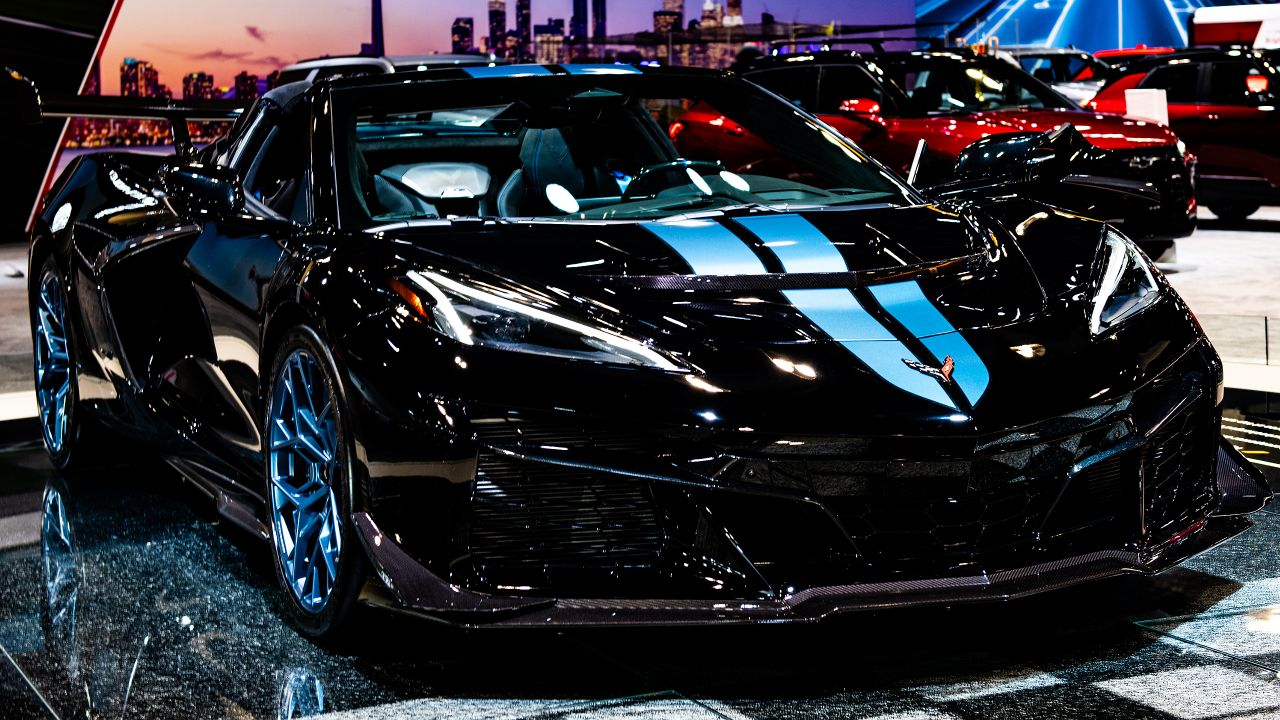
Even as GM tried to stabilize production, a safety issue landed squarely on the Corvette’s most high‑profile variants. Then came the safety recall of 2023-2026 Corvette Z06s and ZR1s over a potential fuel spillage and fire risk, a problem that strikes at the heart of buyer confidence in track‑focused models. For shoppers considering a six‑figure performance car, the prospect of fuel spillage and fire risk is not a minor annoyance, it is a reason to pause or walk away entirely. That hesitation can quickly translate into deferred orders and canceled deposits, particularly when the affected models are supposed to serve as the technological and emotional halo for the entire lineup.
The timing of the recall also collided with already limited build windows, worsening delays for customers who had been waiting through earlier production interruptions. Reporting on the recall notes that ZR1 production was quite low, which means the issue did not affect a huge number of cars on the road, but it did hit the very vehicles that generate the most attention and social‑media visibility for the brand. When the conversation around the Corvette Z06 and ZR1 shifts from lap times to fire risk, the halo dims, and that can drag on showroom traffic even for lower‑spec trims that are not directly involved in the campaign.
High‑power engineering meets a tougher market
What makes 2025 particularly striking is that the sales slump arrived just as Corvette engineering reached some of its most extreme heights. The ZR1 features a twin-turbocharged 5.5-liter LT7 V8, producing 1,064 horsepower and 828 pound-feet of torque, numbers that place it squarely in the realm of exotic supercars. On paper, that kind of specification should be a magnet for attention and a catalyst for demand, especially among collectors who see limited‑run, high‑output models as future classics. Instead, the ZR1’s technical fireworks were partially overshadowed by the practical realities of getting any Corvette, let alone the flagship, built and delivered.
Official 2025 Corvette Production Stats released by Chevrolet show how carefully GM has been managing the mix of trims and options. One of the big stories in those figures is how the company leaned into higher‑spec variants, a strategy that can boost revenue per car but also narrows the pool of potential buyers. Commentary on those production figures has highlighted that overall sales are being squeezed by American budgets right now, with higher interest rates and inflation making it harder for shoppers to justify a discretionary purchase. When I connect those dots, the picture that emerges is of a car that has never been more capable, but is also more exposed to macroeconomic pressure and pricing sensitivity than in earlier generations.
What the 2025 slump signals for Corvette’s future
The 2025 downturn does not automatically spell long‑term trouble for Corvette, but it does raise pointed questions about how GM balances exclusivity, pricing, and production resilience. A year with 24,533 sales, down 26.4% from 33,330 units, is a reminder that even an icon can lose ground when supply is constrained and confidence is shaken by recalls. If GM wants to restore momentum, it will need to show that the worst of the production turbulence at Bowling Green is behind it and that future safety campaigns will be handled in ways that reassure, rather than rattle, the core enthusiast base.
There are also strategic choices ahead about how aggressively to chase ultra‑high‑performance variants like the 5.5-liter, 1,064 horsepower ZR1 versus more attainable trims that can keep volumes healthier. The official Corvette Production Stats and the 10 Takeaways from 2025 Corvette Production Figures both point to a lineup that has tilted toward complexity and cost at a time when Overall Sales are being squeezed. If GM can simplify ordering, stabilize The Bowling Green Assembly Plant, and keep the spotlight on performance rather than production drama, the sales story in a few years could look very different from the sharp slide that defined 2025.
More from Fast Lane Only: