
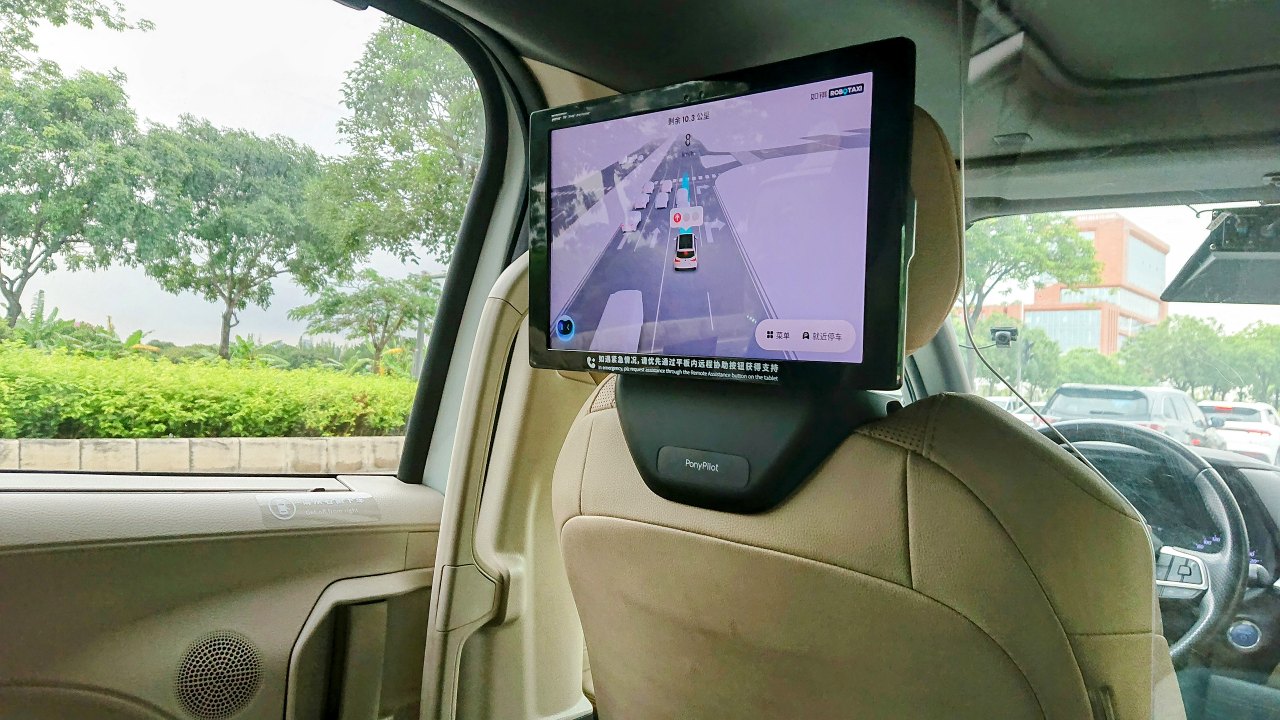
Early data from commercial robotaxi programs is finally putting numbers behind the hype, and the picture is more complicated than the marketing slogans suggest. In some controlled settings, autonomous fleets are already outperforming human drivers on key safety metrics, yet other deployments are struggling to match basic human competence. The gap between those outcomes shows how difficult it is to build machines that can reliably replace people behind the wheel.
Instead of a single, inevitable glide path to driverless streets, the emerging record looks more like a patchwork of partial successes, costly setbacks, and unresolved ethical questions. The technology is advancing, but the early evidence suggests that turning robotaxis into a wholesale substitute for human drivers will be slower, more uneven, and more politically fraught than its most vocal champions promised.
What the first crash numbers actually show
The most mature robotaxi programs are beginning to publish detailed safety data, and those disclosures reveal both real progress and sharp limits. Waymo, which operates fully driverless services in several U.S. cities, reports that its vehicles have significantly fewer police-reported crashes and injury-causing collisions than human drivers when operating in the same areas and conditions. Independent analysis of Waymo’s transparency reports has highlighted “dramatic safety improvements” compared with local human baselines, suggesting that a carefully geofenced, sensor-rich fleet can already outperform the average person on the road.
That performance is not universal across the industry. Tesla Robotaxis, which still rely on human safety monitors, have been involved in crashes at a rate that compares unfavorably with both human drivers and more conservative robotaxi systems. One assessment of early service data found that Tesla Robotaxis were involved in collisions far more frequently than Waymo vehicles operating over similar distances, underscoring how different technical and operational choices translate into real-world risk. Separate reporting on Tesla’s own disclosures notes that human drivers in the United States average approximately one police-reported crash every 500,000 miles, a benchmark that remains difficult for some autonomous services to match consistently.
Why one robotaxi is safer than another
The divergence in safety records is not a mystery to engineers. Waymo has spent years building a sensor stack that combines lidar, radar, and cameras, along with high-definition maps and conservative driving policies. That approach, while expensive and geographically constrained, appears to be paying off in lower crash and injury rates compared with human drivers in the same operating domains. Analysts who have reviewed Waymo’s internal data argue that its vehicles avoid a large number of minor collisions and near-misses that routinely occur in human traffic, which helps explain the reported reductions in injury-causing crashes.
Tesla has taken a very different path, betting that camera-only perception and software trained at massive scale will eventually be enough to navigate almost any road. Industry observers note that, despite marketing about “radically different” philosophies, both Tesla and Waymo are ultimately trying to solve the same core problem of reliable perception and prediction in messy urban environments. However, the early crash data suggests that Tesla’s more aggressive, software-first strategy has yet to deliver safety outcomes on par with the best geofenced robotaxis, even with human monitors still in the loop. That contrast illustrates how design decisions about sensors, mapping, and driving style can make the difference between a system that is statistically safer than humans and one that is still struggling to reach parity.
The messy reality of “human-like” driving
Even the strongest safety record does not mean a robotaxi behaves in ways that always feel safe or predictable to people around it. In San Francisco, passengers and bystanders have reported that Waymo vehicles have recently become more “confidently assertive,” accelerating harder, changing lanes more quickly, and occasionally bending traffic rules in ways that resemble impatient human drivers. Police in the city have even pulled over a Waymo car after an illegal U-turn, an incident that would have been almost unthinkable when the company’s vehicles were known for ultra-cautious behavior that sometimes blocked intersections rather than take risks.
Regulators are also probing how these systems handle the most sensitive scenarios, such as interactions with children. Federal investigators opened an inquiry into Waymo after a vehicle struck a child who had entered the roadway from behind an SUV, an event the company says unfolded too quickly for the system to avoid despite an immediate braking response. The case highlights a core tension in robotaxi design: to operate smoothly in dense city traffic, vehicles must behave more like human drivers, but the closer they get to human-like assertiveness, the more they risk replicating the very errors and near-misses that automation was supposed to eliminate.
Technical limits that do not show up in marketing
Behind the headline crash statistics lie stubborn technical constraints that make full human replacement difficult. Modern robotaxis depend on complex perception systems that must identify vehicles, cyclists, pedestrians, and road features in real time, often under poor lighting or weather conditions. Research on traffic sensing has found that vision-based devices can be “less precise and more susceptible to operational circumstances” than other methods, a warning that applies directly to camera-heavy autonomous driving stacks. When a system misclassifies an object or fails to detect it at all, the resulting error can cascade into sudden braking, awkward swerves, or collisions that a cautious human might have avoided.
Those perception challenges are compounded by the need to predict how other road users will behave, especially in chaotic urban settings where informal norms matter as much as written rules. Waymo’s shift toward more assertive driving is one response to that problem, an attempt to integrate into the flow of traffic rather than act as a rolling obstacle. Tesla’s strategy, which leans heavily on large-scale data from human drivers to train its models, is another. Yet the early crash records and regulatory investigations show that neither approach has fully solved the edge cases that make driving difficult for humans in the first place, from children darting into the street to ambiguous right-of-way situations at crowded intersections.
The economic and social gap between pilots and replacement
Even if robotaxis eventually match or surpass human safety in specific zones, replacing human drivers at scale is a separate challenge. Consulting analyses of the sector estimate that entering a single urban market can take up to two years and require roughly $15 million in upfront investment, reflecting the cost of mapping, regulatory engagement, fleet deployment, and local operations. Those figures help explain why only a handful of cities currently have meaningful robotaxi service, and why expansion has been slower than early forecasts that envisioned rapid nationwide rollouts.
The labor market effects are already visible in places where autonomous taxis operate, but they are far from a clean substitution of machines for people. In some areas, the presence of self-driving fleets has depressed earnings for human drivers, with reports of pay falling in cities such as Los Angeles year-on-year as robotaxis absorb a slice of demand. At the same time, ride-hailing executives still speak in terms of a “Trillion Dollar Future” for autonomous mobility, arguing that removing human drivers is essential to making the business profitable. That ambition collides with the current reality: robotaxis remain geographically limited, capital intensive, and, in some cases, less safe than the human drivers they are supposed to replace. The early data does not close the door on a driverless future, but it does suggest that the road to get there will be longer, more incremental, and more contested than the industry’s boldest promises.
More from Fast Lane Only



Leave a Reply