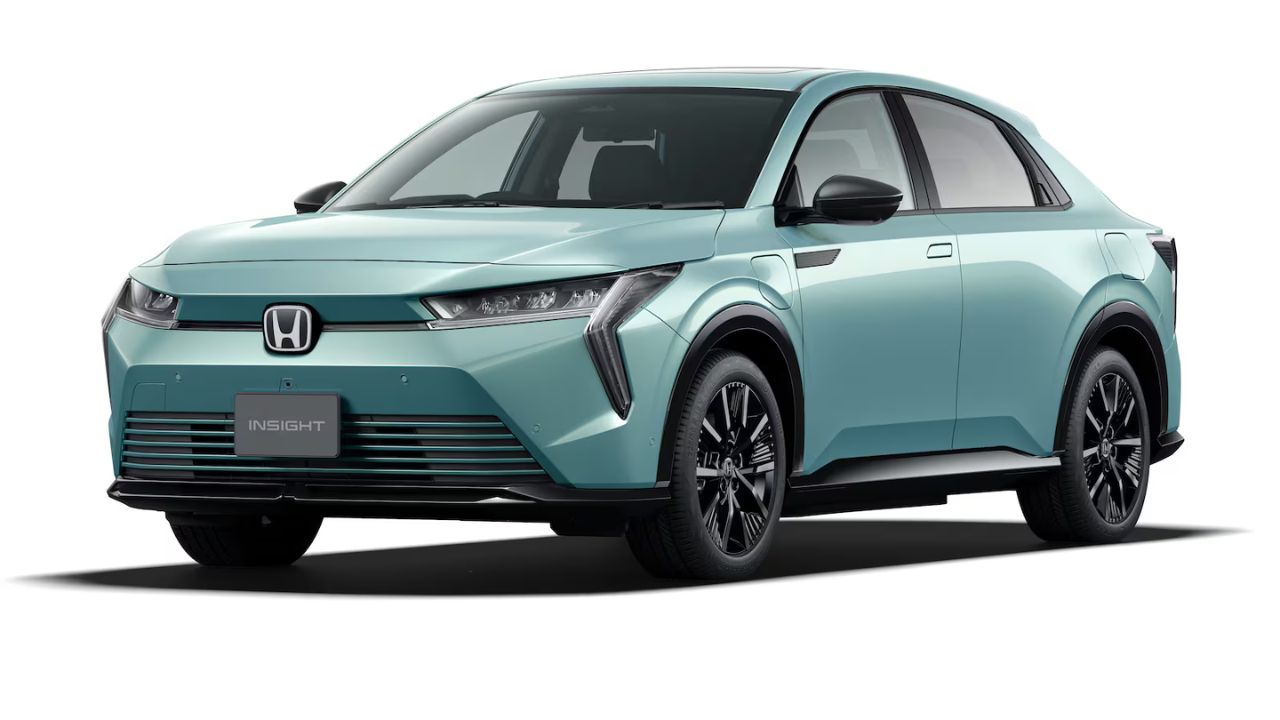
Honda is bringing back the Insight nameplate, this time on a fully electric compact sedan with a headline starting price of about $35,000. The move gives Honda a more affordable EV in a market crowded with crossovers and trucks, but the company is keeping the rollout tightly controlled, limiting who can actually buy one.
The revived Insight slots below Honda’s existing electric offerings and targets buyers who want a familiar, efficient commuter car that happens to be battery powered. Early details on production, regional rollout, and dealer allocations, however, suggest that availability will be far from widespread at launch, raising questions about how much impact this model can have on the broader EV market.
What happened
Honda has revived the Insight as a compact electric sedan positioned around a $35,000 starting price before incentives. According to early reporting, the car is aimed at shoppers who might have once considered the hybrid Insight or Civic but now want a fully electric alternative that still feels like a conventional small car rather than a high-riding crossover. The company is leaning on the Insight’s name recognition from its hybrid past, yet the new model is described as a ground-up EV rather than a simple conversion of an existing gasoline platform.
The new Insight is expected to use a battery pack sized for daily commuting and moderate highway trips, with range figures designed to compete with other compact EVs in the low- to mid-price bracket. Reporting indicates that Honda is prioritizing efficiency and approachable pricing over headline-grabbing performance numbers. That strategy aligns the car more closely with practical rivals such as mainstream compact EV sedans and hatchbacks, rather than premium performance models.
Availability is where things get complicated. Coverage of the launch stresses that Honda is not planning a nationwide, high-volume rollout from day one. Instead, the company is focusing on select markets that already have stronger EV adoption, better charging infrastructure, and dealer networks prepared for electric sales and service. One report notes that Honda is tying early allocations to specific regions and dealers, sharply limiting how many shoppers can find an Insight on a local lot during the first phase of sales. That reporting highlights that the electric Insight will initially be sold in relatively small numbers, with production scaled to match those targeted regions rather than the entire United States.
Some of the constraints trace back to Honda’s broader EV strategy. The company has been building out partnerships and platform plans, and the new Insight arrives as part of that long-term shift. The decision to reintroduce the Insight name on a compact EV at roughly $35,000 reflects Honda’s effort to bridge its hybrid past with its electric future. At the same time, the deliberate pace of the rollout shows that Honda is still cautious about overcommitting to EV volumes before it is confident about demand and supply. Reporting on the launch of the $35,000 Insight emphasizes that the car will be available only through a limited number of dealers at first, which will shape who can realistically buy one.
Additional coverage of the model revival underscores the gap between the headline promise and the real-world buying experience. Honda is willing to advertise a compelling price and familiar badge, but it is not yet ready to flood showrooms. Instead, the Insight will arrive in a controlled trickle, with some states and metro areas seeing inventory long before others. This approach has led some analysts to describe the new Insight as more of a pilot effort than a full-scale mass-market launch. One report on the revived Insight notes that the limited production plan could leave many interested buyers waiting months or even years before they can find one in stock.
Why it matters
The return of the Insight as an electric sedan at roughly $35,000 lands directly in one of the most contested segments of the EV market. Affordability has become a central concern for buyers, and many shoppers who might have considered an EV in the $40,000 to $50,000 range a few years ago are now looking for something closer to the mid-$30,000s. By setting the Insight’s base price around that threshold, Honda is signaling that it wants a piece of the mainstream EV shopper who values price and practicality over luxury features.
In that sense, the Insight could become an important bridge model for drivers moving from gasoline or hybrid compact sedans into their first EV. The original Insight, especially in its later hybrid form, built a reputation as a sensible, efficient commuter. Reusing the name on a compact electric sedan helps Honda tap into that legacy. For buyers who are wary of crossovers or simply prefer the driving dynamics and footprint of a small car, the Insight offers a familiar format with an electric powertrain. If Honda can keep transaction prices close to the advertised $35,000 and maintain reasonable lease deals, the car could appeal to commuters, fleet buyers, and households that want an EV as a second car.
Limited availability undercuts that potential. A car cannot reshape the market if it is difficult to find. By restricting the early rollout to specific regions and dealers, Honda is effectively capping the Insight’s immediate influence on EV adoption. Shoppers in states without strong EV incentives or infrastructure will have a harder time buying one, even if they are interested. That creates a mismatch between the model’s positioning as an accessible EV and its actual presence in showrooms.
The strategy reflects the tension many legacy automakers face. They need to demonstrate progress on electrification, meet regulatory targets, and respond to growing consumer interest, yet remain cautious about committing to high-volume EV production in a market that is still volatile, with shifting incentives, fluctuating battery costs, and uneven charging infrastructure. Honda’s decision to revive the Insight name on a relatively affordable EV, while simultaneously limiting its distribution, shows how the company is trying to manage that risk.
For consumers, the Insight highlights both the progress and the remaining gaps in the EV transition. A few years ago, a $35,000 compact EV from a major Japanese automaker would have been headline-making simply for existing. Today, the bar has moved. Buyers now expect not just competitive pricing but also broad availability, solid range, fast charging capability, and a dealer experience that supports EV ownership. The Insight appears to hit some of those marks on paper, particularly on price and familiarity, but its constrained rollout suggests that Honda is still testing the waters rather than diving in.
The car also matters for Honda’s broader brand positioning. The company built much of its reputation on efficient, reliable small cars such as the Civic and the original Insight hybrid. As the market shifts toward electric powertrains, Honda needs models that carry that identity forward. The new Insight gives Honda a compact EV that connects directly to its fuel-efficient heritage. If the car succeeds in its initial markets, it could encourage Honda to expand production, invest more heavily in dedicated EV platforms, and bring additional electric sedans and hatchbacks to market.
From an industry perspective, the Insight’s limited availability serves as a case study in how automakers are handling the middle ground of the EV market. High-end electric models often receive generous investment and global launches, while compliance-oriented or experimental EVs remain confined to a handful of regions. The Insight appears to fall somewhere in between. It carries a familiar badge and a price that could attract genuine demand, yet Honda is treating it more cautiously than a full-scale global product. That approach may protect the company from overproduction risk, but it also slows the pace at which mainstream buyers can transition to electric options from brands they already trust.
There is also a competitive angle. Other automakers have begun to push more aggressively into the affordable EV segment, with compact sedans, hatchbacks, and crossovers that target similar price points. If those rivals offer broader availability and stronger lease incentives, Honda risks ceding ground even as it reenters the space with the Insight. Shoppers who cannot find an Insight locally may simply move to another brand rather than wait for Honda to expand allocations. In that scenario, the Insight’s impact would be felt more in Honda’s compliance and regulatory calculations than in visible shifts in market share.
What to watch next
The key question in the months ahead is whether Honda treats the revived Insight as a niche product or as the start of a larger push into affordable EVs. Several indicators will show which way the company is leaning. One is production volume. If Honda ramps up manufacturing faster than initial reports suggest, and if more dealers begin receiving inventory beyond the early target markets, that will signal growing confidence in demand and in the company’s EV supply chain.
Regional expansion will be another important signal. Early coverage points to a rollout focused on states and metro areas with stronger EV infrastructure and incentives. Observers will be watching to see how quickly Honda moves beyond those initial regions. A gradual but steady expansion into more states would suggest that the company sees the Insight as a scalable product rather than a limited experiment. If the car remains confined to a small set of markets for an extended period, it will reinforce the perception that Honda is still hedging its bets on mass-market EVs.
Pricing and incentives will also shape the Insight’s real-world appeal. The advertised starting price of about $35,000 is competitive on paper, but transaction prices depend on dealer markups, option packages, and financing offers. Should Honda support the car with aggressive lease deals, low-interest financing, or loyalty bonuses for existing Honda owners, the Insight could become a more compelling choice for cost-conscious buyers. Conversely, if dealers treat the limited supply as an opportunity to add markups, the car could drift out of reach for the very shoppers it is supposed to attract.
Another factor to watch is how the Insight fits into Honda’s broader electrification timeline. The company has outlined plans to expand its EV lineup over the next few years, and the Insight’s performance in the market will influence how quickly those plans move. Strong demand and positive feedback could encourage Honda to accelerate development of additional compact EVs, including hatchbacks or small crossovers that share components with the Insight. Weak sales or persistent supply constraints could lead the company to refocus on hybrids or postpone more ambitious EV launches.
Customer experience will matter as well. Early buyers of the Insight will provide feedback on range, charging performance, ride quality, and software features. If the car delivers a smooth, reliable ownership experience, it will help build trust in Honda’s electric offerings. That is particularly important for buyers moving from long-trusted gasoline models into their first EV. Any issues with battery reliability, charging compatibility, or dealer service could slow adoption and make shoppers more cautious about Honda’s future electric models.
More from Fast Lane Only