
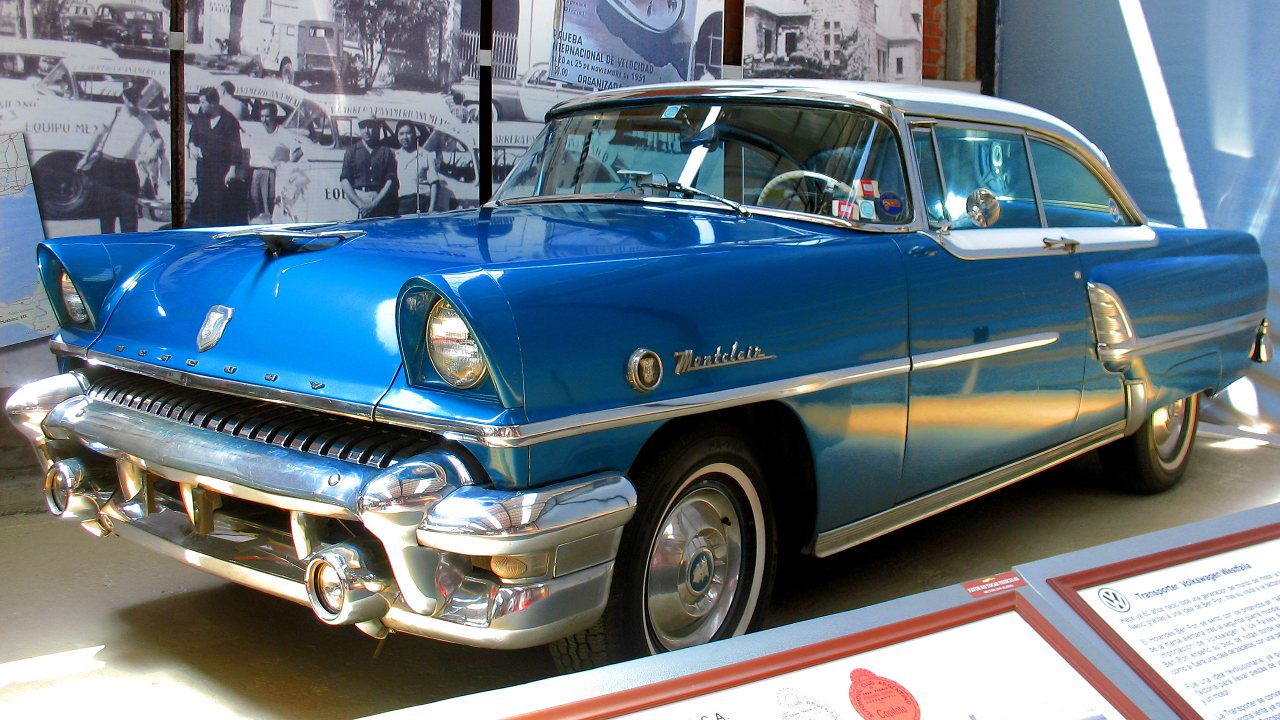
The 1956 Mercury Montclair arrived at a moment when American buyers were trading up, not just to bigger cars, but to more glamorous ones. To win those customers, Mercury had to look and feel like a step above Ford without quite trespassing on Lincoln territory, and the Montclair became the sharpest tool the brand had for that job.
By pairing dramatic styling with generous dimensions and a carefully curated list of comforts, the Montclair tried to turn Mercury into a destination for drivers who wanted more flash and status than a Ford Crown Victoria but were not ready to pay for a full luxury badge. Its size, features, and marketing all pointed in the same direction: this was the Mercury meant to chase the upscale buyer who still shopped the middle of the market.
Mercury’s middle‑class ambition in the mid‑1950s
In the mid‑1950s, Mercury occupied a precarious spot in the Ford hierarchy, positioned between Ford and Lincoln yet often overshadowed by both. The success of the Ford Crown Victoria as a stylish, aspirational Ford blurred the lines, since buyers could get a lot of visual drama without ever leaving the lower-priced showroom. Contemporary commentary on the 1955 Mercury Montclair notes that many shoppers did not instinctively see Mercury as a distinct step up, which made it harder for the brand to justify higher prices to image‑conscious families who were already impressed by the Crown Victoria’s flair.
That context shaped how the 1956 Montclair was conceived and sold. Rather than simply being a nicer Ford, it had to telegraph that it belonged to a different social tier, even if it shared corporate engineering. Analysis of the 1955 model’s reception shows how Mercury struggled to define itself between Ford and Lincoln, and that struggle carried directly into the following year’s car. The 1956 Montclair therefore became a kind of rolling argument that Mercury could be more sophisticated than Ford without demanding the full luxury commitment of a top‑line brand, a pitch aimed squarely at upwardly mobile buyers who wanted to be seen moving up in the world.
Big dimensions, bigger presence
Size was one of Mercury’s most obvious tools for signaling status, and the 1956 Montclair leaned into that strategy. The car rode on a wheelbase of 119 inches and stretched to a total length of 206.3 inches, figures that placed it firmly in the “big car” camp for its time. Not surprisingly, the Montclair used that footprint to project a sense of authority on the road, with long, straight body sides and a substantial hood that visually separated it from the more compact proportions of many Ford models. Those raw numbers mattered to buyers who equated length and wheelbase with comfort, safety, and social standing.
That physical presence was amplified by the styling language Mercury was developing in the mid‑1950s. Period advertising for related models, such as the 1956 Mercury Medalist, leaned heavily on the “Big M” identity, a phrase that underscored both the literal size of the cars and their intended market position. Enthusiasts who later rediscovered those ads in old magazines have noted how the imagery framed Mercury as a bold, almost flamboyant choice, even when the cars themselves had largely disappeared from everyday traffic. The Montclair shared that visual vocabulary, using its generous dimensions as a canvas for bright trim and two‑tone paint that made it look every bit the aspirational step up Mercury needed it to be.
Upscale features versus budget siblings
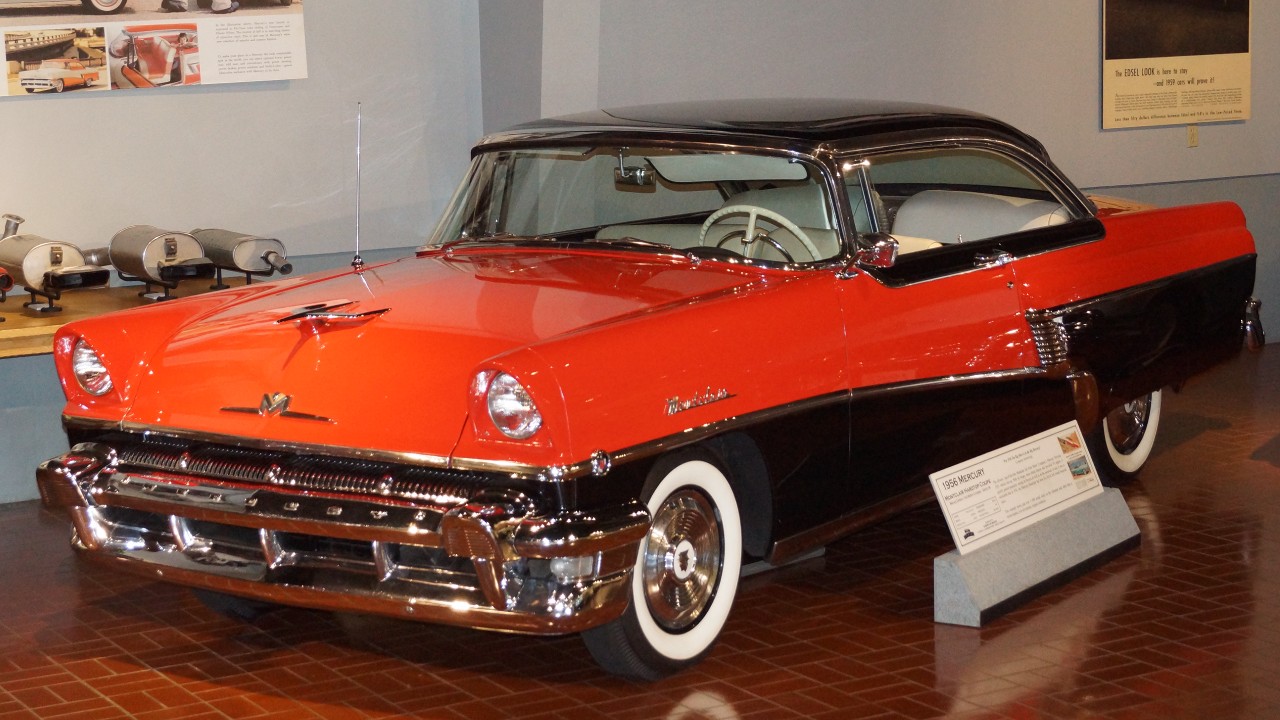
Mercury’s product ladder in 1956 made the Montclair’s role clearer by contrast. At the lower end sat the 1956 Mercury Medalist, a car explicitly pitched to cost‑conscious buyers. The Medalist came with a three‑on‑the‑tree manual transmission as standard equipment, with the Merc‑O‑Matic automatic offered at extra cost, a configuration that signaled thrift and practicality more than indulgence. Period analysis of the Medalist notes that it was a “Mercury for misers,” a phrase that captured how carefully the brand segmented its lineup to reach buyers who wanted the Mercury name but not the full price tag.
The Montclair, by contrast, was designed to feel like the opposite of that frugal proposition. While the sources on the Medalist spell out its basic transmission setup and budget positioning, the Montclair’s mission was to bundle more comfort and convenience into a package that justified its place near the top of Mercury’s range. In practice, that meant richer interior materials, more elaborate exterior trim, and a stronger emphasis on automatic transmissions and power‑assisted features that made driving feel effortless. By setting the Medalist as the entry point and the Montclair as the aspirational choice, Mercury created a clear internal hierarchy that nudged status‑seeking buyers toward the more expensive car.
Marketing the Montclair as a cut above Ford
Mercury’s advertising strategy in the mid‑1950s tried to solve a branding problem that had been building since the 1955 model year. As commentators looking back on the 1955 Mercury Montclair have pointed out, the arrival of the Ford Crown Victoria as a new standard of style within the Ford lineup made it harder for Mercury to stand out. If a buyer could get a dramatic roofline and plenty of chrome at a Ford price, the case for paying more for a Mercury had to rest on something beyond surface flash. That is where the 1956 Montclair’s combination of size, presence, and perceived refinement came into play.
Advertising for Mercury’s 1956 models, including the Medalist, leaned on the “Big M” identity to suggest that these cars belonged to a more substantial, more prestigious class than ordinary Fords. Enthusiasts who encountered those ads years later have remarked on how they framed Mercury ownership as a statement about having arrived, even if the cars themselves were already rare on the road by the time those memories were formed. By tying the Montclair to that narrative, Mercury tried to reposition itself as the natural next step for a Ford owner who had outgrown the Crown Victoria and wanted a car that looked and felt like a promotion.
Legacy of a mid‑market status symbol
Looking back, the 1956 Mercury Montclair illustrates both the potential and the limits of chasing upscale buyers from the middle of the market. Its generous 119‑inch wheelbase and 206.3‑inch length, its bold “Big M” styling, and its place above budget models like the Medalist all show how carefully Mercury tried to calibrate its appeal. The car was big enough and flashy enough to signal upward mobility, yet still rooted in the same corporate engineering that underpinned Ford products, a balance that made sense for families who wanted more prestige without abandoning practicality.
The later nostalgia around Mercury’s 1950s lineup, visible in the way enthusiasts rediscovered old ads and debated the brand’s place between Ford and Lincoln, suggests that the Montclair did succeed in carving out a distinct identity, at least in memory. Commentary on the 1955 Montclair’s reception and the 1956 Medalist’s bargain positioning helps fill in the picture of a brand that was constantly negotiating its status. Within that story, the 1956 Montclair stands out as Mercury’s most confident attempt to court buyers who were ready to move beyond a Ford Crown Victoria but still wanted a car that felt connected to the world they knew.
More from Fast Lane Only:



Leave a Reply