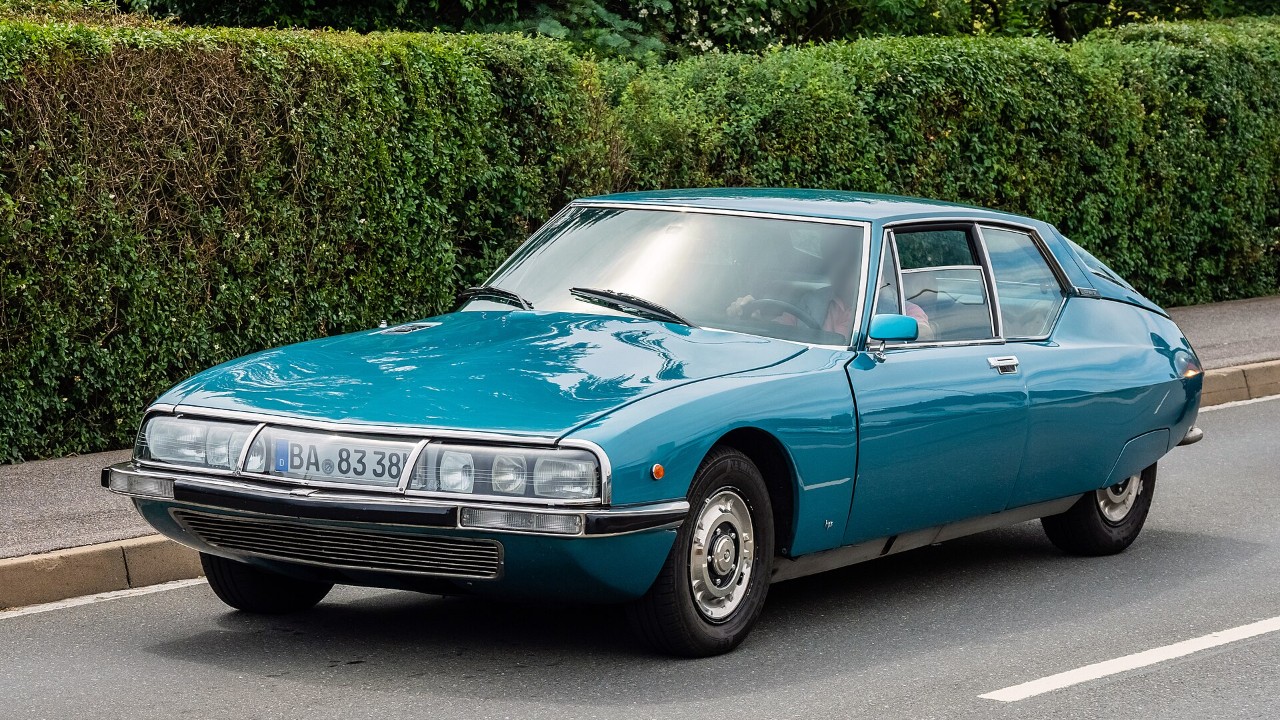
The 1971 Mercedes-Benz 300SEL 6.3 arrived looking like a sober executive saloon and then behaved like a muscle car that had slipped into a tuxedo. It fused limousine-grade comfort with startling pace at a time when those qualities were expected to live in separate garages. By quietly rewriting what a big four-door could do, it bent expectations for luxury, performance and even what the Mercedes and Benz badges were supposed to stand for.
The quiet shock of a super-sedan
When I picture the 300SEL 6.3 in period, I see a car that did not shout about itself. The W109 body was familiar, almost conservative, yet under that formal suit sat the mighty M100 V8 and hardware that put it in the company of the quickest cars of its era. Contemporary road tests stressed that the big Benz was more than a straight-line brute, pointing to fully independent suspension, four-wheel disc brakes and a chassis that felt improbably agile for its size and heft, a combination that helped cement the brand’s “bank-vault” reputation for solidity while it was busy humiliating sports cars on the autobahn for its size and heft.
That duality is why later commentators have happily called it the grandfather of every German sports sedan. The idea that a stately saloon could deliver sports-car pace was so new that sales expectations were modest at first, yet the car’s blend of speed and civility proved influential enough that later performance four-doors from Germany, Britain and the United States would trace their lineage back to this original 6.3.
Luxury that masked the menace
What still strikes me is how completely the cabin tried to reassure you while the drivetrain plotted mischief. Period cars could be ordered with a power sunroof, air conditioning, a radio with power antenna, a radio-telephone and even a matched luggage set, all of which reinforced the sense that this was a discreet executive express rather than a hot rod. Those Period optional extras helped justify the price and, more importantly, wrapped the performance in an aura of exclusivity that owners still talk about today.
Even now, when I watch a 1971 car finished in Black with black leather interior sitting dormant in a storage bay, not currently running after years off the road, the luxury still dominates the first impression. The thick hides, deep seats and restrained brightwork make it easy to forget that this is the same machine that once shocked supercar drivers, a contrast that is obvious even in a simple walkaround of that Black leather interior.
Engineering that redefined “too much”
Underneath the formality, the engineering brief bordered on outrageous. Mercedes and Benz engineers lifted the 6.3 litre V8 from the opulent 600 limousine and installed it in the smaller W109 shell, creating a sedan that could run with the most dedicated sports cars of the era. By taking that powerplant from the 600 limousine, the company effectively decided that “too much” was exactly the right amount for a flagship sedan.
The chassis was not left behind. Factory literature and later sales listings highlight self-levelling air suspension, a limited-slip differential and four-wheel disc brakes, all working to keep that mass and power in check. A surviving 1971 Mercedes and Benz 300SEL 6.3 Sedan offered today still leans on those specifications as selling points, proof that the underlying engineering has aged far better than some of the chrome.
From discreet saloon to racing “Red Pig”
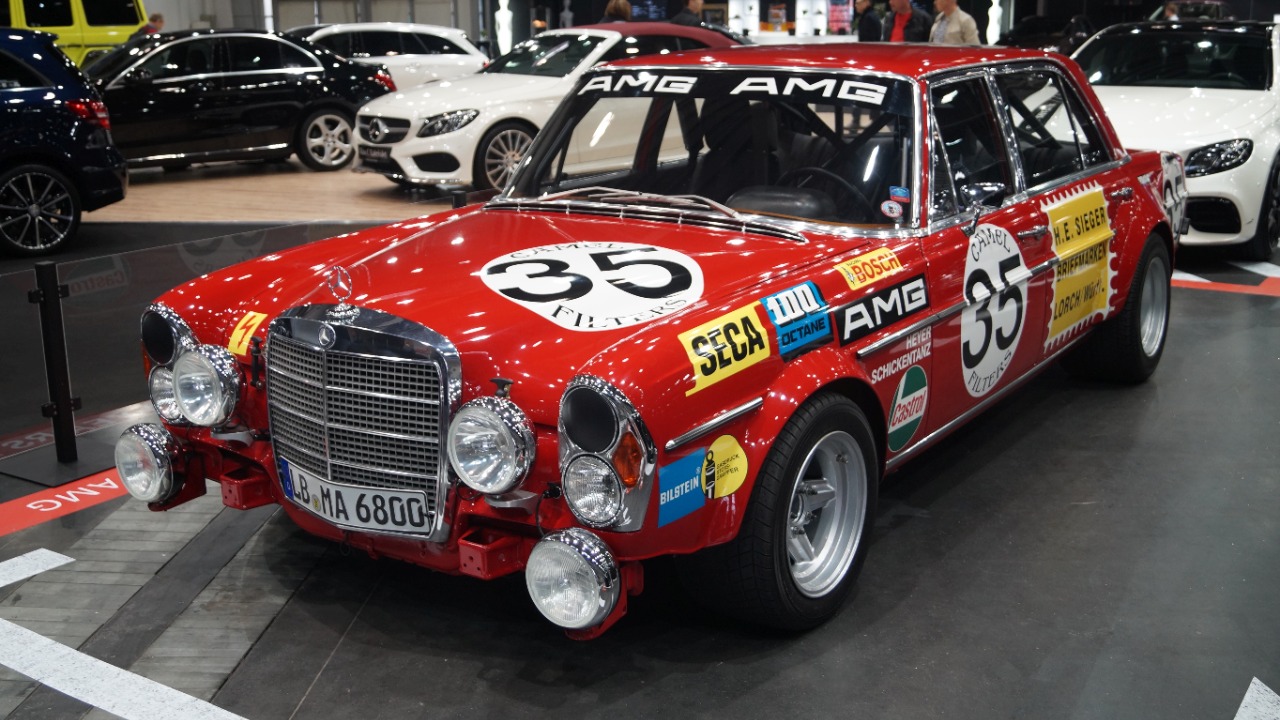
For all its subtlety on the street, the 300SEL 6.3 also had a wild side that emerged on the track. By the early 1970s, AMG was already building a reputation for taking Mercedes and Benz products and making them go faster and harder while preserving their luxury, a pattern that has continued for more than 50 years. The most famous expression of that philosophy in this era was the scarlet racing version nicknamed the “Red Pig”, which took the same basic formula and pushed it into full competition spec.
That car, built around the same 6.3 litre V8 concept, showed how far the platform could be stretched when comfort was no longer the priority. Period images of the “Red Pig” underline how improbable it was to see such a large sedan dicing with purpose-built racers, yet its success helped convince both enthusiasts and the company that high performance and four doors could coexist. The fact that this lineage runs from a stately road car to a snarling circuit machine is part of why the 300SEL 6.3 still feels like a rule-breaker rather than just another classic Mercedes and Benz.
How it feels from behind the wheel today
Modern drives of well-preserved examples reveal how carefully the car balances effort and ease. One detailed account lingers on the large steering wheel with its thin rim, which initially feels unfamiliar but, thanks to servo assistance, quickly becomes an ally in guiding the “6.3” with surprising precision. That same report praises the exceptional comfort, generous space and pleasant atmosphere that still define the cabin, reminding me that the car’s character is as much about how it makes you feel as how quickly it can cover ground inside the “6.3”.
Video drives reinforce that impression. In one clip, a presenter climbs into what he calls a classic car gathering and settles into a 1971 Mercedes-Benz 300 SEL 6.3 that he clearly regards as something special, narrating how the car blends old-world craftsmanship with a still-potent turn of speed among classic cars. In another, a workshop tour pairs a Mercedes and Benz 300 SEL 300 SEL 6.3 with a Lamborghini Miura S, a visual reminder that this sedan genuinely belongs in the same conversation as the era’s exotic royalty.
The collector’s market and enduring myth
Half a century on, the 300SEL 6.3 occupies a curious place in the collector world, at once revered and slightly under the radar. Some cars are still offered with Price on Request, a phrase that hints at both rarity and negotiation, especially when the specification includes desirable Factory options such as Single Seats and Instruments in English on a USA Version chassis. One such Price on Request example is described without hesitation as one of the greatest four-door saloon cars ever made, a verdict that aligns neatly with the car’s reputation among marque specialists.
At the same time, there are humbler stories of cars that have slipped into long-term storage, waiting for someone to recognize their significance. A non-running 1971 sedan that has been off the road for years, or a project car tucked into a corner of a specialist shop, still carries the same engineering DNA that once shocked the industry. When I see a mechanic like Tyrrell walking past a Mercedes and Benz 300 SEL in a Workshop Catchup Part, or a seller quietly listing a tired example alongside more obvious exotics, I am reminded that the myth of the 6.3 is not just about pristine museum pieces. It lives in every car that still carries that badge, waiting to bend someone’s expectations all over again.
More from Fast Lane Only: