The 1973 Porsche 911 Carrera RS did not just win races, it rewired what enthusiasts expect from a sports car. In a single model, Porsche fused motorsport urgency with everyday civility so convincingly that the car has taken on an almost sacred status among drivers and collectors alike. Half a century later, I see its fingerprints on everything from modern GT Porsches to the way we talk about “purity” in performance cars.
Rennsport, racing pressure and the birth of a legend
When Porsche set out to build the 911 Carrera RS, the goal was blunt: create a 911 that could dominate on track yet still carry a license plate. The German word that shaped the project was Rennsport, literally “motorsport” or “racing”, and it has been tightly linked with Pors road cars for half a century. To go racing in top-flight series, the company needed a homologation special, so engineers pushed the existing 911 platform further than anyone inside Zuffenhausen had dared.
That pressure produced the 911 Carrera RS 2.7, a car that Porsche itself now frames as a turning point in its history. The factory recalls how, around 50 years ago, Porsche developed a new 911 variant for racing and rallying, the 2.7 that enthusiasts still revere. That factory memory matters, because it shows the RS was never a marketing exercise, it was a competition tool first, and that intent is exactly what collectors now treat as sacred.
How the RS rewrote the 911 rulebook
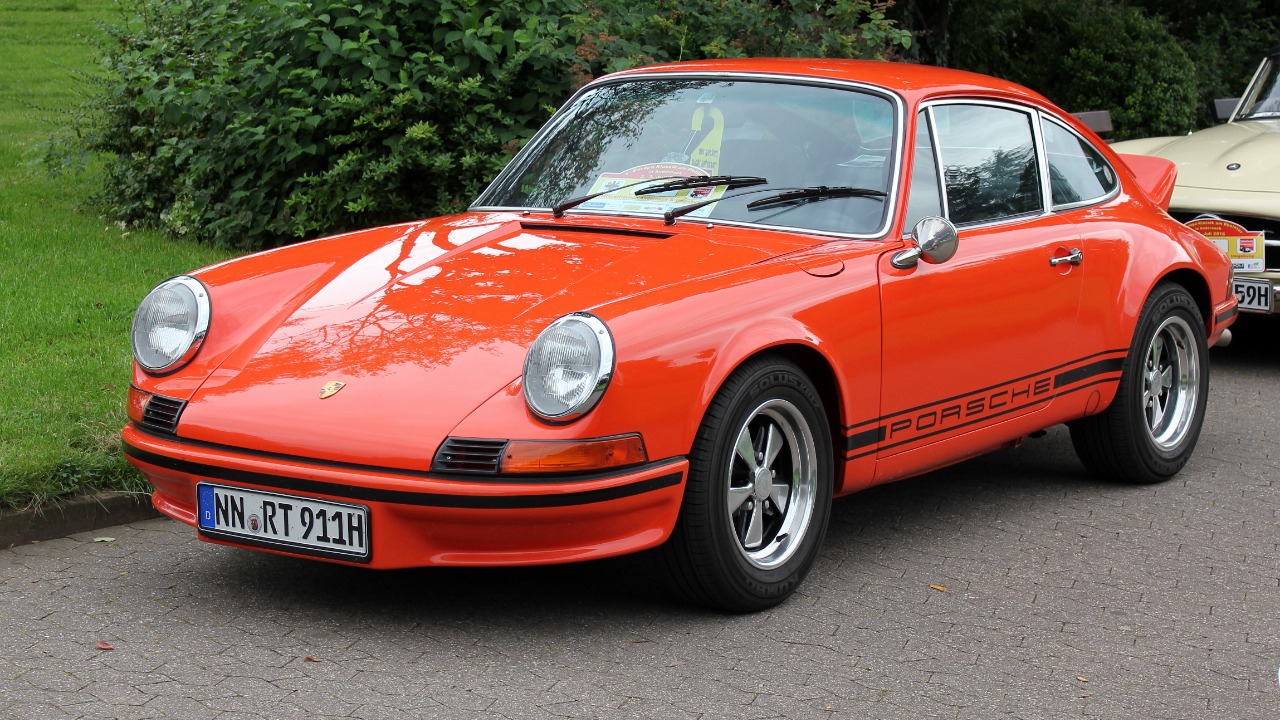
What fascinates me about the Carrera RS is how methodically Porsche reworked the familiar 911 recipe. The car’s 2.7 liter flat six was not just a bored out engine, it was tuned so that the 2.7 RS delivered performance that still feels brisk by modern standards, with a responsiveness that makes later turbocharged cars seem almost remote. Weight was stripped wherever possible, from thinner glass to pared back trim, so the car could turn that extra displacement into real-world pace.
At the same time, Porsche was careful not to alienate loyal 911 buyers who wanted comfort. The company offered two distinct RS variants, the Sport version, known internally as M471, and the Touring model, coded M472, each catering to different drivers, as detailed in a deep Feb history of the car. That split personality, raw Sport for purists and more civilized Touring for road use, is a template Porsche still follows with its modern GT cars, which is one reason the RS feels like the spiritual blueprint for the brand’s current lineup.
The “holy grail” driving experience
Spend any time around air-cooled obsessives and you will hear the same phrase: the Carrera RS is the holy grail. That reputation is not just about rarity, it is about how the car drives. Enthusiasts point out that All of the changes made to the 911 to create the 911 Carrera RS, also known as the 2.7 Carrera RS, were aimed at delivering one of the best driving experiences possible. Lighter bodywork, sharper suspension, and that rev-hungry engine combined to create a car that feels alive at any speed, not just when the speedometer is pinned.
That sense of connection is why the RS is widely regarded as the holy grail when it comes to 911s. One detailed look at the model notes that the 1973 Porsche 911 Carrera RS 2.7 is Remains Highly Valued The benchmark, with Well maintained examples commanding extraordinary respect and money. When I talk to owners, they describe a car that feels both delicate and determined, a machine that rewards smooth inputs and punishes clumsy ones, which only deepens the aura around it.
Design cues that became instant icons
Even people who have never driven a Carrera RS can usually sketch its outline from memory, and that is no accident. The most famous flourish is the “ducktail” rear spoiler, a piece of functional sculpture that reduced lift at high speed and gave the car its unmistakable profile. Porsche itself leans into that language, recalling how the Duck tail, the RS badge and the 2.7 script became shorthand for Germany’s fastest sports car of its era.
Those visual cues have only grown more powerful with time. In one behind-the-scenes film, the presenter admits, almost in disbelief, that “god this is. magic. there’s a good chance you recognize this car” because the Carrera scripts and ducttail have become an iconic silhouette even to casual fans. I see the same effect in the scale model world, where a Viper Green miniature of The Porsche 911 Carrera 2.7 RS is described as one of the most iconic and influential sports cars ever, praised for balancing razor sharp performance with surprising usability, a balance rarely achieved at the time.
From homologation special to modern-day shrine
What began as a pragmatic homologation project has turned into something closer to a rolling shrine. One writer, introducing a deep dive into a particularly original example, opens with the words Brace yourselves ladies and gentleman, before Diving right into why the 1973 Porsche Carrera RS 2.7 is the undisputed champ of homologation specials. That same piece describes how every nook and cranny of the car reflects obsessive attention to detail, from the way panels fit to the sparse interior, reinforcing the idea that this is not just a fast 911, it is a benchmark for how focused a road car can be.
Over time, that reverence has only intensified. Enthusiast histories point out that for half a century, Pors naturally aspirated sports cars from Zuffenhausen have been measured against the Rennsport ideal set by the RS. Another retrospective on the 1973 Porsche 911 Carrera RS history notes how its limited production run, its timing in the broader 911 story and its dual Sport and Touring personalities all combined to make it outstanding, a point underscored in that detailed There analysis. When I look at the modern GT3 and GT3 RS, I see not just successors but tributes, each one trying to recapture a little of the magic that made the original Carrera RS feel almost sacred in the first place.
More from Fast Lane Only: