
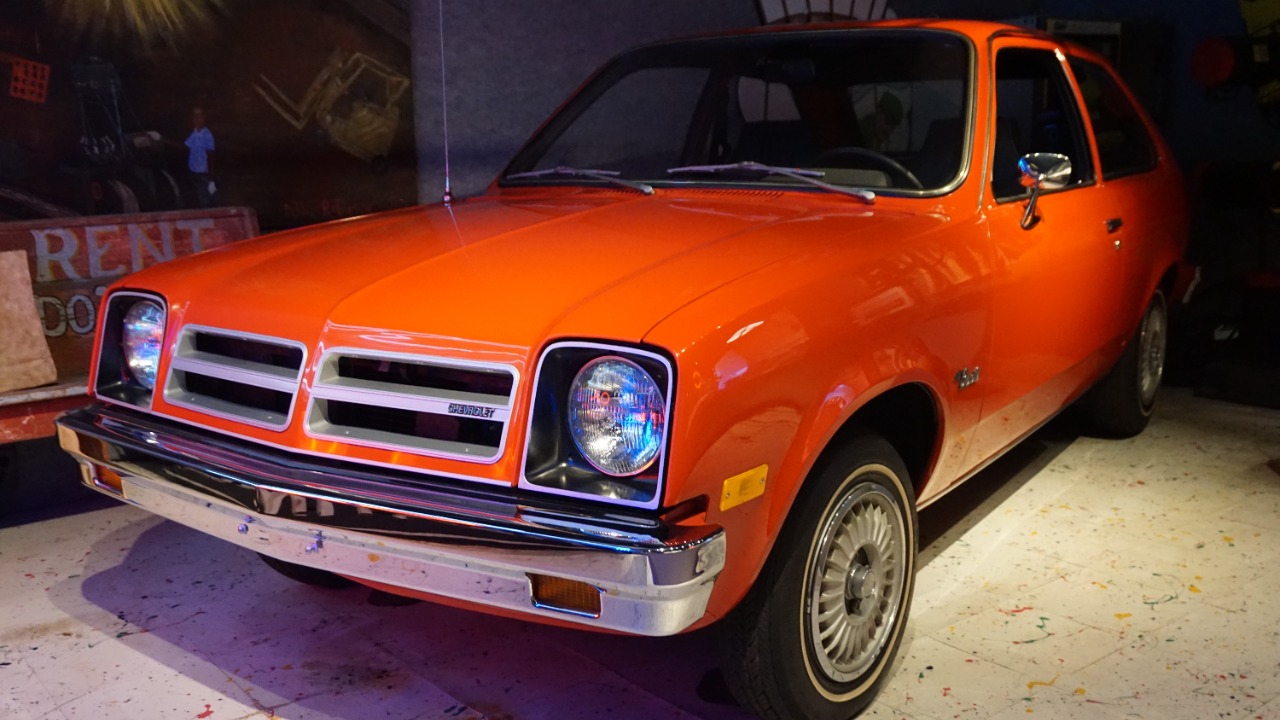
You can tell a lot about a country by the cars it builds when money is tight and patience is thin. In the mid‑1970s, as fuel prices spiked and big V8s suddenly looked like bad habits, the 1976 Chevrolet Chevette arrived as a kind of rolling austerity plan. If you look past the jokes, that first full model year shows you what survival looked like for both drivers and Detroit.
Instead of chrome‑heavy optimism or muscle‑car swagger, the 1976 Chevette offered you a small, light, almost stubbornly modest way to keep moving. It was not fast, not glamorous, and not meant to impress anyone at the stoplight. It was meant to start, sip fuel, and get you to work again tomorrow.
The post‑Vega reset: when “good enough” became the goal
By the time you reach 1976, you are looking at a Chevrolet division that has already been burned once by its own ambition. After the Vega, a car that promised cutting‑edge engineering and instead delivered headaches, Chevrolet pivoted to something safer. The Chevette was the conservative answer, a subcompact that traded innovation for predictability, and that trade is exactly what survival mode looks like inside a big carmaker.
Under the skin, the Chevette leaned on the General Motors T‑Body, a rear‑drive Platform that GM billed as a World Car. Instead of chasing exotic tech, you got a front‑engine layout, simple suspension, and drivetrains that could be built and serviced almost anywhere. It was a quiet admission that, after the Vega and its troubled Modern four‑cylinder experiments, the company needed something that would not scare off cautious buyers.
Small, light, and just enough: the 1976 Chevette’s hardware
When you slide into a 1976 Chevette, you are not stepping into a showcase of power. You are meeting a car that was designed to be the smallest and most fuel‑efficient thing the brand could sell. Enthusiasts later pointed out that Chevette the was the lightest American car in its day, and that low weight was not about bragging rights, it was about stretching every gallon when Gas was expensive and rationing was a fresh memory.
Mechanically, you got exactly what you needed and little more. Initially the Initially available engines were small inline‑fours, listed at 1.4 and 1.6 liters, paired with simple manual gearboxes or an optional three‑speed automatic. The low compression ratio mentioned in period specs, such as 8.5:1, and the modest price tags highlighted in survivor ads, underscored that this was a car built to a budget, not a dream.
Driving in survival mode: how the Chevette actually felt
If you drive a surviving 1976 Chevette today, you feel that frugality in every control. In one walk‑around and test drive, the host of a Feb video points out details like the way the door stays open only if you click the latch down, a reminder that even basic hardware feels a bit improvised. Another clip focused on Driving a surviving 1976 Chevrolet Chevette shows the car working hard just to keep up with traffic, its modest engine buzzing as it does the one job it was built for.
Owners remember the sensations vividly. One driver who learned on a late‑seventies model recalls that Every time you came to a stop sign the whole car shook and sputtered, a description that fits the 1976 version just as well. Another Chevette fan writing about a little white diesel Chevette decades later notes its humble, endearing presence among flashier classics, proof that the basic driving experience never pretended to be more than it was.
What owners gave up, and what they got back
To live with a 1976 Chevette, you accepted compromises that would send many modern shoppers running. A later owner summed it up bluntly, calling his 1981 Chevy Chevette underwhelming by every definition. Yet in the same breath he notes that he could get 40 m on the highway, a payoff that mattered when paychecks were tight. Another commenter in a Chevette discussion group explains that it fit the bill for an inexpensive higher mpg vehicle when Gas was being rationed and a relative needed something to replace his 8 cylinder AMC Matador.
That tradeoff between comfort and cost shows up again and again in personal stories. One owner remembers a 1976 Chevrolet Chevette Woody photo description available, bought used in a pinch. Bought because it was there and cheap, not because it was aspirational. Another retrospective on the 1977 Chevrolet Chevette notes that it was not lauded for speed or luxury, but it carved out a place in history by being available and affordable at a time when America needed it most. Those same dynamics were already baked into the 1976 car.
A car built for hard times, remembered with reluctant affection
When you zoom out from the spec sheets, the 1976 Chevette starts to look like a rolling barometer of American anxiety. In one video essay, the narrator describes how the Chevy Chevet was not fast, flashy, or famous, but in tough times it gave Americans what they needed most, simple affordable transportation. Another clip on the Chevrolet Chevet repeats the point that it was not Detroit muscle, yet in one of the toughest moments in American economic life it kept people moving. That is survival mode, not just for a company, but for the families who bought in.
Even critics inside the industry saw the limits. One retrospective on Chevrolet’s history notes that 1976 was the Model year for Chevy third failed attempt at a world‑class small car, the Chevette. Another overview of gm’s failed american frames the later Chevrolet Citation as The Everyday Survivor Once written off as just another econobox, suggesting that GM’s small‑car story is full of near misses. Yet when you read a local remembrance of The Chevette as Chevrolet sub‑compact successor to the Vega, you see that even stripped‑down Scooter models sold well. People did not love them, but they bought them, and they remember them.
More from Fast Lane Only


Leave a Reply