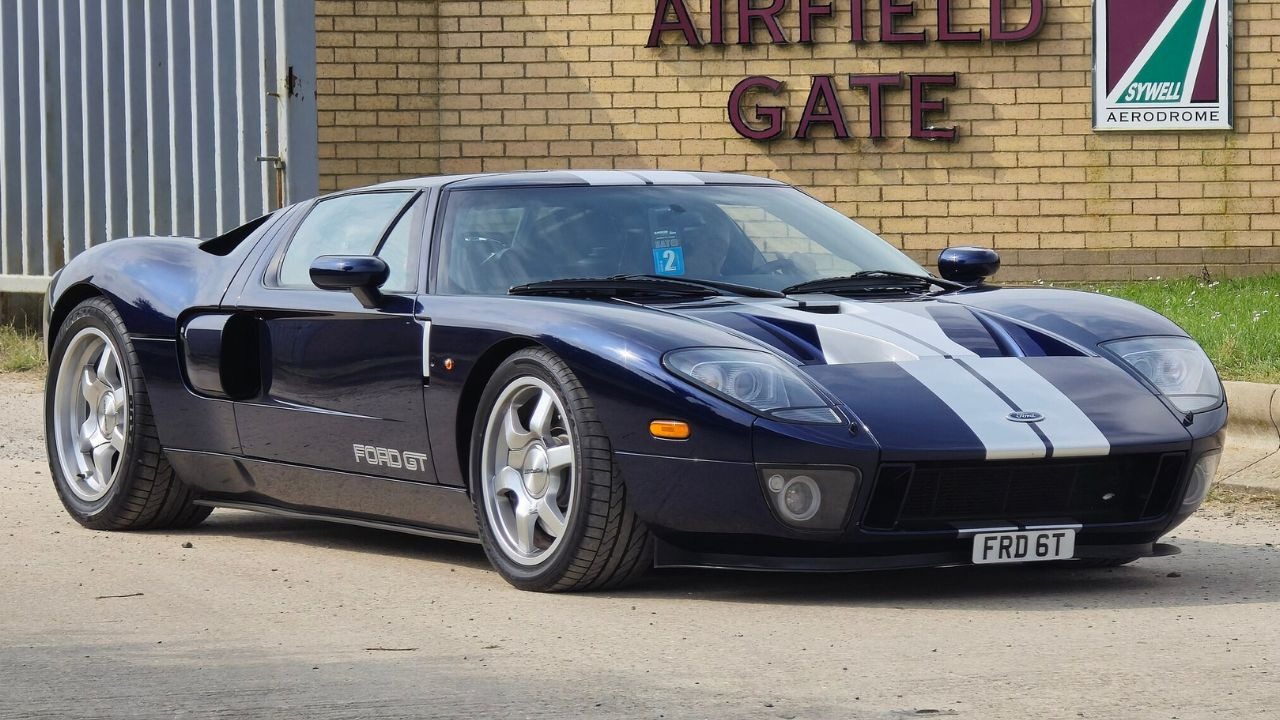
The 2005 Ford GT arrived at a moment when American performance cars were loud and fast but rarely mentioned in the same breath as the most coveted European exotics. By reviving the GT40 legend with modern engineering and unapologetically analog hardware, it did more than honor a racing story, it reset expectations for what a United States supercar could be. I see that car as the point where nostalgia, engineering ambition, and collector appetite converged to restore America’s confidence at the very top of the performance ladder.
Rather than chasing lap-time headlines with electronics and gimmicks, the GT leaned on raw power, a manual gearbox, and a shape burned into motorsport history. That combination, backed by limited production and a market that has only grown more enthusiastic, turned a centennial celebration project into a benchmark that still shapes how enthusiasts judge American supercars today.
The audacious decision that broke with the early‑2000s playbook
In an era when stability control and paddle shifters were becoming the default for high-end performance cars, In 2005, Ford made an unusually pure choice. The company built a supercar with a manual transmission and no traction control, a layout that signaled trust in the driver and a willingness to prioritize feel over electronic safety nets. I read that decision as a deliberate statement that American engineering did not need digital filters to stand with the best, and that confidence resonated with enthusiasts who were already wary of creeping automation.
That analog stance also framed the GT as a car created “for the love of performance,” not as a cynical marketing exercise. By refusing to dilute the experience with layers of software, Ford invited comparison with the most focused European machines of the time, while still delivering a cockpit and driving position that felt usable in the real world. The result was a car that looked like a museum piece but behaved like a modern weapon, and that contrast became central to its reputation.
Engineering a modern supercar under a 1960s silhouette
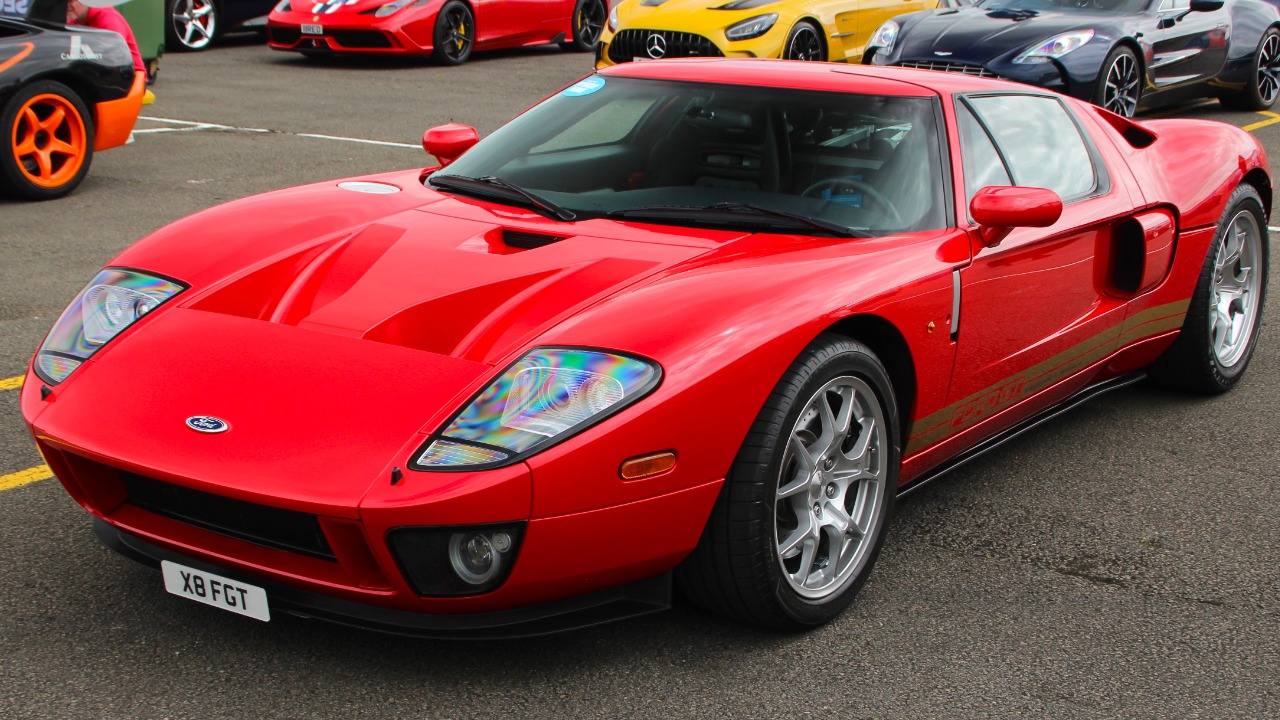
Reimagining the GT40 shape for the 21st century was not a simple styling exercise. As one early test drive put it, Perhaps the biggest challenge faced by the GT team was fitting a contemporary supercar under a 1960s shell, while still delivering a nearly 200‑mph top speed. I see that packaging struggle as the heart of the project: the car had to honor the low, wide proportions that made the original GT40 iconic, yet incorporate crash structures, cooling, and ergonomics that modern buyers expected.
The solution was a 21st‑century chassis and drivetrain wrapped in a body that retained the essential cues of the original. A later Heritage Edition description notes that the 21st‑century iteration of the GT was a blend of classic design and modern engineering, Retaining the iconic silhouette while delivering 550 horsepower and 500 lb‑ft of torque. That balance between heritage and hardware is what allowed the GT to feel like a genuine successor rather than a retro toy.
Powertrain and performance that could stand with Europe’s best
Underneath the nostalgia, the GT’s numbers were as serious as its intent. Built as a performance powerhouse, the 2005 Ford GT’s heartbeat is supplied by a 5.4-liter V8 topped with a twin‑screw supercharger, an engine that delivered both brutal mid‑range shove and the kind of top‑end pull needed for that near‑200‑mph capability. I view that choice as a confident embrace of American V8 character, refined enough to compete globally but still unmistakably rooted in Detroit’s strengths.
Contemporary coverage of the GT’s production run underscores how effectively that package landed. Limited build numbers made the car highly sought after, and demand quickly turned it into a collector’s item, with period testing confirming that it could go toe to toe with Europe’s finest supercars. The message was clear: this was not a nostalgia project hiding behind its paint scheme, it was a fully credible rival to the most respected names from Italy, Germany, and the United Kingdom.
From instant classic to blue‑chip collectible
Even before the GT reached customers for the 2005 model year, it was framed as a future classic. One detailed drive story notes that Even before the GT was released, it was always destined to be a classic, with just over 4000 examples built and a character that was quietly dangerous and more overtly brawny than its European peers. That combination of scarcity and attitude meant the car entered the market with a built‑in mythology, something most modern supercars have to earn over decades.
Over time, that early promise hardened into market reality. One analysis framed the model in stark financial terms, arguing that Why The 2005 Ford GT Was The Best Investment Of The 21st Century, and noting how it moved from being a fast car to a piece of blue‑chip art. I see that shift as a direct reflection of how thoroughly the GT restored faith in American supercar engineering: buyers were no longer just paying for speed, they were paying for a story that had proven its staying power.
A supercar that did not punish its driver
Plenty of early‑2000s exotics were fast, but they were also fragile, cramped, or intimidating in daily use. The GT carved out a different reputation. One detailed look at an ex‑Paul Walker example notes that it would earn a reputation as a supercar that did not punish its driver or require a slew of electronic safety systems, with period testing backing up Ford’s claim that the car was both stable and approachable at speed. That usability mattered, because it showed that an American supercar could be both ferocious and friendly.
Modern reviewers still highlight that balance. One widely shared video review calls the 2005 Ford GT a rare and iconic supercar with a timeless design, powerful performance, and a manual transmission, framing it as one of the best analog driving experiences left in the modern era. When a car can be described that way two decades on, it suggests that the original engineering brief hit a sweet spot between rawness and refinement that rivals still struggle to match.
Heritage, Le Mans, and the power of the GT40 story
The GT’s emotional pull rests heavily on the legend of the GT40 that humbled Ferrari at the 24 Hours of Le Mans. Contemporary promotions lean into that history, describing the legendary 2005 Ford GT as a modern tribute to the GT40 that crushed Ferrari at Le Mans, and reminding potential buyers that such a car could be sitting in YOUR garage. I see that language as more than marketing hyperbole, it reflects how deeply the GT40 narrative still resonates with enthusiasts who see the 2005 car as a direct link to that golden era.
Ford itself has not been shy about reinforcing that connection. One centennial celebration campaign framed the 2005 model as the moment Ford brought that legend back to life in the form of the Ford GT, explicitly tying the modern car to one of the most famous racing stories of all time. When a manufacturer leans that hard into its own past, it risks being accused of nostalgia, but in this case the performance and reception of the GT justified the confidence.
Why the 2005 Ford GT still defines American supercar confidence
Two decades on, the GT’s influence is visible in how American performance brands talk about themselves. Later Ford GT projects, mid‑engine Corvettes, and even limited‑run domestic track specials all operate in a world where an American car has already proven it can command European‑level respect and collector money. A detailed collector‑focused review notes that in 2005, Nov and its peers were looking at a car built for the love of performance, not just volume, and that mindset has since spread across the segment.
Enthusiast media continue to revisit the GT as a benchmark, with one feature describing how Jan drives in the car still feel like American dreaming, and another collector analysis pointing out that Dec market data keeps the GT in the blue‑chip art conversation instead of ordinary depreciation charts. When a car can be discussed in the same breath as investment‑grade art and still be praised as quietly dangerous and overtly brawny, it has clearly done more than just revive a badge. It has restored a sense that American supercars can be both culturally significant and dynamically world class.