

The 396 big block Camaro sits at the crossroads of muscle car mythology and today’s data driven collector market, a car that once defined Chevrolet performance and now trades in a surprisingly wide price band. I want to trace when Chevrolet actually put the 396 into the Camaro lineup, how that engine fit into the broader big block story, and what recent sales say about what these cars are worth now.
From the first Chevrolet Camaro SS 396 in the late 1960s to today’s auction blocks and online classifieds, the numbers tell a story of peak desirability, a long plateau, and a market that is now more nuanced than the nostalgia around “396” might suggest.
How the 396 big block arrived in Chevrolet’s performance playbook
Before the Camaro ever wore a 396 badge, Chevrolet had already turned the 396 into a cornerstone of its performance strategy. The 396 cu in V8, listed alongside the related 402 and described as a 6.5 L engine, first appeared in the Corvette and the Chevelle, where it quickly built a reputation for serious power in a relatively compact package for a big block. That early deployment in the Corvette and Chevelle framed the 396 as a premium performance option rather than a basic workhorse.
Later reporting on the engine’s origins reinforces that positioning. One detailed account notes that the Chevrolet 396 big block was introduced in 1965 as part of Chevy’s new Mark IV engine family, explicitly designed to deliver high horsepower and torque for the performance boom of the 1960s and early 1970s. Another source, dated Sep 9, 2025, again ties the 396 to that Mark IV program and describes how Chevrolet and Chevy engineers built it to rule the road with a thunderous sound, language that reflects how enthusiasts still talk about these engines today. Both references to the 396 and the Mark IV family underline that by the time the Camaro arrived, the 396 was already a proven, high profile powerplant.
When Chevrolet put the 396 into the Camaro
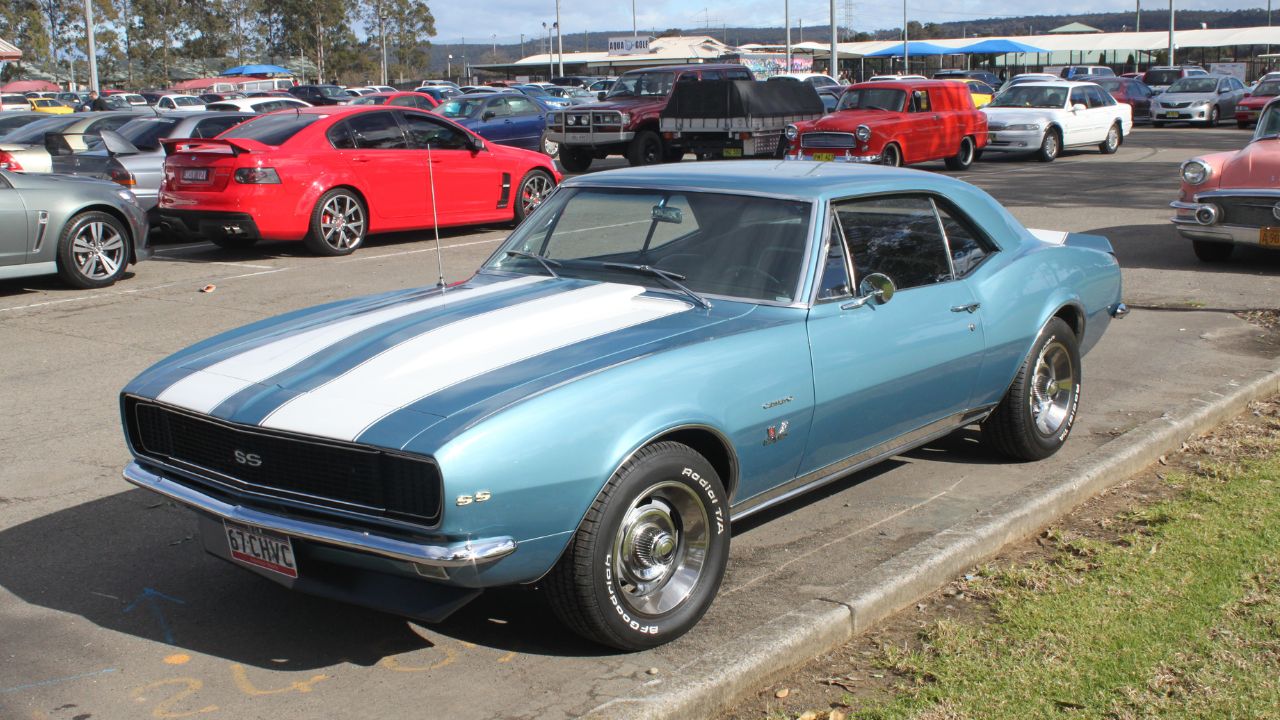
The first generation Chevrolet Camaro, described as an American pony car introduced by Chevrolet in the fall of 1966 for the 1967 model year, provided the platform that would soon carry the 396. That initial launch established the Camaro as a direct rival in the performance coupe space, but the real escalation came when Chevrolet layered in the SS performance package and, with it, big block power. A detailed enthusiast breakdown of the Chevrolet Camaro SS 396, explicitly labeled as First Generation (1967-1969), confirms that the SS package in those years included the 396 engine as the centerpiece of the upgrade. In other words, the 396 Camaro story begins squarely within that 1967 to 1969 window for the first generation and the Chevrolet Camaro SS.
As the Camaro evolved into its second generation, the 396 badge briefly carried over even as the underlying displacement shifted. Documentation on the second generation notes that the 1970 Camaro SS 396 was actually equipped with a 402 cubic inch version of the big block, a quirk that reflects how Chevrolet sometimes retained familiar marketing labels even when the engineering changed. That same second generation history also records that Some at GM seriously considered dropping the Camaro and Firebird altogether under corporate pressure, which adds context to how precarious the performance car segment had become by the early 1970s. The reference to the Camaro SS 396 with a 402 and the mention of Camaro and Firebird being at risk show that the 396 era in the Camaro was both technically fluid and strategically fragile.
Why the 396 Camaro became a collector benchmark
Over time, the 396 equipped Camaros, especially from the first generation, turned into reference points for collectors who wanted the most muscular versions of Chevrolet’s pony car. A focused overview of the Chevrolet Camaro SS 396 First Generation (1967-1969) makes clear that the SS package was marketed as a step up in both performance and image, and that the 396 engine was central to that identity. When General Motors introduced big block engines into its lineup in the 1960s, it marked a major shift in how American performance cars were positioned, and the Camaro SS 396 slotted directly into that broader move toward higher displacement and higher output. That context helps explain why enthusiasts still single out the First Generation SS 396 as a benchmark car.
Individual examples illustrate how that reputation translates into perceived value. A detailed post about a 1969 Chevrolet Camaro with an extensively restored 396ci engine, dated Dec 31, 2024, describes it as one of the most desirable configurations on the classic car market and notes that prices for such cars have gone “through the roof” in the eyes of long time owners. Another enthusiast video, tagged Aug 9, 2024, shows a 1969 396 Chevy Camaro being fired up and framed within broader Camaro history, reinforcing how the sound and presence of the big block remain central to the car’s appeal. Together, these references to a restored Chevrolet Camaro and the Aug video on Camaro history show how the 396 cars have become touchstones for both market watchers and fans.
What 396 Camaros are selling for now
Recent valuation data suggests that while top tier 396 Camaros can command strong money, the broader market has settled into a more measured range than some of the most breathless anecdotes imply. A valuation table for 1969 Chevrolet Camaro models lists a Median Sale for Year 2025 of $77,000, with the table explicitly labeling Median Sale, Year and Consignments. That figure reflects the middle of the market rather than the extremes, but it still signals that late first generation cars, which include many SS 396 examples, remain firmly in high value territory. The same source shows earlier years with different Median Sale numbers, indicating that 1969 cars often sit at or near the top of the Camaro price curve, which aligns with the way collectors prize that final first generation model year.
For 1968 Camaros, a separate valuation table shows a Year 2025 Median Sale of $61, with the table again calling out Median Sale, Year and Sell Through Rate. The $61 figure is clearly truncated in the summary, but even with that limitation, the structure of the data confirms that 1968 cars trade at a lower median than 1969 examples. That gap is consistent with long standing market patterns that favor the final first generation year, especially for high specification cars. When I compare those structured valuations with the anecdotal claim that some 1969 396 cars have gone “through the roof” price wise, it suggests that while standout restorations and rare option combinations can push well above the median, the typical sale sits closer to the $77,000 benchmark and the lower 1968 Median Sale.
Real world listings and the “surprisingly affordable” narrative
Beyond auction medians, current listings show how wide the spread has become between driver quality cars and showpiece restorations. An active classified for a 1968 Chevrolet Camaro RS/SS 396 Convertible #’s Matching lists the car with Year: 1968, Miles: 1,111 and an asking price of $119,900.00, presented as a Classified Ad with Best Offer. That example, which combines the RS/SS package, the 396 engine, a Convertible body style and a Matching numbers claim, sits well above the 1968 median and illustrates how rare configurations can command a substantial premium. The explicit figures of 396, 1,111 and $119,900.00 in that Chevrolet Camaro RS listing underscore how sellers position these cars at the top of the market when they can tick multiple desirability boxes.
At the same time, broader commentary on big block Camaros suggests that prices have softened in recent years compared with their peak. A detailed feature on the first big block Camaro, dated Jun 14, 2025, notes that when General Motors introduced big block engines into its lineup in the 1960s it reshaped expectations for American performance, but it also argues that values for some of these early big block cars are now “surprisingly affordable” relative to their historical highs. That perspective does not contradict the six figure asking prices for exceptional RS/SS 396 Convertibles, but it does highlight how more common configurations and driver level cars can trade closer to the median auction figures or even below. Taken together, the structured valuation data, the high end big block analysis and the live Classified Ad paint a nuanced picture: the 396 Camaro remains a blue chip nameplate, but for buyers willing to compromise on options or condition, it can be more attainable than its legend suggests.


Leave a Reply